
Reviewed · WORKSHOPS
Cappadocia: Authentic Pottery Workshop Experience
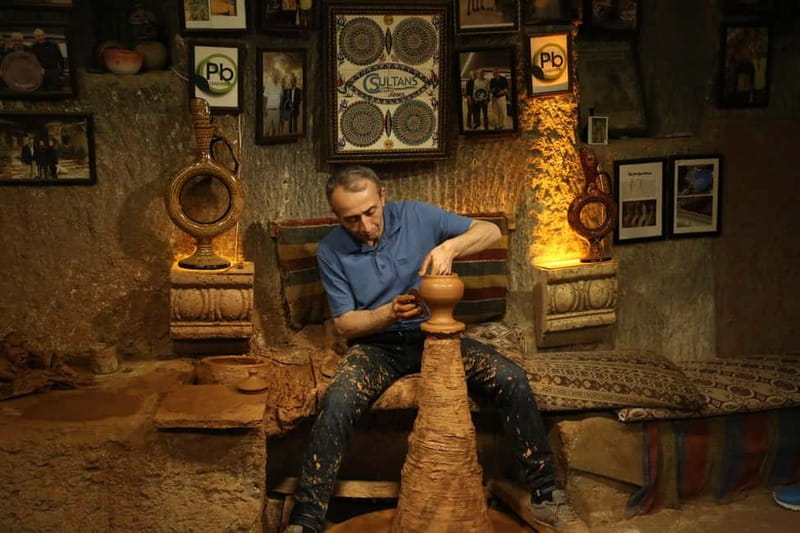
Clay tells Cappadocia’s story. This one-hour workshop in Avanos, the region’s pottery center, gives you a direct way to touch local tradition rather than simply look at it. I like the patient, beginner-friendly instruction, and I like that you can take your own handmade piece with you. The $9 price is unusually low for a hands-on cultural activity.
The main consideration is the format: in a group, each person may use the wheel one at a time while others watch. That works well for a small family or couple, but it may feel slow if you expect everyone to shape clay together.
In This Review
- Five useful things to know before you go
- Why Avanos pottery belongs on your Cappadocia plans
- Arriving at the Ottoman Art Ceramic Pottery Workshop
- Your first turn on the pottery wheel
- What your finished piece means
- The people who shape the experience
- How much value do you get for $9?
- Pottery designs, Ottoman links, and Cappadocian identity
- Who will enjoy this one-hour class?
- Planning the visit without fuss
- Should you book this pottery workshop?
- FAQ
- Where does the pottery workshop begin?
- Where does the activity end?
- How long does the experience last?
- What language is the instruction in?
- Is hotel transfer included?
- Is food included?
- Can I take my pottery home?
- Can I cancel for a full refund?
Five useful things to know before you go
- The workshop is in Avanos: You meet at Ottoman Art Ceramic Pottery Workshop in Cappadocia’s pottery town.
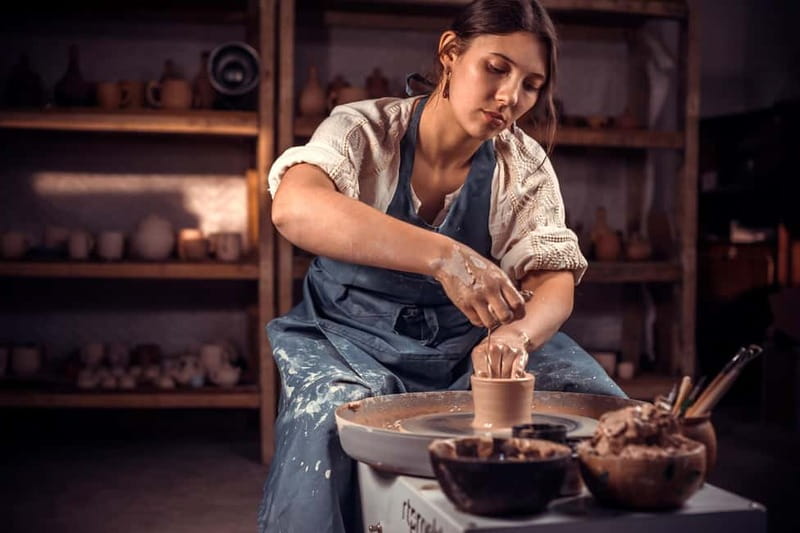
- You get a real turn at the wheel: The instructor guides each person through the basic process, including first attempts.
- English instruction is available: Yusuf is praised for his calm teaching, while Cristina and the family team help explain the craft and the objects on display.
- Your pottery is yours to keep: A carry box can be provided, which helps if you are flying home with your piece.
- Drinks are included: Food is not included, but drinks are part of the activity.
- It is short and affordable: The class lasts one hour and costs $9 per person, making it easy to fit into a busy Cappadocia day.
Why Avanos pottery belongs on your Cappadocia plans
Cappadocia is famous for fairy chimneys, cave churches, underground cities, and sunrise balloon rides. Yet Avanos gives you a different connection to the region. Here, clay is not just an art material. It is part of daily life and local identity.
The town’s pottery tradition is tied to the soft volcanic earth found around Cappadocia. That soil can be shaped into water jugs, bowls, serving dishes, and decorative pieces. Pottery has practical value here, but the finished work also carries patterns and images linked to the region, including fairy chimneys, cave homes, and designs influenced by older civilizations.
I like this activity because it gets you away from passive sightseeing. You are not simply walking through a shop filled with finished ceramics. You sit down, handle the clay, make mistakes, and see how much skill is needed to create a clean bowl or vessel.
At the same time, you should keep your expectations sensible. One hour is enough for an introduction, not a full pottery course. You will learn the basic movements and produce a personal piece, but the result may have the charmingly uneven shape that comes with a first attempt.
A few more options to weigh up in Cappadocia
- Cappadocia Hot Air Balloon Ride / Royal Balloon
★ 5.0 · 6,829 reviews - Cappadocia: Goreme Hot Air Balloon Flight at Sunrise
★ 5.0 · 4,924 reviews - Cappadocia Hot Air Balloon Ride/ Turquaz Balloons
★ 5.0 · 3,330 reviews
Arriving at the Ottoman Art Ceramic Pottery Workshop
The activity begins at the Ottoman Art Ceramic Pottery Workshop in Avanos. There is no hotel transfer, so you need to make your own way to the meeting point. The activity also ends there, which keeps the arrangement simple but means you should allow time for local transport.
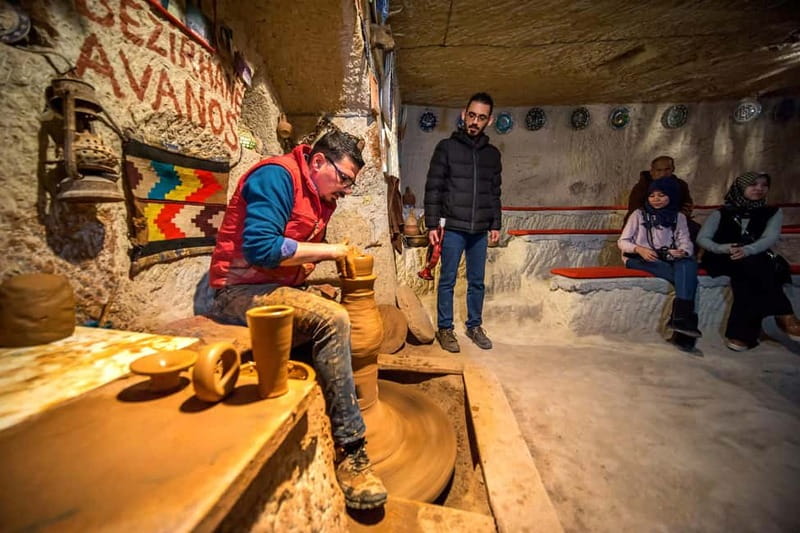
The setting is part workshop, part exhibition space. Finished ceramics show what experienced artists can do with the same material you are about to handle. You might see ornate plates, traditional forms, detailed painted designs, and pieces connected to Ottoman or Cappadocian styles.
One especially unusual feature is an underground museum area mentioned by Cristina, who helps run the center. That gives the visit more depth than a quick wheel demonstration. You can look at finished work, hear about the objects, and then try the basic craft yourself.
The workshop is described as family-run, with a mother and her sons welcoming people into the space. That personal setup matters. You are not being moved through a large production line. The tone is more intimate, and the teaching is directed at your group.
Your first turn on the pottery wheel
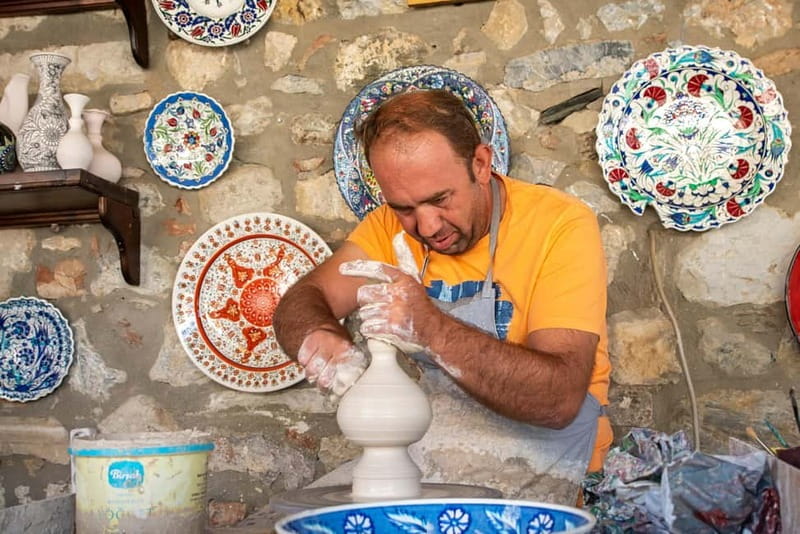
The hands-on part begins with clay and the pottery equipment provided at the workshop. The instructor demonstrates the basic method, then guides you as you shape your own piece.
For a first-timer, the hardest part is usually keeping the clay centered and applying steady pressure. The instructor’s role is important here. Yusuf is specifically praised for being pleasant and patient with a group, and another participant describes the class as suitable for both first-timers and people with prior experience.
The class is taught in English. That makes it easier to follow the hand positions and timing, especially when the clay starts to wobble. You should expect close guidance rather than a long formal lecture. The value is in trying the movement yourself and receiving corrections as you go.
The wheel is used by one person at a time. If you arrive as a group of five, for example, the others may watch while one person works. This is the one point I would clarify before booking if shared participation matters to you. It can be a pleasant way to cheer on your family or friends, but it is not the same as having several wheels running at once.
The short length also has a benefit. You can enjoy the activity without giving up half a day of sightseeing. If your Cappadocia schedule already includes a valley walk, a museum, or a village visit, this class fits neatly into the gaps.
What your finished piece means
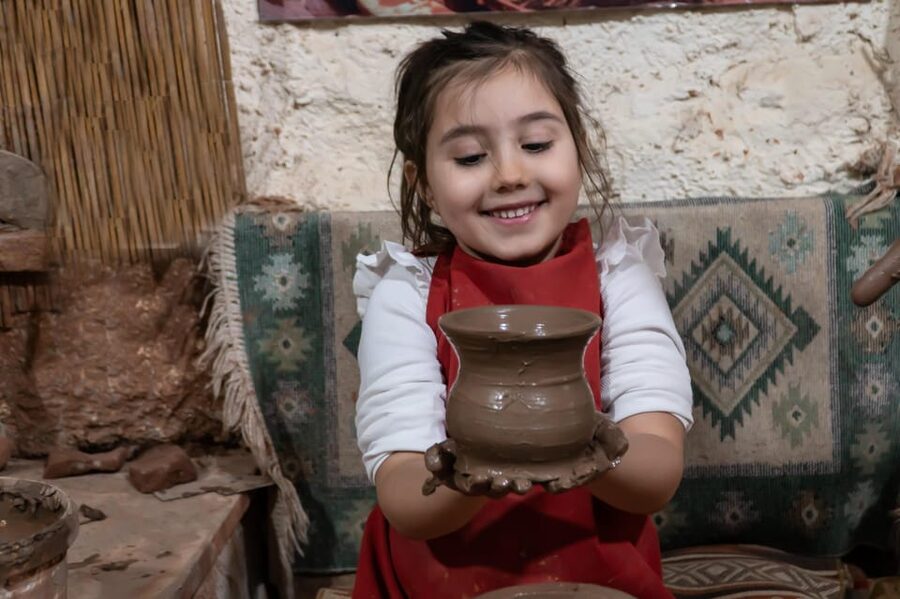
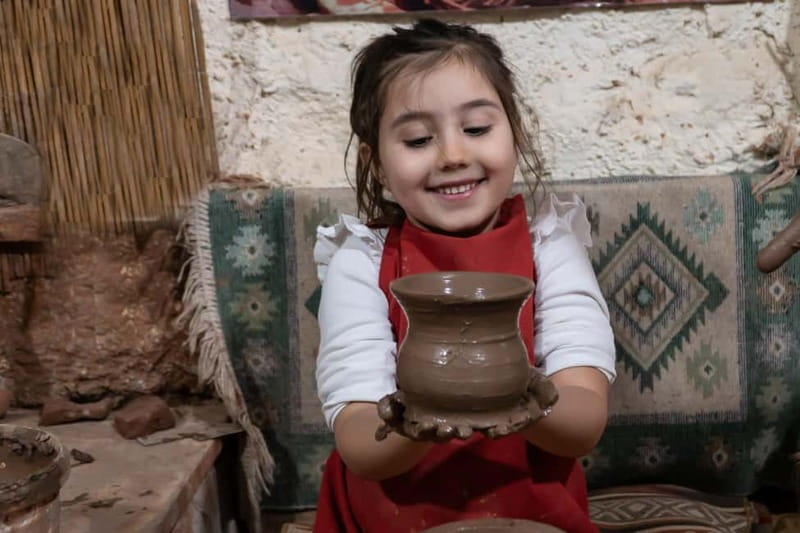
Your creation will probably not look like the polished ceramics displayed around the workshop. That is part of the appeal. A first piece carries evidence of your hands, your pressure, and your decisions.
The activity allows you to take your personal masterpiece home. One participant was worried about bringing pottery on a flight to the United Kingdom and was given a carry box. Another said the finished product arrived in the UK the next day. Those details suggest that the workshop team understands the practical problem of transporting ceramics, though you should confirm exactly how your piece will be packed or sent if you are flying.
Do not assume every item will be fired or shipped in the same way unless the staff explains it to you. The clear promise is that your pottery is allowed to go home with you. Ask about packing before you leave the workshop, especially if you have a long journey or connecting flights.
There is also a chance to buy additional ceramics. A couple enjoyed the class and bought two bowls as souvenirs. That is optional, and it can be useful if your own creation is more personal than polished. The display pieces also give you a chance to see the level of finish that comes from years of practice.
A completely different kind of day out:
- Cappadocia Sunset ATV Tour
★ 5.0 · 2,984 reviews - Cappadocia Sunrise Hot Air Balloon Flight / Discovery Balloons
★ 5.0 · 2,882 reviews - Cappadocia: Goreme Hot Air Balloon Flight Over Fairychimneys
★ 4.8 · 2,347 reviews - Green (South) Tour Cappadocia (small group) with lunch and ticket
★ 5.0 · 2,317 reviews
The people who shape the experience
The strongest part of the workshop is the human contact. Cristina is praised for explaining the pottery art in detail, including the objects displayed at the center. The family-run setting adds a welcoming touch, with the mother and her sons greeting people and helping them settle in.
Yusuf is singled out for his calm manner with groups. That matters because clay can be frustrating in the first few minutes. A rushed teacher can make the experience feel like a test. A patient teacher lets you laugh at a lopsided bowl and try again.
You may also encounter a different instructor or partner location arranged through Tourmania. The supplied details include references to Kybele Ceramics and a master who offered homemade wine, so the exact person or small workshop team may vary. The central promise remains an English-language pottery session with equipment and guidance.
Drinks are included. Food is not, so do not arrive expecting a meal or a full restaurant stop. Any extra refreshments mentioned at the workshop should be treated as a pleasant courtesy, not a guaranteed part of the $9 package beyond the included drinks.
How much value do you get for $9?
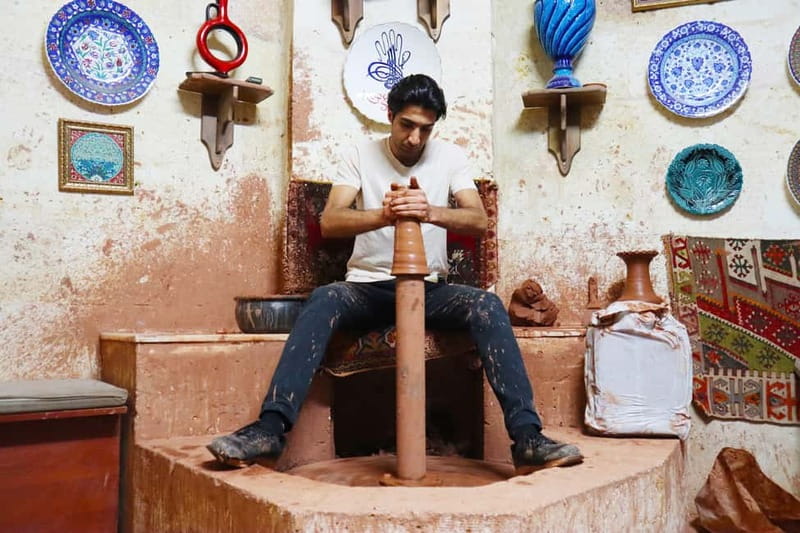
At $9 per person, this is one of the easier cultural activities to justify in Cappadocia. The price includes the workshop, an English-speaking professional instructor, use of the pottery equipment, drinks, and the piece you make.
That last item is important. Many low-cost activities give you a demonstration and perhaps a small souvenir. Here, you get an active lesson and something connected to your own time in Avanos. Even if the shape is imperfect, it has a story that a mass-produced bowl does not.
The one-hour limit keeps the cost low, but it also limits the depth of instruction. If you want to learn trimming, glazing, painting, or kiln firing, this is not presented as that kind of course. The supplied information focuses on shaping the clay and taking the personal piece home.
I see the best value for couples, families, and anyone who wants a short break from sightseeing. It is also a good choice if you have already spent enough on balloon rides and guided excursions. For $9, the financial risk is small, and the activity offers more personal involvement than another souvenir stop.
Pottery designs, Ottoman links, and Cappadocian identity
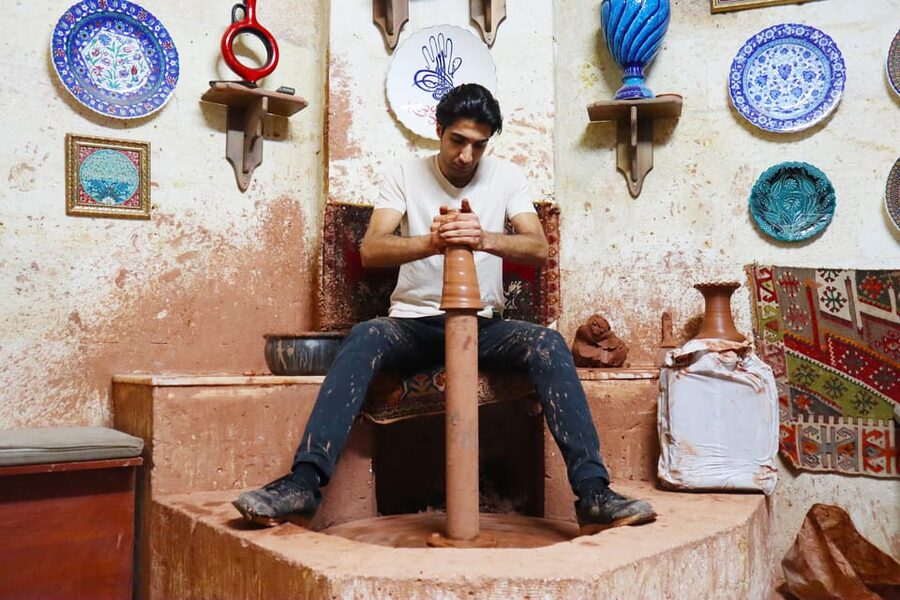
The finished pieces in the workshop reflect several layers of local culture. Some designs draw on the fairy chimneys and cave dwellings that define Cappadocia. Others use patterns connected to older civilizations or Ottoman traditions.
The pottery is not only made for display. Traditional jugs and serving dishes show how ceramics fit into ordinary household life. That practical side helps explain why the craft survived across generations. You are seeing an art form that has been useful as well as beautiful.
The display may include pieces decorated with Zultanite stone, a detail that caught Cristina’s attention during one visit. Zultanite is associated with color-changing jewelry and decorative work, and it gives you another example of how local materials and regional design can appear together. The workshop is not just about making a bowl. It is also a place to ask how objects are used, decorated, and valued.
I recommend looking closely before your own turn. Notice the thickness of the walls, the evenness of the rim, and the painted detail. Then try not to feel discouraged when your first piece looks simpler. The gap between your work and the display pieces is a useful lesson in craftsmanship.
Who will enjoy this one-hour class?
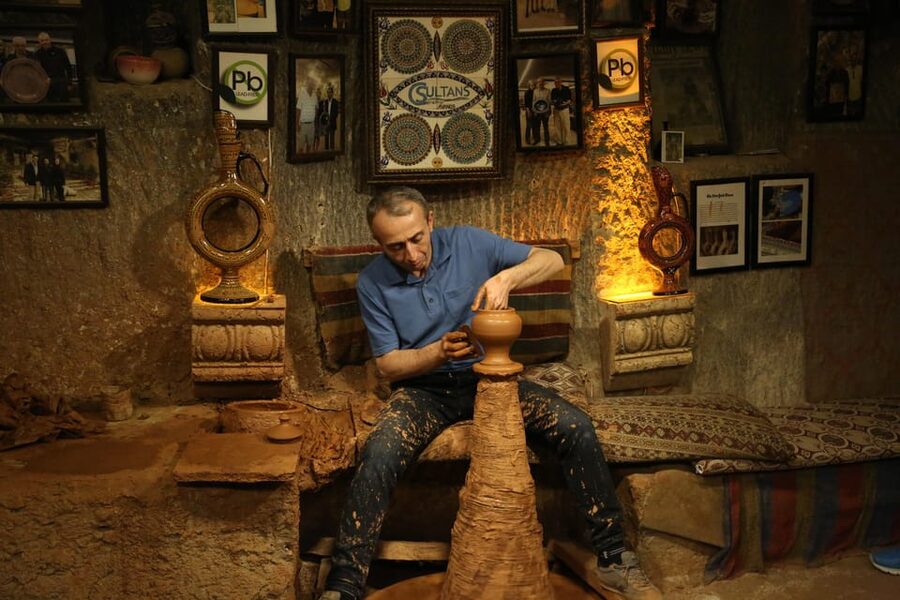
This workshop suits you best if you want a relaxed, practical cultural experience and do not need a polished professional result. Beginners are welcome, and the instruction is designed to help you make a first attempt without prior training.
It works especially well for:
- Couples who want a shared souvenir
- Families with children old enough to follow basic instructions
- Small groups happy to take turns
- Solo visitors who enjoy making things by hand
- Experienced pottery students looking for a short local introduction
The class may be less satisfying if you want a long lesson with several techniques. It may also disappoint a large group that expects everyone to work at the same time. Since the wheel is used individually, ask how your party will be scheduled when you reserve.
This is also a good rainy-day or hot-afternoon option. The supplied information does not promise a particular indoor schedule beyond the one-hour workshop, but the activity takes place at the pottery center rather than along a trail or viewpoint. It gives you a useful change of pace from outdoor Cappadocia sightseeing.
Planning the visit without fuss
The duration is one hour, and starting times depend on availability. Check the schedule before you build the rest of your day around it. Since there is no hotel pickup, include the time needed to reach Avanos and return to your next stop.
The meeting point is Ottoman Art Ceramic Pottery Workshop. The activity ends at the same location. That makes it easier to combine with other Avanos plans, but the experience itself does not include a transfer, meal, or broader town tour.
You can reserve now and pay later, which is useful when your Cappadocia plans are still shifting. Free cancellation is available up to 24 hours in advance for a full refund. Keep an eye on the exact booking conditions shown for your chosen time, since availability and operating arrangements can affect the practical details.
English is the stated instruction language. If someone in your group needs another language, the supplied information does not confirm additional options, so ask before booking.
Should you book this pottery workshop?
I would book it if you want a low-cost, hands-on way to understand Avanos and you like the idea of bringing home something made by your own hands. The strongest reasons are the friendly family setting, patient instruction from teachers such as Yusuf, the chance to see local ceramics, and the unusually modest $9 price.
I would skip it only if you want a fully shared group class with everyone on a wheel at once, or if you are looking for advanced pottery techniques. For most people, the imperfect rim and uneven shape are part of the memory. Just confirm the turn-taking arrangement and how your piece will be packed before you leave.
FAQ
Where does the pottery workshop begin?
The activity begins at Ottoman Art Ceramic Pottery Workshop in Avanos, Cappadocia.
Where does the activity end?
It ends back at the meeting point, the Ottoman Art Ceramic Pottery Workshop.
How long does the experience last?
The pottery workshop lasts one hour.
What language is the instruction in?
The instructor teaches in English.
Is hotel transfer included?
No. Hotel transfer is not included, so you need to reach the workshop meeting point yourself.
Is food included?
No. Food is not included, although drinks are included.
Can I take my pottery home?
Yes. Your personal pottery piece is included and you are allowed to take it with you. A carry box may be available for transporting it.
Can I cancel for a full refund?
Yes. You can cancel up to 24 hours in advance for a full refund. You can also reserve now and pay later.
Just added in Cappadocia
- Flexible Private Cappadocia Tour – Explore at Your Own Pace★ 5.0 · 27 reviews
- Sunset ATV Tour in Cappadocia★ 5.0 · 188 reviews
- Private Salt Lake Sunset Tour with Photos & Snacks★ 4.5 · 32 reviews
- Balloon Watching & Sunrise Experience★ 5.0 · 20 reviews
- Hot Air Balloon Ride in Cappadocia / Goreme★ 5.0 · 109 reviews
- VIPPrivate Airport Transfer From or To Kayseri & Nevsehir Airport★ 4.5 · 20 reviews
- Photoshoot Experience in Cappadocia with Flying Dress★ 5.0 · 19 reviews
- Cappadocia: Two Full-Days Private Tour (Driver Guide)★ 5.0 · 51 reviews
Workshops, compared.
Original Turkish Mosaic Lamp Workshop w/ Snacks
Read our review →
Turkish Coffee Making and Fortune Telling Workshop
Read our review →
Turkish Mosaic Lamp Workshop with Bosphorus View
Read our review →
Turkish Mosaic Lamp Workshop in Galata – All Included
Read our review →
Turkish Coffee Making and Fortune Telling Workshop
Read our review →Browse the lists this tour appears in