
Reviewed · FOOD TOURS
Cappadocia Cooking Class
Cook your way into Cappadocia. This four-hour class takes you from your hotel to Urgup’s local shops, then into a family home or local kitchen to prepare Turkish dishes with a host and interpreter. I like the market visit because it gives you a look at everyday ingredients, and I like the warm, personal setting far more than a standard restaurant meal. The main thing to consider is that the cooking can be hands-on but informal, with some dishes prepared in advance.
You can choose a 10 AM lunch or 4 PM dinner departure, with pickup and drop-off included across much of Cappadocia. The small maximum of six people should make conversation easy, and guides such as Kadir have helped turn the meal into a wider talk about Turkish life, food, and culture. At $176.61 per person, this is not a cheap meal, but it offers several hours of food, transport, instruction, and local company in one package.
In This Review
- Key points to know before you book
- From your hotel to Urgup’s food shops
- Entering a local home or kitchen
- What you may cook during the four hours
- How hands-on is the cooking?
- The meal is the real reward
- A local conversation, not just a recipe lesson
- How the price of $176.61 measures up
- Timing, group size, and practical planning
- Who will enjoy this most?
- Should you book the Cappadocia Cooking Class?
- FAQ
- What time does the cooking class begin?
- How long does the experience last?
- Is hotel pickup included?
- What food and drinks are included?
- How many people can join the class?
- Is the class available in English?
- Can I cancel for a full refund?
Key points to know before you book
- Shop in Urgup first: The experience begins with a stop at local shops, where you can see typical ingredients before cooking.
- Cook in a local setting: Depending on the arrangement, you may work in a family home, apartment, or local restaurant.
- Choose lunch or dinner: Pickup is listed for 10 AM or 4 PM, giving you useful control over your day.
- Small groups matter: The maximum is six people, and some bookings may operate as private classes.
- Expect a shared cooking style: You may chop, stir, shape, and help with the meal, but not every dish is made individually.
- Local interpretation is included: A guide such as Kadir can translate and explain food, customs, and modern Turkish life.
From your hotel to Urgup’s food shops
Your day begins with hotel pickup at 10 AM for lunch or 4 PM for dinner. Pickup is available from hotels in Goreme, Avanos, Uchisar, Ortahisar, Cavusin, Urgup, Mustafapasa, Ayvali, and Nevsehir, which makes this useful if your base is outside Goreme.
The drive takes you first to Urgup for shopping. This is not just a quick supply run. It gives you a chance to see the small food shops and local ingredients that shape the meal. One participant described the shopping stop as a good way to discover typical products used in Turkish cooking, and that is exactly where this experience gains value.
You might see ingredients for salads, stews, stuffed grape leaves, ravioli, yogurt soup, rice, beans, or dessert. The exact menu can change, so you should not book expecting every listed dish to appear. Still, the shopping stage helps connect the food on your plate with the food culture around you.
A practical point: the transfer is part of the value, but allow some flexibility. One family had trouble when the driver got lost on the way to the class. It was described as a shortcoming rather than a serious failure, yet it is a reminder that Cappadocia’s scattered towns and winding roads can add time.
More Food Tours in Goreme:
- Cooking Class at Exclusive Kings Valley
★ 5.0 · 54 reviews - Istanbul: European and Asian Side Guided Foodie Walking Tour
★ 4.9 · 1,038 reviews - Istanbul: Guided Food Tour with Ferry Ride and Tastings
★ 4.9 · 600 reviews
Entering a local home or kitchen
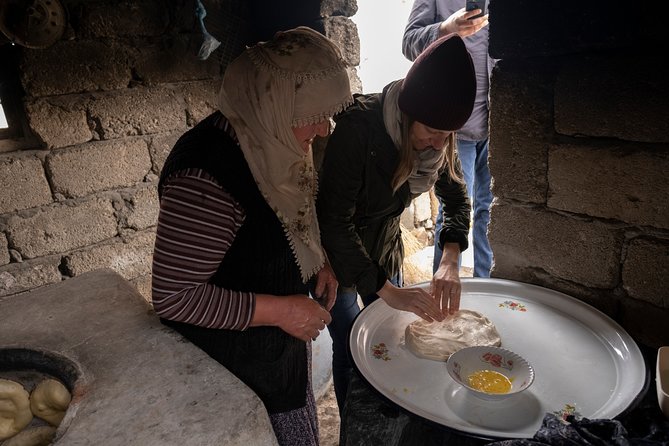
After shopping, you continue to the host’s home or cooking venue. The setting is one of the strongest reasons to choose this activity. Several arrangements have taken place in private homes, including a young couple’s apartment in Urgup, while others have used a restaurant or another local kitchen.
That variety is worth understanding. You are not buying a fixed cooking studio with the same chef and identical room every day. Hosts can change from one class to another, and the style may vary. One person described a welcoming local family home, while another cooked in a restored old prison that had been converted into a restaurant.
This flexibility can work in your favor. A home setting may feel more personal and give you a better view of ordinary Cappadocian life. A restaurant kitchen may offer more professional equipment and a chef who is used to teaching. The trade-off is less predictability.
Communication is handled by a local interpreter. Some hosts speak little or no English, but the interpreter stays available throughout the activity. Kadir is named in several accounts and is praised for keeping conversation flowing, explaining local matters, and helping with the practical details.
You should expect the host to be warm and social. The tone is closer to being welcomed into someone’s kitchen than attending a formal culinary school. That means you may talk about family life, Turkish customs, local work, and food while preparing lunch or dinner.
What you may cook during the four hours
The menu offers a broad sample of Turkish home cooking rather than one signature dish. Starters can include a seasonal salad, purslane salad, minced seasonal vegetable salad, or stuffed grape leaves. Purslane is especially interesting if you have only eaten familiar lettuce-based salads, since it is a common edible plant used in Turkish kitchens.
Main dishes may include stewed vegetables, meat stew with vegetables, or Turkish ravioli. The listed dessert is a Cappadocian preparation made with flour, grape molasses, and butter or sunflower oil. The wording of the menu suggests a traditional, simple sweet rather than a polished pastry course.
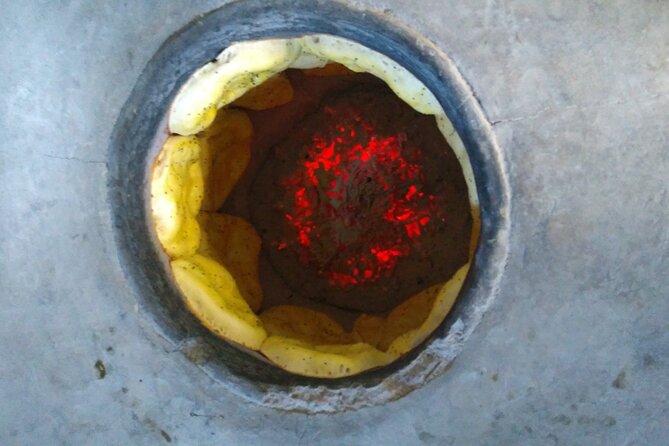
Past classes have included yogurt soup, meatballs wrapped in eggplant, rice with beans and pastrami sauce, semolina dessert, mezze, and bread cooked in a tandoor oven. These examples show why you should treat the sample menu as a guide, not a promise.
The class may also adapt to dietary needs. One group included vegetarians and a person with celiac disease, and the host found gluten-free flour for the dessert. That is encouraging, but you should still raise allergies and dietary restrictions at booking. The available information confirms one successful accommodation, not a guarantee for every request.
How hands-on is the cooking?
This is the key question. The answer depends on your host and the size of your group.
In the best version, you will genuinely cook. You may learn recipes, prepare several dishes, help place bread in a tandoor oven, and take part in each stage of the meal. Children have been included in the preparation, which can make them more willing to taste food they helped create.
The class is not always a strict, step-by-step lesson where each person prepares an individual plate. One account describes a host making a large pot of each dish while participants cut vegetables and stirred from time to time. A few ingredients were already cooked, and the person did not receive complete recipes.
I would frame this as a home cooking visit with active participation, not a professional cooking course. If you want to master Turkish ravioli folds or leave with a printed recipe book, ask for that before you arrive. If you want to cook beside a local host, taste dishes that may not appear on restaurant menus, and learn through conversation, the loose format should suit you.
The small group limit helps. With no more than six people, you have a better chance to handle ingredients and ask questions. Some bookings have ended up as private classes, though that cannot be promised for every departure.
A few more options to weigh up in Goreme
- Cappadocia Hot Air Balloon Ride / Royal Balloon
★ 5.0 · 6,829 reviews - Cappadocia Hot Air Balloon Ride/ Turquaz Balloons
★ 5.0 · 3,330 reviews - Cappadocia Sunset ATV Tour
★ 5.0 · 2,984 reviews - Cappadocia Sunrise Hot Air Balloon Flight / Discovery Balloons
★ 5.0 · 2,882 reviews
The meal is the real reward
After the preparation, you sit down to eat the food you helped make. The meal includes three courses, along with water, black tea, or coffee. Alcohol is not included, and neither are soda or pop.
Some accounts mention local wine during the meal, but the official inclusions do not promise it. If wine matters to you, confirm the arrangement rather than assuming it comes with the price. Alcoholic drinks are specifically listed as extra.
The food receives the strongest praise. People describe it as delicious, home-cooked, and in some cases the best meal of their time in Turkey. That does not mean you should expect restaurant-level presentation. The appeal is the flavor, the setting, and the story behind the dishes.
You may eat foods that are less common on tourist menus. That is a real advantage. Restaurant menus in Cappadocia often focus on familiar regional favorites, while a household meal can include yogurt soup, vegetable dishes, salads, stuffed leaves, or simple sweets that reflect daily cooking.
The meal also gives you time to slow down. Cappadocia sightseeing can become a busy sequence of valleys, underground cities, viewpoints, and transfers. Sitting with a host over a shared meal offers a welcome change of pace.
A local conversation, not just a recipe lesson
The cooking is only half of the experience. The other half is the conversation.
Kadir has been praised for making discussion easy and for sharing information on many subjects. Another host and guide spoke about Turkish culture, the economy, and history with a family group. These exchanges can give you a clearer sense of how people live in modern Cappadocia, beyond the stone valleys and famous rock formations.
The best conversations often happen while waiting for a pot to simmer or dough to come together. You may ask about local ingredients, family meals, shopping habits, or how food changes between regions. The interpreter helps bridge language gaps, but you should still arrive ready to participate rather than sit back and watch.
Some hosts may speak excellent English. Others may rely almost entirely on the interpreter. The experience can work in either case, but the rhythm will differ. The host who speaks directly with you may create a more fluid class, while another may offer a quieter kitchen with translation in short bursts.
Past groups have enjoyed dancing in the kitchen, sharing wine, and talking with the hosts long after the cooking was finished. That relaxed mood cannot be scheduled, but the small group and home setting make it possible.
How the price of $176.61 measures up
At $176.61 per person, this class is expensive compared with simply ordering a Turkish meal. It becomes easier to justify when you count the included hotel transfers, Urgup shopping stop, interpreter, cooking session, three-course meal, tea, coffee, and several hours of personal contact.
You are also paying for access to a private or local setting that you would not easily arrange on your own. A restaurant meal may cost less, but it will not usually include a host explaining ingredients, a market visit, or the chance to help prepare the dishes.
The value is strongest for couples, families, and small groups who enjoy conversation and food more than a packed sightseeing schedule. One family called the activity expensive but still felt it was different enough from their other Cappadocia outings to be worthwhile. That is a fair assessment.
The value is weaker if you only want a formal lesson with precise measurements and individual instruction. In that case, part of your payment is going toward hospitality and transport rather than technical training.
Timing, group size, and practical planning
The lunch class begins with pickup at 10 AM, while the dinner class begins at 4 PM. The approximate duration is four hours, though one family group spent five to six hours together. Build in extra room if you want to enjoy the conversation rather than rush back to your hotel.
The listed maximum is six people. That is a comfortable size for a kitchen visit and much better than a large demonstration class. Private arrangements have occurred, but you should not assume a private booking unless it is confirmed.
Children must be accompanied by an adult. Families have had good results, including children who joined the cooking and became more willing to try unfamiliar dishes. The minimum drinking age is 21, and service animals are allowed.
Free cancellation is available if you cancel at least 24 hours before the start time. Changes or cancellations inside that window are not accepted for a refund. The cutoff uses local Cappadocia time, so check the hour carefully if your plans are changing.
Who will enjoy this most?
I would choose this class if you want to meet local people, eat food that feels like home cooking, and spend part of your Cappadocia visit away from the usual sights. It is especially good for couples, families with older children, and small groups that enjoy asking questions.
It also suits you if food is a way of understanding place. You will see ingredients before they become dinner, hear how dishes fit into local life, and share a meal in a setting that may be a home rather than a dining room aimed at tourists.
You may want to skip it if you need a tightly timed activity, dislike shared cooking, or expect a formal culinary qualification. The class can be wonderfully personal, but it is not identical every day. The host, venue, exact dishes, and amount of hands-on work may change.
Should you book the Cappadocia Cooking Class?
Book it if your best holiday memories come from kitchens, conversations, and meals shared with local people. The highly praised elements are clear: warm hosts, excellent food, thoughtful interpretation, a useful market stop, and the chance to see a more ordinary side of Cappadocia.
Before paying, contact the provider about the likely host, venue, menu, dietary needs, and how much hands-on cooking is planned. That one message can help set the right expectations.
For a polished cooking school with fixed recipes, this may feel too loose. For a personal introduction to Turkish home food, the $176.61 price can make sense, especially when transport and dinner are included. I would consider it one of the better choices for a free half-day, provided you value company and local contact as much as the cooking itself.
FAQ
What time does the cooking class begin?
The lunch class includes hotel pickup at 10 AM. The dinner class includes pickup at 4 PM.
How long does the experience last?
The advertised duration is approximately four hours. Some groups have spent five to six hours with the hosts, so you should allow extra time if your schedule is tight.
Is hotel pickup included?
Yes. Free pickup and drop-off are available from hotels in Goreme, Avanos, Uchisar, Ortahisar, Cavusin, Urgup, Mustafapasa, Ayvali, and Nevsehir.
What food and drinks are included?
The experience includes a three-course lunch or dinner, water, black tea, or coffee. Alcoholic drinks and soda or pop are not included.
How many people can join the class?
The maximum group size is six people. Some bookings have operated as private classes, but a private class is not guaranteed.
Is the class available in English?
Yes. The experience is offered in English and includes a local interpreter.
Can I cancel for a full refund?
Yes, if you cancel at least 24 hours before the experience begins. Cancellations or changes made less than 24 hours before the start time are not accepted for a refund.
Just added in Goreme
- Flexible Private Cappadocia Tour – Explore at Your Own Pace★ 5.0 · 27 reviews
- Sunset ATV Tour in Cappadocia★ 5.0 · 188 reviews
- Private Salt Lake Sunset Tour with Photos & Snacks★ 4.5 · 32 reviews
- Balloon Watching & Sunrise Experience★ 5.0 · 20 reviews
- Hot Air Balloon Ride in Cappadocia / Goreme★ 5.0 · 109 reviews
- VIPPrivate Airport Transfer From or To Kayseri & Nevsehir Airport★ 4.5 · 20 reviews
- Photoshoot Experience in Cappadocia with Flying Dress★ 5.0 · 19 reviews
- Cappadocia: Two Full-Days Private Tour (Driver Guide)★ 5.0 · 51 reviews
Food Tours, compared.
European and Asian Side Guided Foodie Walking Tour
Read our review →
The Award-Winning PRIVATE Food Tour of Istanbul: The 10 Tastings
Read our review →
Istanbul Food Tour – History and Culture of Turkish Culinary
Read our review →
Istanbul Kadikoy Food Tour with 12+ Local Delicacies Tastings
Read our review →
Istanbul Traditional Food Tour with Dinner on Off-Touristy-Path
Read our review →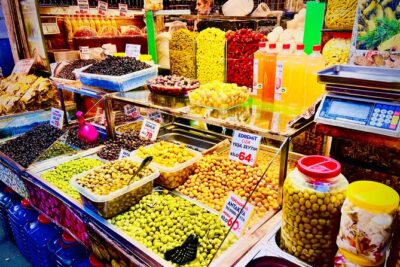
Istanbul Guided Street Food Tour Around European and Asian Sides
Read our review →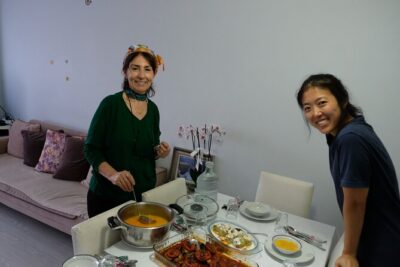
Private Turkish Cuisine Cooking Class with Local Moms
Read our review →Browse the lists this tour appears in