
Reviewed · DAY TRIPS
Gallipoli Full-Day Tour from Istanbul
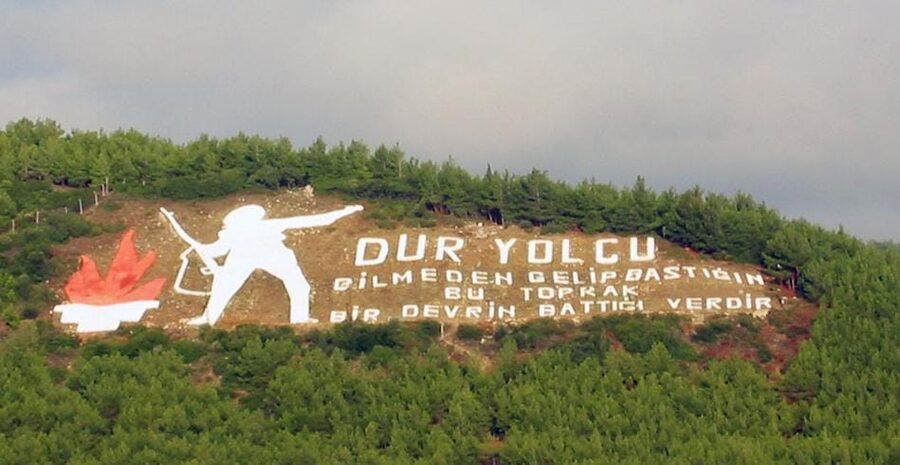
Gallipoli rewards a long day. This 18-hour trip takes you from Istanbul to the Anzac landing beaches, cemeteries, trenches, and memorials of the 1915 campaign, with lunch in Eceabat and an English-speaking guide throughout. I like the carefully chosen stops, especially Lone Pine, Beach Cemetery, and Johnston’s Jolly. I also like that the tour explains the Turkish and Allied sides together. The main drawback is clear: five hours each way by road makes this a demanding day.
The guide can make or break a battlefield visit. Burak received especially strong praise for his clear, thoughtful explanations, while guides such as Charlie, Burek, and Bulant were also singled out for bringing the campaign to life. If Gallipoli matters to your family story, or if you want more than a quick photo at a monument, this is a serious and worthwhile outing.
In This Review
- Key points before you book
- Why this is such a long day from Istanbul
- Crossing to Eceabat and starting with lunch
- Brighton Beach and the first hours of the Anzac campaign
- Beach Cemetery and Private John Simpson Kirkpatrick
- Anzac Cove, Arı Burnu, and the dawn service site
- The memorials that connect personal loss with national memory
- The Artillery Road walk and Shell Green Cemetery
- Lone Pine and Johnston’s Jolly
- The Nek and Chunuk Bair
- What the guide and drivers add to the day
- Is $176 good value?
- Who should book this Gallipoli tour?
- Should you book it?
- FAQ
- How long does the Gallipoli tour from Istanbul last?
- How long is the drive from Istanbul to Gallipoli?
- What time is hotel pickup?
- Is lunch included?
- Is dinner included?
- Which Gallipoli sites are visited?
- Is the tour conducted in English?
- What should I bring?
Key points before you book
- Five hours each way: Expect roughly ten hours on the road, plus the sightseeing and meal stops.
- The most important Anzac sites: The route includes Brighton Beach, Beach Cemetery, Anzac Cove, Arı Burnu Cemetery, Lone Pine, Johnston’s Jolly, The Nek, and Chunuk Bair.
- A balanced account: The tour covers Australian, New Zealand, Allied, and Turkish experiences of the campaign.
- Lunch is included: You eat at a local restaurant in Eceabat, but drinks and dinner cost extra.
- Walking matters: Comfortable shoes are essential, and an optional walk along the Artillery Road adds more time on foot.
- Best for history-minded visitors: The day suits people willing to trade comfort and spare time for a meaningful visit to Gallipoli.
Why this is such a long day from Istanbul
The distance is the first thing to understand. Pickup begins between about 6:00 and 7:00 in Istanbul, depending on your hotel area, with a later 7:15 pickup listed for the Ataturk Airport area. You then spend about five hours in a van or air-conditioned vehicle before reaching Eceabat and the Gallipoli Peninsula.
That road time is not a minor detail. You may leave Istanbul before breakfast, reach Eceabat around midday, tour the peninsula through the afternoon, and begin the return journey at about 6:00 PM. Dinner is scheduled during the return trip, but it is not included in the $176 price.
I would not recommend this as a relaxed day out. It is better suited to someone who has limited time in Turkey, wants to see Gallipoli from Istanbul, and accepts that the visit will fill nearly the entire day. Several people found the journey completely worthwhile, while one practical suggestion was to spend a night in Eceabat instead. That is good advice if you have the time.
The pickup system is useful, though you need to choose from the listed hotels and meeting points. Coverage includes Sultanahmet, Beyazıt, Sirkeci, Laleli, Aksaray, Taksim, Beşiktaş, Beyoğlu, Şişli, Ortaköy, Bebek, and several named hotels near central Istanbul. Confirm your pickup point carefully, since the early morning schedule changes by neighborhood.
More Day Trips in Istanbul
- From Istanbul: Sapanca and Masukiye Day Trip with Lunch
★ 4.0 · 1,036 reviews - Istanbul: Best of The City Full-Day Tour with Transfers
★ 4.6 · 616 reviews - Istanbul to Gallipoli Full Day Tour with Lunch and Transfers
★ 5.0 · 567 reviews
Crossing to Eceabat and starting with lunch
The route takes you across the Dardanelles toward Eceabat, a small town on the European side of Turkey near the Gallipoli battlefields. Lunch is included at a local restaurant, which gives you a proper break before the afternoon visits begin.
Do not expect lunch to be the main event. Its value is practical: you can eat, regroup, and prepare for several hours of memorials and battlefield sites. Drinks are not included, so carry some Turkish lira or another accepted form of payment if you want something beyond the included meal.
The crossing and road journey also help explain why Gallipoli became such a significant military target. The Dardanelles connected the Aegean Sea to the Sea of Marmara, making control of this waterway central to the Allied plan. A good guide will connect the geography to the decisions made during the campaign, rather than treating each stop as an isolated monument.
Brighton Beach and the first hours of the Anzac campaign
The afternoon begins around the Anzac battle zone, including Brighton Beach. This was the first intended landing site for Australian and New Zealand troops, though the actual landings unfolded elsewhere along the coast.
This stop is useful because it sets up the campaign before you reach the more familiar names. Gallipoli was not simply a series of famous cemeteries. It was a failed attempt to force a route through the Dardanelles and reach Constantinople, now Istanbul, and the beaches help you picture how exposed the landing operation was.
You will hear more than military dates here. The strongest guiding style links the orders, terrain, confusion, and human cost. The guide’s job is especially important because the beaches themselves can look quiet and ordinary. Without explanation, you might see only a shoreline. With context, the location becomes the opening scene of a campaign that shaped Australian, New Zealand, and Turkish national memory.
Beach Cemetery and Private John Simpson Kirkpatrick
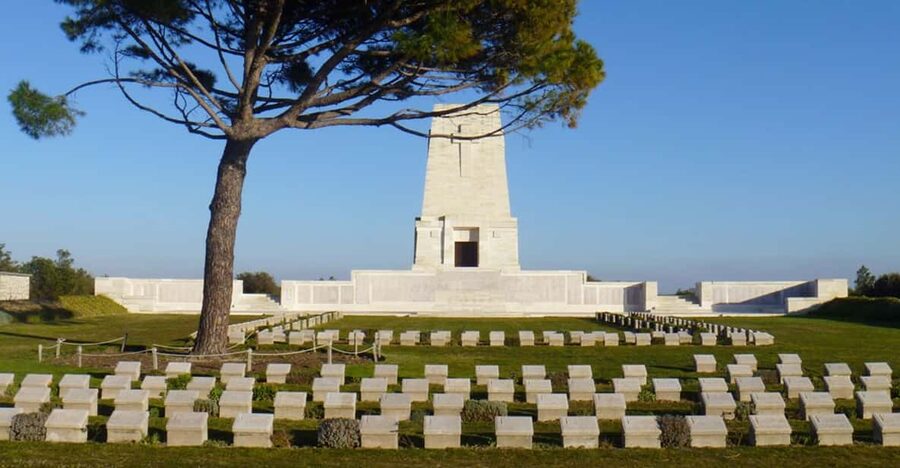
Beach Cemetery is one of the most emotionally powerful stops. It contains the grave of Private John Simpson Kirkpatrick, often remembered as the soldier who carried wounded men using a donkey during the Anzac campaign.
The cemetery is also a good place to slow down. You are not just checking another monument off a list. The graves bring the scale of the campaign down to individual names, ages, and lives. The setting near the coast makes the stop especially affecting.
I appreciate that the route includes several cemeteries rather than only grand memorials. The monuments tell the public story, while the cemeteries make the cost personal. If you have a family connection to Gallipoli, allow yourself time to take in the place quietly, even though the schedule later becomes fairly tight.
A completely different kind of day out:
- Istanbul: Bosphorus Dinner Cruise & Show with Private Table
★ 4.8 · 44,561 reviews - Istanbul: Daytime or Sunset Sightseeing Cruise & Audio Guide
★ 4.8 · 14,430 reviews - Istanbul: Bosphorus Dinner Cruise with Turkish Night Show
★ 4.8 · 10,127 reviews - Best of Istanbul 1, 2 or 3-Day Private Guided Istanbul Tour
★ 5.0 · 8,922 reviews
Anzac Cove, Arı Burnu, and the dawn service site
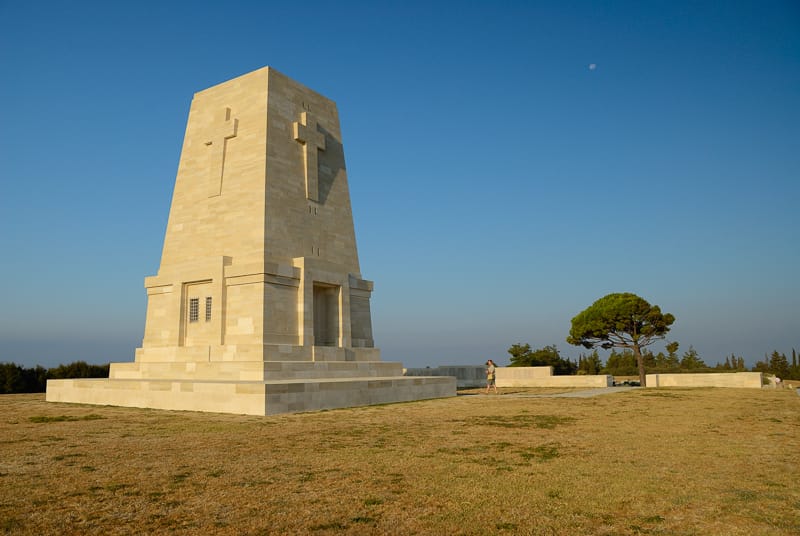
Anzac Cove is the name most people associate with the campaign. The tour visits the cove and the Arı Burnu Cemetery, then continues to the Anzac Commemorative Site at North Beach.
The commemorative site lies below the Sphinx, a distinctive rock formation associated with the Anzac area. It is also where the dawn service is held on Anzac Day. Even outside the annual ceremony, the site carries strong meaning for Australians and New Zealanders who come to remember relatives or understand the origins of Anzac identity.
You will likely spend less time here than you might expect on a private visit. That is one of the tour’s tradeoffs. The advantage is that you see the major places in one organized sweep. The disadvantage is that the schedule cannot give every site the same amount of quiet time.
Guides who explain both sides make this part more valuable. The campaign is not presented only as an Anzac story. Turkish forces defended the peninsula at enormous cost too, and the most thoughtful interpretation recognizes the losses and courage on both sides.
The memorials that connect personal loss with national memory
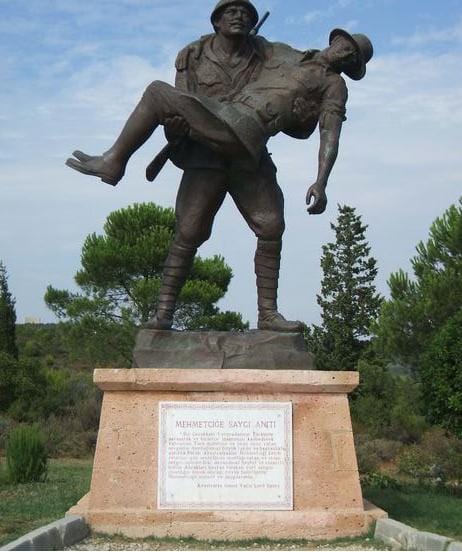
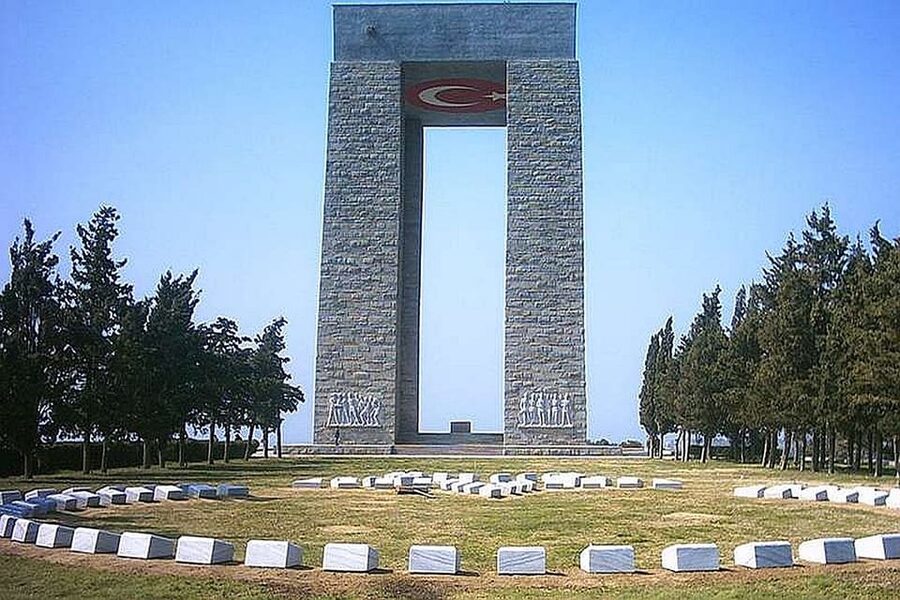
The route includes the Mehmetçik Monument, which represents the Turkish experience of the campaign. Seeing it alongside the Anzac sites helps prevent a one-sided visit.
This balance is one of the tour’s strongest qualities. You can learn why Gallipoli became central to the national memory of Australia and New Zealand, while also understanding the Turkish defense and sacrifice. The campaign is often simplified in school lessons or popular accounts, so a guide who adds less familiar details can make the day more useful.
The memorials are spread over a broad area, and the vehicle saves you from working out the route yourself. You will not need to navigate between remote sites or arrange separate entrance tickets. All entrance fees are included, which makes the price easier to judge.
The Artillery Road walk and Shell Green Cemetery
An optional walk along the Artillery Road can take you from the shoreline toward Lone Pine, passing Shell Green Cemetery. This is the part to consider if you want more than a vehicle-based tour.
Walking gives the terrain more meaning. Distances, slopes, and the closeness of the positions become easier to understand when you move through the area at ground level. It also gives you a better sense of how difficult communication and supply must have been during the fighting.
The option comes with a practical warning. The day is already long, and the walk adds physical effort after the early start and road journey. Comfortable shoes are not just a suggestion. If you have limited mobility, ask the guide exactly how much walking is planned before joining this part.
Shell Green Cemetery has a particular connection to the Australian side of the campaign. One person on a recent visit came specifically because a great-grandfather was buried there. If you have a family name to find, bring the details with you and tell the guide early in the day.
Lone Pine and Johnston’s Jolly
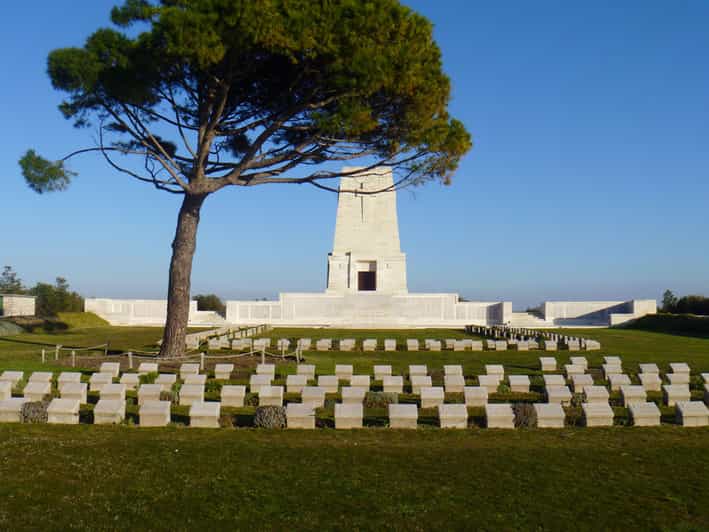
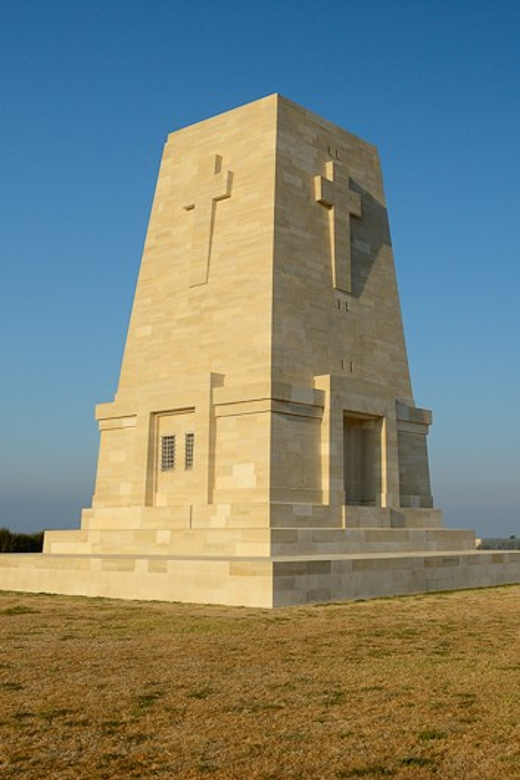
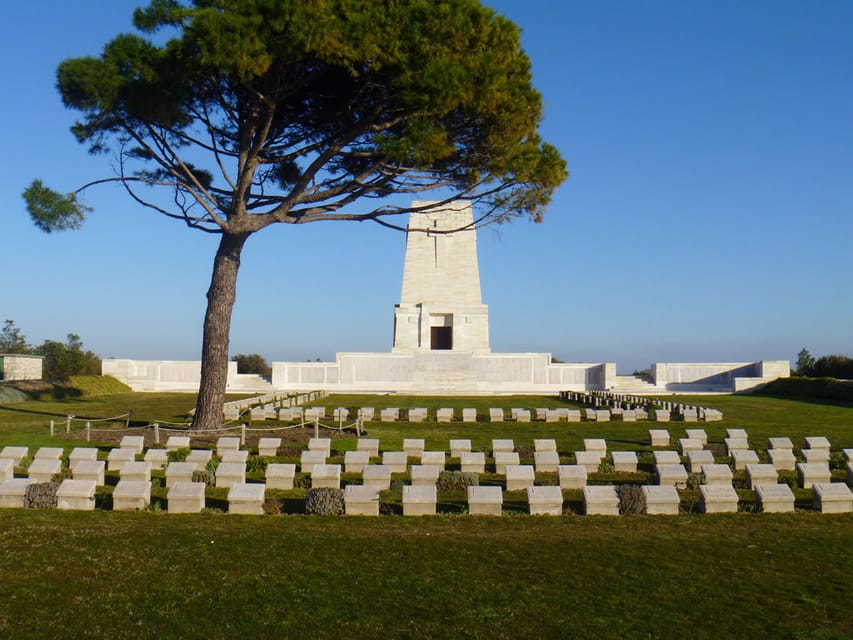
Lone Pine is the main Australian cemetery and memorial area on the peninsula. It is one of the places where the Australian story of Gallipoli feels most concentrated, with remembrance, battlefield geography, and personal loss brought together.
Johnston’s Jolly offers a different kind of understanding. Here, Turkish and Allied trenches were reportedly as close as 30 feet apart. That short distance changes the way you picture the fighting. The campaign was not always fought across wide open ground. In places, opposing positions were dangerously near each other.
The site also includes trenches and tunnels, making it one of the better stops for understanding battlefield conditions. You may find the visit more vivid than a standard monument stop because the surviving features show how close and confined the positions were.
This is where the guide’s skill matters most. A list of dates will not explain what it meant to hold ground only a few steps from the opposing force. Burak was praised for offering documented details beyond the usual school version of the campaign, which is exactly the kind of added context that makes Johnston’s Jolly worthwhile.
The Nek and Chunuk Bair
The Nek Cemetery is another major stop on the route. The Nek is remembered for the disastrous attack by Australian troops during the August 1915 offensive, and the location is essential for understanding the terrible cost of repeated assaults on heavily defended positions.
Chunuk Bair is tied to the New Zealand troops’ epic stand on August 8, 1915. For New Zealand visitors, this can be one of the most meaningful parts of the afternoon. It also shows that the Anzac campaign was not a single event on one beach, but a series of operations across difficult ground.
By this point, you may feel the effects of the early start and the packed schedule. Some parts can feel rushed, especially if the guide gives long explanations at one stop and must then keep the group moving. One sensible improvement would be more background information while driving, leaving extra minutes at the memorials themselves.
What the guide and drivers add to the day
The strongest part of this experience is the human explanation. Burak is repeatedly praised for his clear and engaging account, and Charlie, Burek, and Bulant also received warm comments for their command of the subject and respectful manner.
You should expect an English-speaking guide, but guiding styles can vary. The best approach is not theatrical. It is calm, accurate, and willing to discuss Turkish and Allied experiences together. This is a place where tone matters as much as facts.
The drivers also affect the experience because the road portion is so long. Most feedback describes the drivers as punctual and capable, but one account found the driving fast and the ride rough. That is worth keeping in mind if you are sensitive to motion or dislike long vehicle journeys.
The pickup and drop-off service is still a major convenience. You do not need to arrange a separate connection to Gallipoli, find the cemeteries alone, or manage the return to Istanbul after a tiring afternoon.
Is $176 good value?
At $176 per person, the tour is not cheap, but the price includes round-trip transport from Istanbul, lunch, an English-speaking guide, the Gallipoli tour, and entrance fees. The vehicle transfer is the biggest part of what you are paying for. Organizing the same day independently would require transport planning, a guide or detailed route research, and a way to connect the widely scattered sites.
The value is strongest if you have only one free day and want the main Gallipoli locations covered efficiently. It is weaker if you dislike long bus rides or can spare a night near Eceabat. An overnight stay would give you more time and a less punishing schedule, though it would require separate accommodation and transport planning.
Dinner and drinks are extra. Bring identification or a passport, since the booking requires the names and passport numbers of everyone in your group. The tour is not suitable for wheelchair users or people with diabetes, and the walking sections may not suit anyone who struggles with uneven or extended walks.
Who should book this Gallipoli tour?
I would choose this tour if you are staying in Istanbul, have a strong interest in World War I, or have Australian, New Zealand, or Turkish family connections. It is also a good fit if you want a guide to explain the sites rather than simply photograph monuments.
I would think twice if your schedule is already packed or if you want a gentle day outside the city. Ten hours of road travel is a serious commitment. You may also prefer a longer Gallipoli stay if you want time for quiet reflection at every cemetery.
The 4.8 rating from 47 bookings reflects a consistently strong experience, especially for the guides and the emotional weight of the visit. The recurring caution is not about the sites. It is the sheer length of the day, occasional rushing, and the possibility of a fast ride.
Should you book it?
Book this tour if seeing Gallipoli is important and Istanbul is your base. You will cover the beaches, cemeteries, trenches, memorials, and major Anzac sites in one organized day, with a guide who can explain the campaign from both sides.
Skip it if you need comfort, free time, or a slow pace. For everyone else, the $176 cost is reasonable for the transport, lunch, guiding, and access to a remote collection of sites. It is a big day, but Gallipoli is not a place to visit casually. The long road is part of the bargain.
FAQ
How long does the Gallipoli tour from Istanbul last?
The tour lasts approximately 18 hours, including the road journey, sightseeing, meals, and breaks.
How long is the drive from Istanbul to Gallipoli?
The listed itinerary allows about five hours each way between Istanbul and the Gallipoli area.
What time is hotel pickup?
Pickup is generally between 6:00 and 6:30 from Taksim, Beşiktaş, Beyoğlu, Şişli, Ortaköy, and Bebek; between 6:30 and 7:00 from Sultanahmet, Beyazıt, Sirkeci, Laleli, and Aksaray; and at 7:15 from the Ataturk Airport area.
Is lunch included?
Yes. Lunch at a local restaurant in Eceabat is included. Drinks during lunch are not included.
Is dinner included?
No. The return journey includes a dinner stop, but you pay for dinner yourself.
Which Gallipoli sites are visited?
The route includes Brighton Beach, Beach Cemetery, Anzac Cove, Arı Burnu Cemetery, the Mehmetçik Monument, Johnston’s Jolly, The Nek Cemetery, Lone Pine, Shell Green Cemetery as part of the optional walk, and Chunuk Bair.
Is the tour conducted in English?
Yes. The tour includes a live English-speaking guide.
What should I bring?
Bring your passport or ID card and comfortable shoes. You must also provide the names and passport numbers of everyone in your group when booking.
Just added in Istanbul
- Private Tour: Istanbul’s Ottoman Experience Including Topkapi Palace and Blue Mosque★ 4.5 · 16 reviews
- Private istanbul tour with transportation★ 5.0 · 36 reviews
- Private Customizable Istanbul Day Tour with Licensed Guide★ 5.0 · 64 reviews
- IstanbulBasilicaCistern/fastEntranceEnglish/Spanish (not tickets)★ 4.0 · 184 reviews
- Private Old City Guided Tour★ 5.0 · 129 reviews
- Private Princes’ Islands Tour★ 5.0 · 56 reviews
- Private Bosphorus Cruise and Egyptian Bazaar with Motor Yacht★ 4.0 · 24 reviews
- Istanbul Private Tour Designed for Layover Flight, Transfer incl.★ 5.0 · 164 reviews
Day Trips, compared.
Full Day Cappadocia Red and Green Combined Day Tour
Read our review →
Ephesus Temple of Artemis and House of Mary Private Half Day Tour
Read our review →


Full-Day Tour of Pamukkale from Antalya with Lunch
Read our review →
Browse the lists this tour appears in