
Reviewed · ANCIENT SITES AND RUINS
Pamukkale and Hierapolis Full-Day Guided Tour
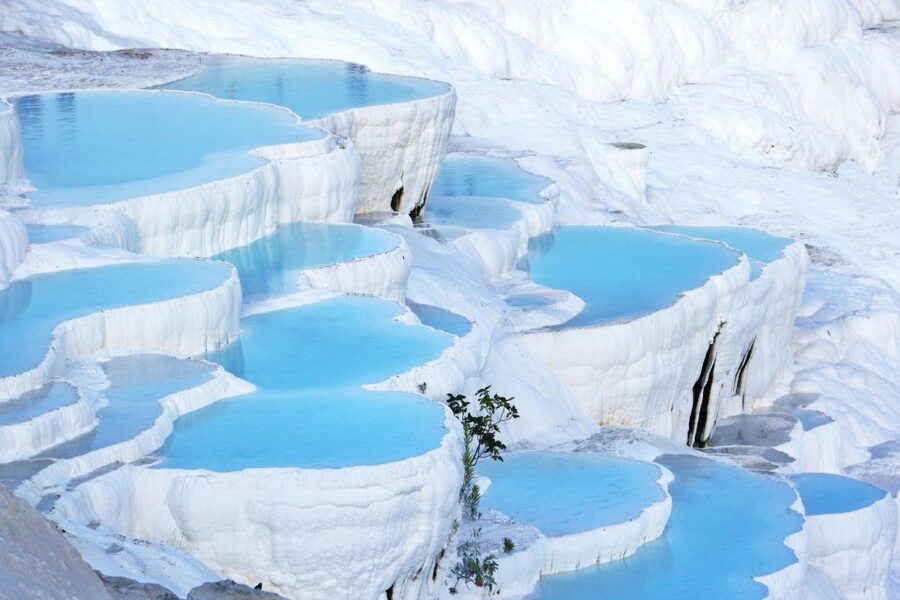
White stone, warm water, ancient ruins: a fine day. This seven-hour tour brings Pamukkale’s white travertines and the ruins of Hierapolis together, with hotel pickup, entrance tickets, and an English-speaking guide included. I like the easy transport and the chance to understand the Roman spa city instead of simply taking photographs. The main concern is value: at $141, the tour costs much more than visiting independently, and Cleopatra Pool may require an extra fee.
The best guides make the difference. Elvan, Ahmed, and other guides have been praised for friendly, clear explanations and helpful service. Bring comfortable shoes and a swimsuit, but leave large luggage behind. Also ask exactly what the day includes before booking, since the Cleopatra Pool has been under renovation and some departures may include a buffet meal or a textile outlet stop.
In This Review
- Key points to know before booking
- Why Pamukkale and Hierapolis belong together
- Walking across Pamukkale’s white travertines
- Entering Hierapolis through the Domitian Gate
- The hot springs and Cleopatra Pool question
- What the guide adds to a self-guided visit
- The Pamukkale Museum and a quieter change of pace
- Food stops and the textile outlet warning
- Transport, timing, and what to pack
- Who gets the most from this seven-hour tour?
- Is the $141 price fair?
- Should you book Pamukkale and Hierapolis?
- FAQ
- Where does the tour start?
- How long does the tour last?
- What language is the guided tour in?
- Are entrance tickets included?
- Can I swim in the thermal waters?
- Is hotel transportation included?
- Can I bring luggage?
Key points to know before booking
- Pamukkale is more than a photo stop: The bright travertines are the result of mineral-rich thermal water flowing over the hillside.
- Hierapolis gives the day historical weight: You visit the Domitian Gate, colonnaded street, cathedral, museum, and other remains of the ancient spa city.
- Hotel pickup is limited to Pamukkale: This tour does not collect you from another city.
- The hot-spring experience may cost extra: Entrance to Cleopatra Pool was reported at $8, with a further $1 locker charge, and the pool has also been under renovation.
- Guide quality is a major strength: Elvan and Ahmed have both received praise for friendly, useful explanations.
- Seven hours is enough for the main sights: You can see Pamukkale and Hierapolis in one day, but the schedule may feel less flexible than going alone.
Why Pamukkale and Hierapolis belong together
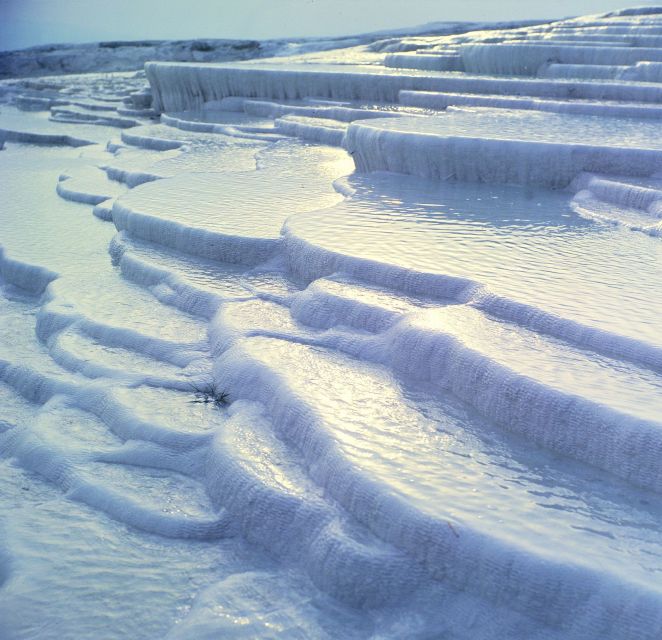
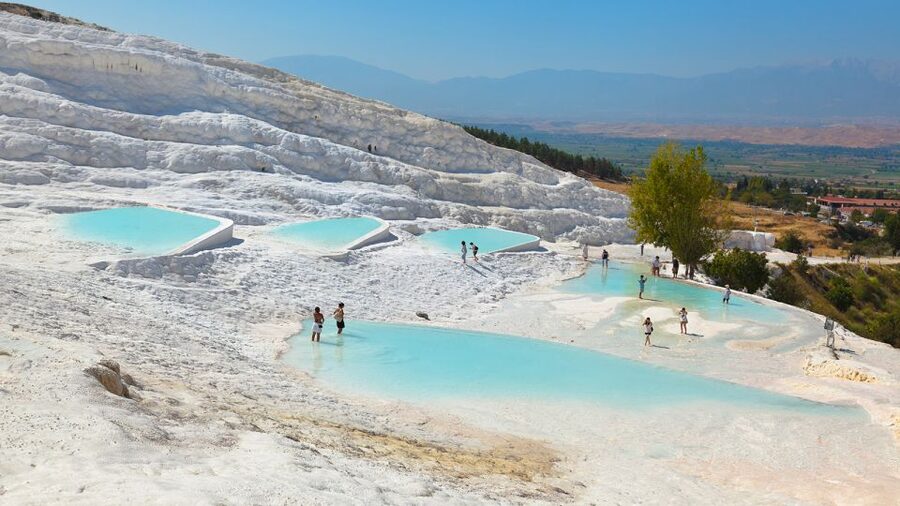
Pamukkale is the natural star, with terraces that look like frozen snow spilling down a hillside. They are made from calcium deposits left by hot spring water. From a distance, the formations seem almost unreal, but the site becomes more interesting when you understand that the same water created both the white terraces and the ancient spa settlement above them.
That settlement was Hierapolis, known in antiquity as the Sacred City. Its hot springs drew people seeking treatment and rest, and the city grew around that reputation. The springs were also linked with Pluto, the god of the underworld, because their vapors were associated with a mysterious passage into the world below.
I like this combination because it gives you two different kinds of sightseeing in one place. Pamukkale is about light, minerals, water, and wide views. Hierapolis is about streets, gates, religious buildings, and the daily life of a city that depended on its springs.
The tour lasts seven hours, which is a useful middle ground. You are not trying to squeeze the site into a rushed morning, but you also are not committing to a full day of wandering without a plan. Your guide helps connect the ruins to the setting, while included transportation removes the need to arrange local transfers.
More Ancient Sites and Ruins in Turkey:
- FOR CRUISERS: Skip The Lines PRIVATE EPHESUS TOUR &On Time Return
★ 5.0 · 8,527 reviews - Top Choice For Cruisers: Ephesus, Mary’s House WITH TICKETS+LUNCH
★ 5.0 · 7,233 reviews - PRIVATE EPHESUS TOUR FOR CRUISERS: On-time Return and Skip-Line
★ 5.0 · 5,807 reviews
Walking across Pamukkale’s white travertines
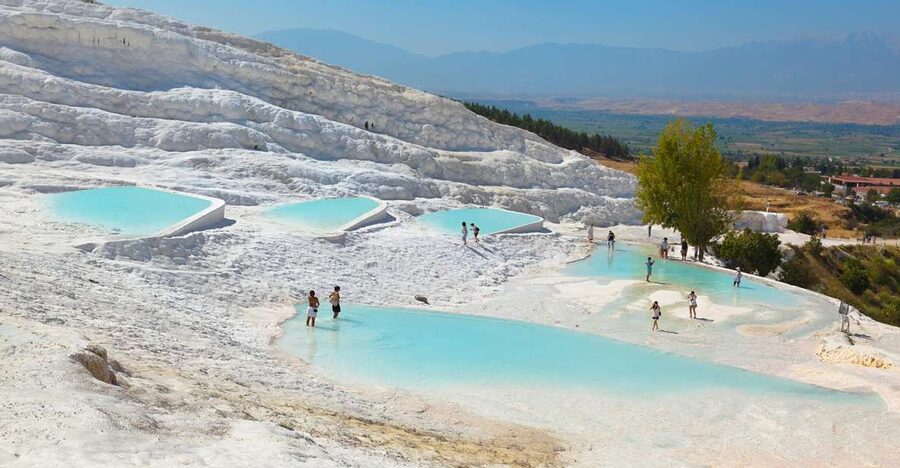
The travertines are the part of Pamukkale most people picture first. White mineral terraces step down the slope, formed as warm water moved across the rock and left deposits behind. Their appearance changes with the season and water flow, so do not expect every terrace to look equally full at every visit.
You should wear comfortable shoes for the approach and for the wider archaeological site. The ground around a major outdoor ruin can be tiring, and the day includes more than a quick glance from a viewpoint. A swimsuit is also useful if you plan to enter the thermal water.
The terraces are sensitive, so access is controlled. You should follow the guide’s instructions and use only the areas open for walking or bathing. The attraction is not simply the chance to stand on white stone. It is the contrast between the pale mineral formations, the warm water, and the long views over the surrounding area.
A practical point matters here: water levels can vary. One person who visited in December noted that the amount of water on the travertines depends on the month. That means photographs from another season may not match what you see on the day.
Give yourself time to look rather than treating the terraces as a quick backdrop. The white surface is dramatic, but the site rewards slower attention. Watch the water channels, note where the mineral crust thickens, and look back toward the ancient city above.
Entering Hierapolis through the Domitian Gate
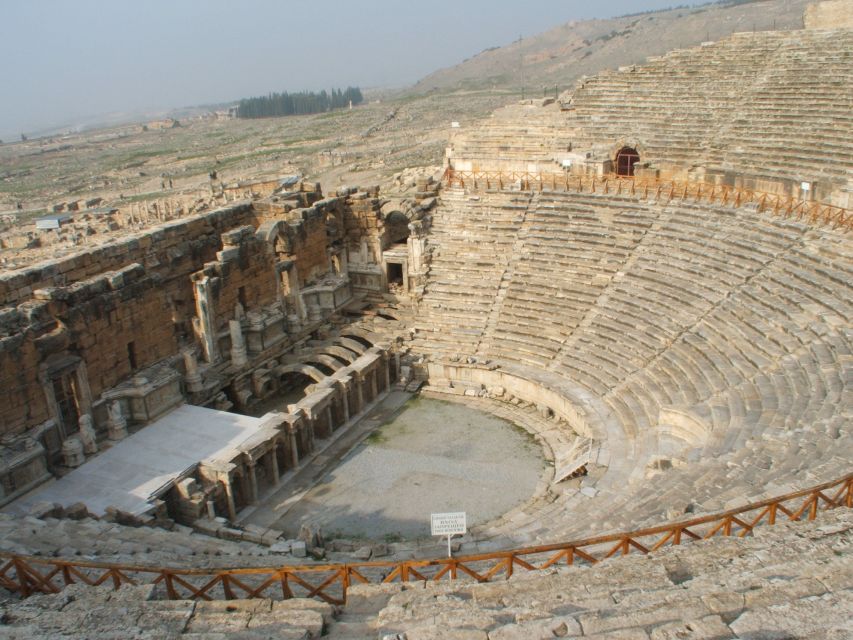
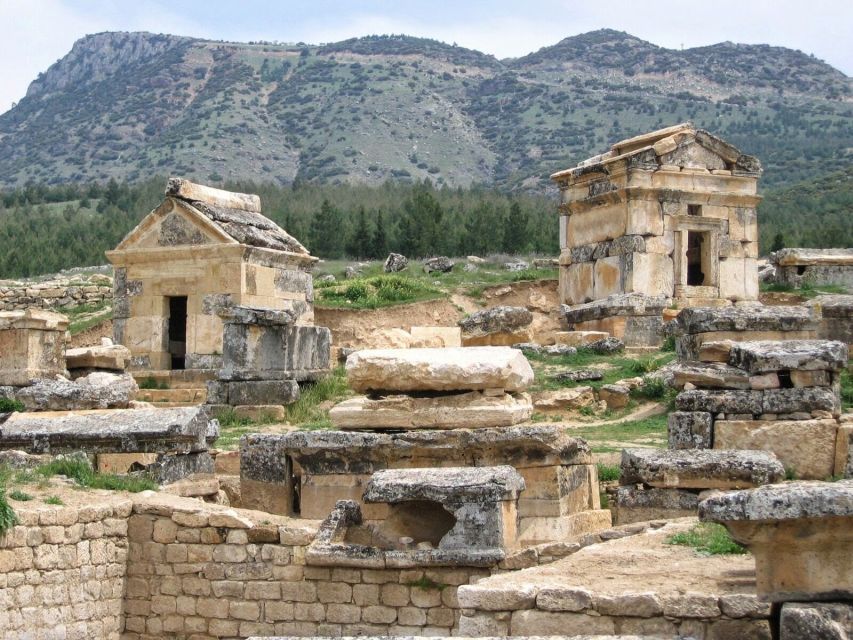
Hierapolis is not a small ruin beside Pamukkale. It was an important ancient spa city, and its remains spread across the plateau. The Domitian Gate provides a formal entrance and helps you picture the city as an organized Roman settlement rather than a collection of scattered stones.
From there, the colonnaded street gives the visit structure. Columns and road lines show how people moved through the city, while the open setting makes it easier to imagine shops, public buildings, and processions along the main route.
The cathedral adds another layer to the site. Its presence reflects the later religious life of Hierapolis, after the city’s earlier Roman character. A guide can help you understand that the ruins represent more than one period and one belief system.
This is where a strong guide earns the tour price. Ahmed has been praised for explaining the area’s history in a way that made the ruins easier to understand. Elvan has also been singled out for friendly, useful commentary. You should still ask questions as you walk. A guided visit works best when you treat it as a conversation, not a lecture.
The ruins can be hot and exposed, depending on the season. Comfortable shoes are listed as essential, and that advice is sound. You are likely to spend much of the day outdoors, so practical clothing and protection from the sun make the visit easier, although the tour information specifically requires comfortable shoes rather than listing additional equipment.
The hot springs and Cleopatra Pool question
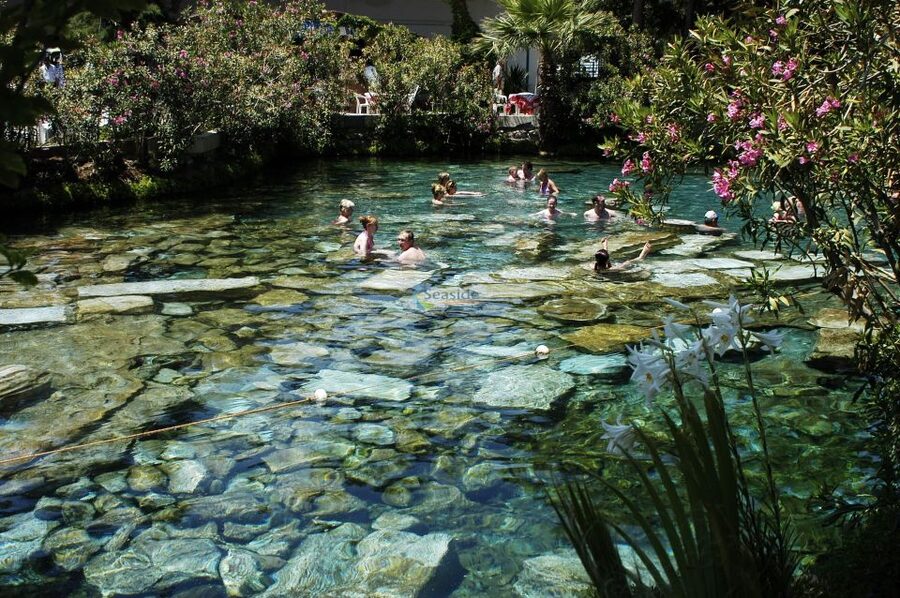
The thermal water is central to Hierapolis. Ancient visitors came because they believed the springs had healing powers, and those waters helped turn the city into a spa resort. Today, the appeal is more direct: warm water offers a pleasant pause after walking through the ruins.
The important catch is that not every thermal-water experience is necessarily covered by the tour price. Entrance to Cleopatra Pool was reported as an additional $8, with a $1 locker fee. Since the main tour includes entrance tickets but the pool charge may be separate, you should ask which admissions are included before you commit.
There is also a current-condition issue. Cleopatra Pool was under renovation during one visit, so you may not be able to use it even if bathing is advertised as part of the day. The hot springs remain part of the area’s identity, but do not assume that every pool will be open or included.
Bring a swimsuit if you want the option to bathe. A towel is not listed among the required items, so confirm what is available before departure rather than counting on the tour provider to supply one.
If the pool is closed, the day still has the travertines and Hierapolis. But if soaking is your main reason for booking, this is the point where you need the clearest confirmation. A ruined city and a natural wonder can carry the day, yet they are not a substitute for a planned swim if that is your top priority.
A few more options to weigh up in Turkey
- Pamukkale: Hot Air Balloon Flight with Flight Certificate
★ 4.5 · 277 reviews - From Selcuk/Kusadasi/Izmir: Pamukkale Full-Day Tour
★ 4.6 · 226 reviews - Pamukkale Hot Air Balloon w/Flight Certificates,Champagne Toast & Hotel Transfer
★ 4.5 · 207 reviews - Antalya: Full-Day Pamukkale Tour
★ 4.5 · 133 reviews
What the guide adds to a self-guided visit
You can visit Pamukkale and Hierapolis on your own for much less than $141. One estimate put an independent visit at under $15 per person, though that figure does not necessarily include every admission, transport cost, or the convenience of hotel pickup.
So the tour’s value depends on what you want to buy. You are paying for an expert local guide, transportation, included entrance tickets, and a fixed plan. If you want historical context and do not want to work out local logistics, that package may feel worthwhile.
If you are comfortable researching the ruins, arranging transport, and moving at your own pace, the price is harder to justify. Hierapolis is compact enough to see in several hours, and independent sightseeing gives you more control over how long you spend at the travertines, museum, or thermal pools.
The guide quality appears to be the strongest variable. Several guides have earned praise for being friendly, helpful, and clear. At the same time, one poor assessment described the explanations as too thin for the price. That difference matters. A tour guide can turn a row of stones into a readable story, but the experience depends on the person leading your group.
The Pamukkale Museum and a quieter change of pace
The Pamukkale Museum offers a break from the outdoor walking and adds objects connected with the ancient site. It is not the headline attraction, but it helps place the ruins in context and gives you a closer look at what has been found in the area.
I like having a museum stop in a day dominated by bright stone and open sky. It slows the pace and gives your eyes a rest. It also helps you see Hierapolis as a lived-in city, not just a scenic ruin.
The museum visit is included in the stated program, along with the Domitian Gate, the colonnaded street, and the cathedral. The exact order can vary, so your guide may arrange the stops according to conditions and timing.
Food stops and the textile outlet warning
A simple buffet restaurant may be part of the day. One account described the buffet as basic but excellent, while another described a poor meal at a remote location. That is a wide difference, so keep your expectations modest and ask whether lunch is included before you book.
Drinks are not included. Bring money for beverages, especially if you are visiting during a warm period. The price also does not promise a particular menu or dining setting.
There is a second point worth checking. A departure has included a stop at a textile outlet after the main sights, with criticism that the stop felt like a sales pitch for towels and bags. It may not appear on every version of the tour, but you should ask directly if shopping stops are planned.
This matters because seven hours is not endless. A short, useful meal break is one thing. A sales stop that you did not expect is another, particularly when you have already paid a high tour price. Ask before departure so you know how much time is reserved for the actual archaeological site.
Transport, timing, and what to pack
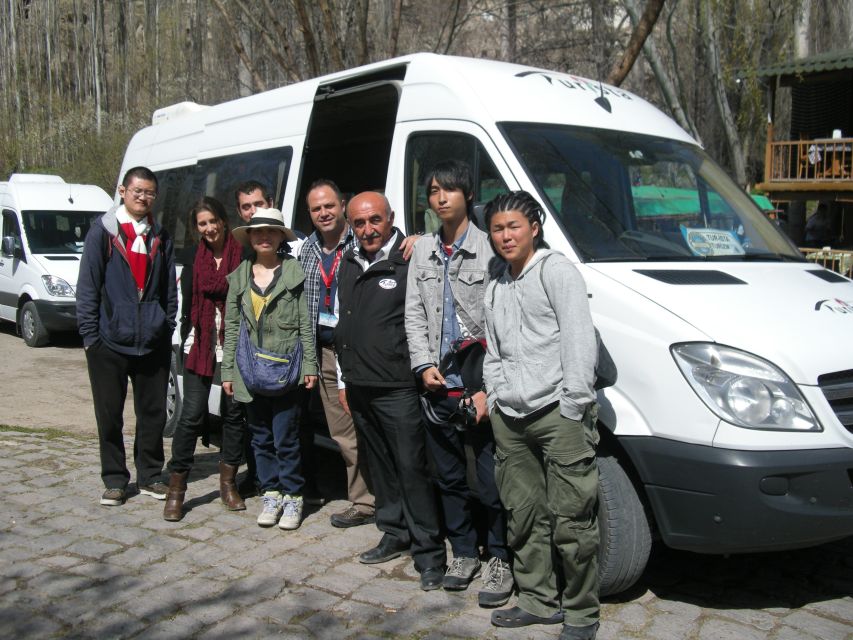
Pickup and drop-off at your hotel are included, but only in Pamukkale. This is not a transfer service from Denizli, Antalya, Izmir, or another city. If you are staying elsewhere, you need to arrange your own way to Pamukkale before the tour begins.
The seven-hour length includes the full day’s sightseeing and transport connected with the tour. Starting times vary, so check availability for the date you want. A fixed start can be helpful because it gives you a clear plan, but it also means you will have less freedom than on a self-guided visit.
Pack light. Large bags and luggage are not allowed, so leave suitcases at your hotel. Comfortable shoes are the one item specifically required, and a swimsuit is sensible if the thermal pools are open and available to you.
You should also carry enough money for drinks and possible pool or locker charges. Those costs are small beside the $141 tour price, but they can be annoying surprises when you arrive without cash or a clear understanding of what is included.
Who gets the most from this seven-hour tour?
This tour suits you if you want Pamukkale and Hierapolis explained in English without having to organize the day yourself. It is especially useful if hotel pickup in Pamukkale saves you a transport headache or if you prefer a guide at a large archaeological site.
It also works well for someone who wants a balanced day. You get nature, ancient ruins, a museum, and the possibility of thermal bathing. The schedule is long enough to cover the main sights without turning the visit into a quick photograph and departure.
I would hesitate if your main concern is the lowest possible price. Independent access can cost far less, and Hierapolis is manageable on your own if you are prepared to arrange transport and admissions.
I would also hesitate if you want complete control over every minute. Potential meal and shopping stops may reduce your time at the ruins, so ask for the precise plan. And if Cleopatra Pool is the central attraction for you, confirm its operating status and extra charges first.
Is the $141 price fair?
At $141 per person, this is a convenience and interpretation purchase, not a budget sightseeing deal. The price covers entrance tickets, hotel pickup and drop-off, and an English-speaking local guide. Those inclusions have real value, particularly when you do not want to navigate the area alone.
The price feels stronger when your guide is as helpful as Elvan or Ahmed, and weaker when explanations are brief or the day includes an unwanted shopping stop. The mixed score of 4.1 from 17 ratings reflects that split: the strongest praise focuses on the guides and transport, while the sharpest complaints focus on cost, food, and extra charges.
I would compare the tour with your own priorities. If you value a smooth day and useful historical explanation, the premium may be reasonable. If you mainly want to see the white terraces, take photographs, and walk through the ruins, self-guided entry may give you better value.
Should you book Pamukkale and Hierapolis?
Book it if you want hotel pickup in Pamukkale, an English-speaking guide, included main entrance tickets, and a clear seven-hour plan. The combination of travertines and Hierapolis is excellent, and a good guide can make the ancient spa city much easier to read.
Before paying, ask three direct questions: Is Cleopatra Pool open? Is its admission and locker fee included? Will the day include a buffet or textile outlet stop? Those answers will tell you whether the tour matches your idea of a relaxed cultural day.
I would choose this tour for convenience and historical context, not for the cheapest admission. If you are happy to pay for transport, guidance, and a planned route, it can be a rewarding day. If you want freedom, low cost, and no commercial stops, visit independently instead.
FAQ
Where does the tour start?
The tour starts from Pamukkale and includes pickup at your hotel there. Pickup from another city is not available.
How long does the tour last?
The tour lasts seven hours. Starting times vary, so you need to check availability for your chosen date.
What language is the guided tour in?
The live tour guide provides the experience in English.
Are entrance tickets included?
Entrance tickets are included for the tour. Cleopatra Pool may require a separate payment, reported as $8, with a possible $1 locker charge.
Can I swim in the thermal waters?
You can bring a swimsuit for the thermal waters, but Cleopatra Pool was under renovation during one visit. Confirm the pool’s current condition and access before booking.
Is hotel transportation included?
Yes. Hotel pickup and drop-off are included, but only for hotels in Pamukkale.
Can I bring luggage?
No. Luggage and large bags are not allowed. Bring comfortable shoes and keep your belongings to a small day bag.
Just added in Turkey
- Private Tour: Istanbul’s Ottoman Experience Including Topkapi Palace and Blue Mosque★ 4.5 · 16 reviews
- Private istanbul tour with transportation★ 5.0 · 36 reviews
- Private Customizable Istanbul Day Tour with Licensed Guide★ 5.0 · 64 reviews
- IstanbulBasilicaCistern/fastEntranceEnglish/Spanish (not tickets)★ 4.0 · 184 reviews
- Private Old City Guided Tour★ 5.0 · 129 reviews
- Private Princes’ Islands Tour★ 5.0 · 56 reviews
- Private Bosphorus Cruise and Egyptian Bazaar with Motor Yacht★ 4.0 · 24 reviews
- Istanbul Private Tour Designed for Layover Flight, Transfer incl.★ 5.0 · 164 reviews
Ancient Sites and Ruins, compared.
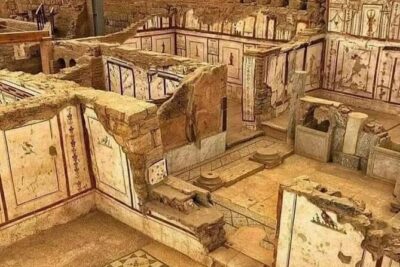
FOR CRUISERS: Skip The Lines PRIVATE EPHESUS TOUR &On Time Return
Read our review →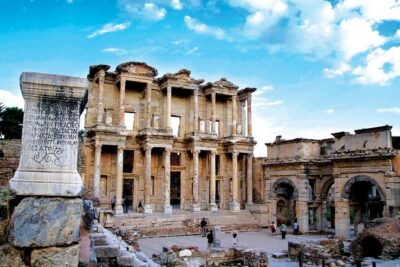
Top Choice For Cruisers: Ephesus, Mary’s House WITH TICKETS+LUNCH
Read our review →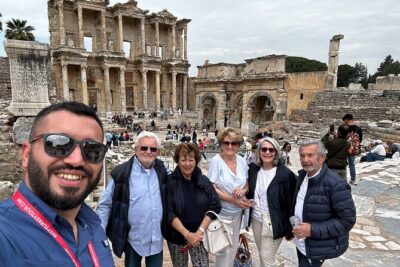
PRIVATE EPHESUS TOUR FOR CRUISERS: On-time Return and Skip-Line
Read our review →
PRIVATE NO HIDDEN FEES Ephesus, Mary’s House Guided Tour /GRP OPT
Read our review →
Pamukkale Hierapolis and Cleopatra’s Pool Tour with lunch from Antalya
Read our review →For Ship Guests:BEST SELLER EPHESUS PRIVATE TOUR & On Time Return
Read our review →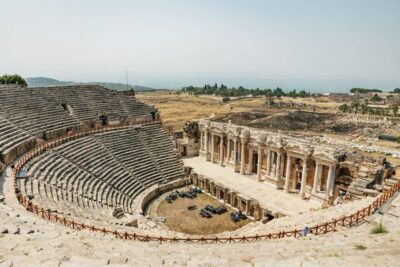
ALL INCLUDED: Ephesus Ruins, Mary’s House Tour incl ENTRY TICKETS
Read our review →Browse the lists this tour appears in