
Reviewed · SKIP-THE-LINE TICKETS
Skip-The-Line:1, 2 or 3 Days Private Istanbul Guided Tour
Istanbul rewards a well-planned first day. I like the private format, which lets your guide adjust the pace, and I like the sweep of the route, from Hagia Sophia and Topkapi Palace to the Bosphorus and Balat. The main caution is that tickets and most transport cost extra, and the word skip-the-line needs careful checking before you pay.
The tour costs $81 per person and can run from about 7 to 22 hours, depending on whether you choose one, two, or three days. That is a fair starting price for a private guide, but not the final cost for a full sightseeing day. Confirm hotel pickup, vehicle use, entrance tickets, and boat arrangements in writing.
In This Review
- Key points to know before you book
- What this Istanbul tour is really offering
- Sultanahmet Square and the Hippodrome set the stage
- Hagia Sophia and the Blue Mosque
- Beneath the city at the Basilica Cistern
- Topkapi Palace needs more than a quick look
- The Grand Bazaar and Spice Bazaar
- Taksim, Istiklal, and Galata
- Dolmabahce Palace and the late Ottoman court
- Süleymaniye Mosque and the Golden Horn
- Balat and Pierre Loti Hill
- How much walking and time should you expect?
- Pickup, meeting point, and extra costs
- Is $81 per person a good value?
- Who should book this private Istanbul experience?
- FAQ
- How long does the tour last?
- What is included in the price?
- Are attraction tickets included?
- Is hotel pickup included?
- Where does the tour begin?
- Does the tour include transportation between sights?
- Can I enter Galata Tower with the guide?
- When is Topkapi Palace closed?
- When is the Blue Mosque closed to sightseeing?
- Can I cancel for a full refund?
Key points to know before you book
- The Old City is covered in depth: Sultanahmet Square, the Hippodrome, Hagia Sophia, the Blue Mosque, Basilica Cistern, Topkapi Palace, and the Grand Bazaar form the core route.
- The two and three-day options add modern Istanbul: You can reach Taksim Square, Istiklal Avenue, Galata, Dolmabahce Palace, the Spice Bazaar, Süleymaniye Mosque, Balat, Pierre Loti Hill, and the Golden Horn.
- This is a private walking experience first: A vehicle can be selected in some options, but transport between sights is not generally included.
- Admission fees are separate: Hagia Sophia, Basilica Cistern, Topkapi Palace, Dolmabahce Palace, Galata Tower, and any Bosphorus cruise or boat service require extra payment.
- The guide can make a big difference: Strong guide assignments have included Cicek, Kemal Malgaz, Sema, Taner, Tunç, Ferhat, Mustafa, Gülşen, Korhan, Kubra, Songul, and Orkhut.
- Closing days affect the plan: Topkapi Palace is closed Tuesdays, the Grand Bazaar Sundays, Dolmabahce Palace Mondays, and the Blue Mosque until 2 p.m. on Fridays.
What this Istanbul tour is really offering
This experience is best understood as a private guide service built around Istanbul’s major sights. You are not buying an all-inclusive sightseeing package. The guide is included, while museum tickets, meals, and transportation are usually not.
That distinction matters because the route includes some of Turkey’s most visited places. Entrance costs can add up quickly, especially if you visit Topkapi Palace, the Basilica Cistern, Dolmabahce Palace, and Galata Tower. A Bosphorus ride may also require its own payment.
The private format is the strongest part of the deal. You can ask for more Ottoman history, more Byzantine architecture, fewer shops, or a slower pace. A private guide can also alter the order of the stops when a mosque is closed for prayer or a palace is unavailable on its weekly closing day.
The tour is offered in English. Families with young children can request a kid-friendly guide, and the guide can adjust the pace for older people or anyone who has trouble walking. One successful two-day outing was adapted around a traveler with a bad knee, while another guide helped a family manage the heat by using a vehicle.
More Skip-the-Line Tickets in Istanbul
- Istanbul: Basilica Cistern Fast-Track Entry and Audio Guide
★ 4.6 · 7,521 reviews - Istanbul: Hagia Sophia Skip-the-Line Ticket & Museum Option
★ 3.7 · 4,958 reviews - Istanbul: Topkapi Palace & Harem Museum Ticket & Audio Guide
★ 4.1 · 3,977 reviews
Sultanahmet Square and the Hippodrome set the stage
The tour begins at the German Fountain in Sultanahmet, unless a central hotel or Galataport pickup has been arranged. This is a sensible meeting point because the square puts you within easy reach of Istanbul’s most important monuments.
Sultanahmet Square occupies the site of the ancient Hippodrome of Constantinople. It was once the social and political center of Byzantine life, where public events and chariot races drew enormous crowds. Today, much of the original structure is gone, but the open space still connects the city’s Roman, Byzantine, and Ottoman chapters.
The nearby Hippodrome was built in the fourth century and later expanded by Roman emperors. It could hold up to 100,000 spectators and once displayed statues, obelisks, and monuments brought from across the Roman Empire.
Look closely at the surviving monuments, especially the Serpent Column and the Obelisk of Theodosius. The visit is free, but do not expect a preserved stadium. Your guide’s explanation is what turns a modern square into a readable map of ancient Constantinople.
Plan on roughly 30 minutes at the square and another 30 minutes around the Hippodrome. These are easy stops, but they are mainly about orientation and context rather than a long indoor visit.
Hagia Sophia and the Blue Mosque
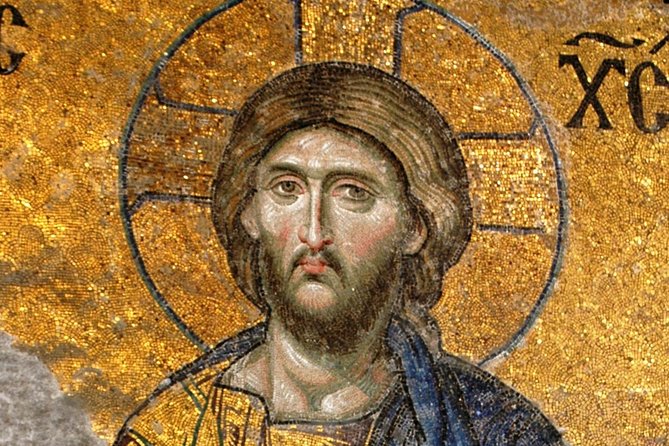
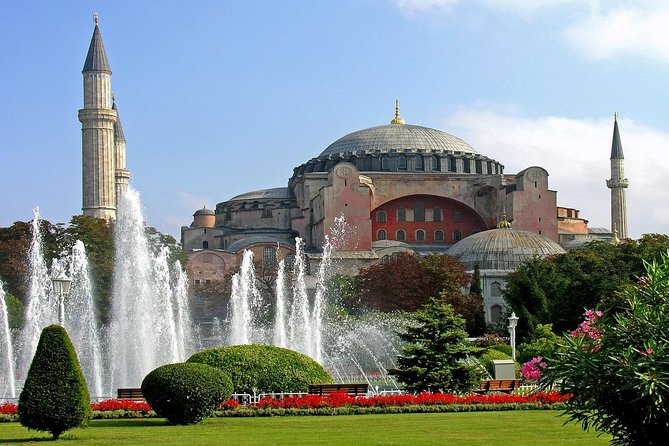
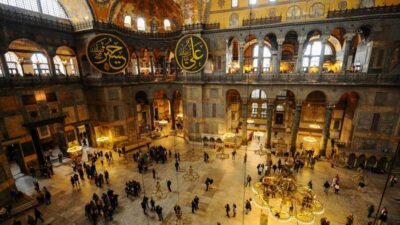
Hagia Sophia is usually the emotional center of a first visit to Istanbul. Built as a Byzantine cathedral in the sixth century, it later became an Ottoman mosque, a museum in 1935, and a mosque again in 2020.
The building’s changing role is part of its meaning. Your visit is not simply an architectural stop. It brings together Byzantine Christianity, Ottoman Islam, and modern Turkey in one complicated place.
Admission is not included. Hagia Sophia also closes to sightseeing during prayer times, so the exact visit can change during the day. Your guide may need to move this stop or explain the exterior first, then return later.
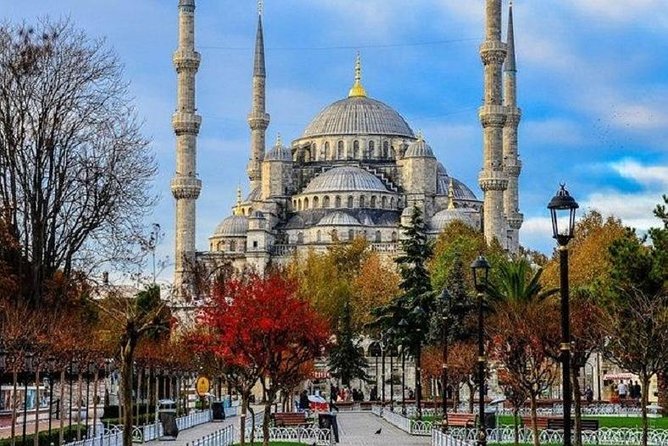
The Blue Mosque, officially the Sultan Ahmed Mosque, was built in the early seventeenth century. Its blue tile work, painted decoration, calligraphy, and six minarets make it one of Istanbul’s most recognizable buildings.
It remains an active place of worship, so modest clothing and respectful behavior are essential. The Blue Mosque is closed to sightseeing until 2 p.m. on Fridays, another reason not to treat the printed order as fixed.
The planned visit is about 30 minutes, but the quality of the stop depends on prayer schedules and crowd levels. The private format helps because your guide can explain what you are seeing without forcing you to keep up with a large group.
Beneath the city at the Basilica Cistern
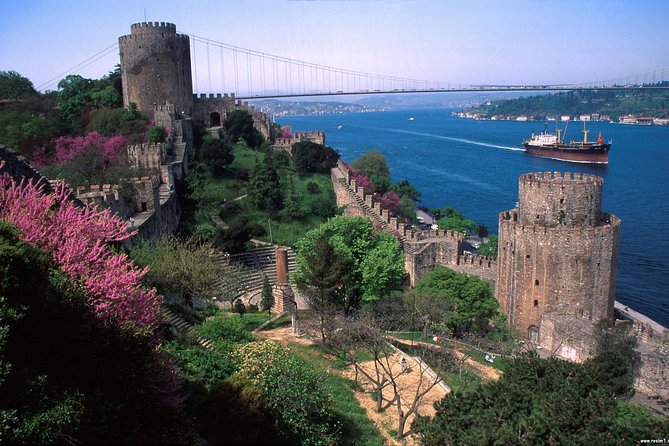
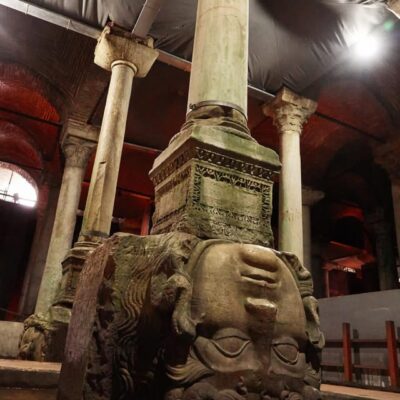
The Basilica Cistern takes you below the street into one of Justinian I’s great building projects. It was the largest underground cistern of Byzantine Constantinople and once supplied water to the city.
The name comes from a basilica that stood above it. That earlier structure is gone, but the cistern survives as a vast underground chamber supported by rows of columns.
Give yourself about an hour here. The cool, dim setting makes a welcome break from the sun and noise above ground. Your guide can help you understand how the cistern fit into the city’s water system and why such a large reservoir was needed.
Admission is extra. If you are watching your budget, this is one of the tickets to ask about before booking. If you have limited time, it is also one of the most atmospheric stops on the route.
A completely different kind of day out:
- Istanbul: Bosphorus Dinner Cruise & Show with Private Table
★ 4.8 · 44,561 reviews - Istanbul: Daytime or Sunset Sightseeing Cruise & Audio Guide
★ 4.8 · 14,430 reviews - Istanbul: Bosphorus Dinner Cruise with Turkish Night Show
★ 4.8 · 10,127 reviews - Best of Istanbul 1, 2 or 3-Day Private Guided Istanbul Tour
★ 5.0 · 8,922 reviews
Topkapi Palace needs more than a quick look
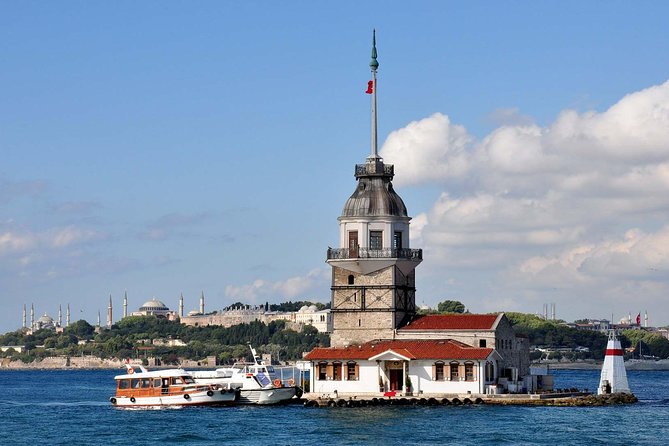
Topkapi Palace served as the Ottoman sultans’ main residence for about 400 years. It was also the empire’s administrative center during its strongest period.
The complex is made up of courtyards and separate buildings rather than one single palace hall. The Imperial Harem, Divan Council Hall, and Treasury are among the major areas, with the Treasury associated with prized objects such as the Spoonmaker’s Diamond.
The suggested visit lasts about two hours, which is a reasonable minimum. Topkapi is too large for a hurried walk-through, especially if you want to understand how court life, government, religion, and private family life operated in separate spaces.
Admission is not included, and the palace is closed on Tuesdays. Put Topkapi on another day if your tour begins Tuesday, or you may lose one of the most important stops in the Old City.
A private guide is useful here because the courtyards can otherwise feel like a sequence of attractive rooms without a clear story. Ask your guide to focus on the sections that interest you most, since seeing every corner can take much longer than two hours.
The Grand Bazaar and Spice Bazaar
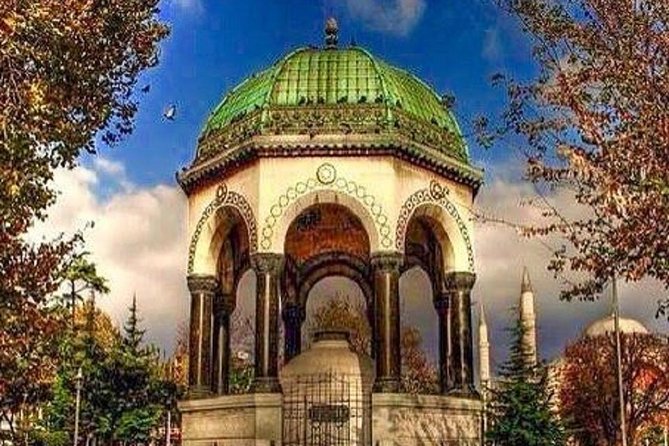
The Grand Bazaar is not just a shopping stop. With more than 61 streets and about 4,000 shops, it is a small city under a roof.
You will find jewelry, ceramics, spices, textiles, carpets, and plenty of friendly sales pitches. Two hours are scheduled here, which gives you time to browse without treating the market as a quick photo stop.
Shopping can be enjoyable when you set the rules. Tell your guide if you want to look only, compare prices, or search for a particular craft. Short introductions to local handicrafts may be part of the day, but you should be able to skip them if they do not interest you.
This is an area where clear communication matters. One unhappy experience involved too much time in expensive rug and imitation-brand shops, with cultural sights missed. Other outings included pleasant shopping guidance, but you should say plainly that sightseeing comes first if that is your priority.
The Grand Bazaar is closed Sundays. The Spice Bazaar, also called Mısır Çarşısı, is a separate market near the New Mosque. Built in 1664 and funded partly by taxes from Egypt, it is the place for spices, sweets, and traditional food products.
Allow about an hour there. The scent and color make it a fine contrast to the monumental buildings of Sultanahmet, and you can buy small edible souvenirs without committing to a costly carpet.
Taksim, Istiklal, and Galata
The itinerary includes Taksim Square more than once, which reflects its role as a transport and meeting hub rather than a monument you need to inspect for hours. The name refers to the old water distribution reservoir, and the square remains a center for public events, parades, and demonstrations.
From Taksim, Istiklal Avenue runs about 1.4 kilometers toward Galata. It is lined with shops, cafés, restaurants, galleries, and historic buildings. You will get a stronger feel for present-day Istanbul here than in the formal palace districts.
Allow roughly an hour for Taksim and another hour for Istiklal Avenue. The route is pedestrian-friendly, but the walking can become tiring after a full morning among the Old City sights.
Galata Tower dates to the period of Genoese control in Constantinople during the fourteenth century. The viewing platform offers wide views over the Old City peninsula and Beyoğlu.
There is an important limitation: guides do not currently receive priority access under Galata Tower regulations. The tour may therefore admire the tower from outside rather than wait in the entry line. If climbing the tower is important to you, ask whether you can buy a ticket and wait independently.
Dolmabahce Palace and the late Ottoman court
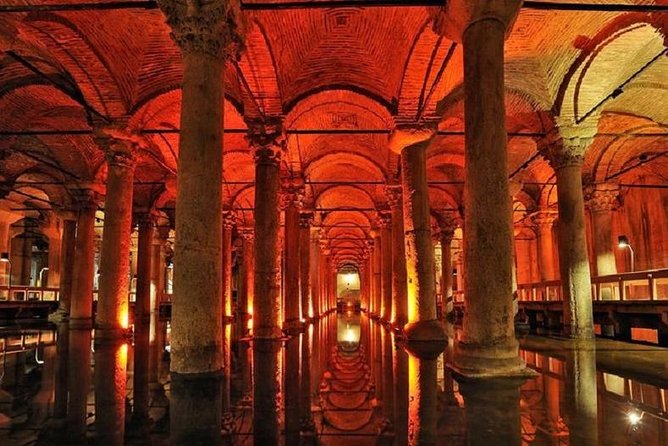
Dolmabahce Palace shows the Ottoman Empire looking toward Europe in its final era. Built between 1843 and 1856, it combines Baroque, Rococo, Neoclassical, and Ottoman elements.
Inside, the complex includes the Ceremonial Hall, State Apartments, and Imperial Harem. It also holds European art, including paintings associated with Franz Xaver Winterhalter and Osman Hamdi Bey.
The planned visit lasts about one hour and 40 minutes. That is enough for an introduction, though the palace’s formal rooms reward a slower pace if your schedule permits.
Admission is extra, and Dolmabahce is closed Mondays. Its location on the European shore of the Bosphorus also makes transportation more useful here. If you select a walking-only option, confirm how your guide plans to connect it with the Old City and Taksim.
Süleymaniye Mosque and the Golden Horn
Süleymaniye Mosque is the work of Mimar Sinan, generally regarded as the greatest Ottoman architect. Sultan Süleyman the Magnificent commissioned it, and it was completed in 1557.
This is more than a prayer hall. The mosque formed part of a külliye, a social complex that included a hospital, school, public kitchen, caravanserai, and hammam. That wider purpose helps you see Ottoman religious buildings as centers of daily public life.
The visit takes about an hour and admission is free. It is a good counterpoint to the more heavily visited Blue Mosque because the surrounding setting gives you a broader view of Ottoman civic planning.
The Golden Horn, or Haliç, is a natural estuary about 7.5 kilometers long. It separates the historic peninsula from Beyoğlu and Eyüp and served as a protected harbor for centuries.
The route may include views of the water rather than a long dedicated stop, depending on the selected duration. You can ask your guide to explain how the harbor shaped Istanbul’s trade, naval power, and neighborhoods.
Balat and Pierre Loti Hill
Balat brings you into a different kind of Istanbul. Located on the Golden Horn, it was historically home to Jewish, Greek, and Armenian communities.
Today, the area is known for pastel-colored houses, narrow streets, antique shops, and cafés. A one-hour visit gives you time to notice the small details that large monuments can hide.
The name may come from the Greek word palation, meaning palace, linked to the nearby Byzantine Blachernae Palace. That connection adds another layer to a neighborhood that can otherwise look simply photogenic.
Pierre Loti Hill offers a quieter hour and broad views over the Golden Horn. It is named for French novelist Julien Viaud, known by his pen name Pierre Loti, who visited the hilltop café in the late nineteenth century.
This stop gives your feet a pause from the stone streets and crowded squares. It also makes a good place for photographs, though the value is mainly the view and the change of pace.
How much walking and time should you expect?
The one-day version can be a long, demanding day. The listed stops add up to many hours, and the Old City sights are close enough that walking is often faster than sitting in traffic.
Several people have found the walking worthwhile, especially when the guide managed timing well. Others have struggled when a guide rushed the group or when transport plans failed. If you have a bad knee, limited stamina, or young children, select a vehicle option if available and request a slower schedule.
The vehicle is not automatically part of the base price. One family found it extremely useful in hot weather, while another group selected a driver but barely used the car because many sights were within walking distance.
That tells you the practical truth: a vehicle is most useful for connecting districts, especially Dolmabahce, Balat, Pierre Loti Hill, and the Old City. It adds less value during a concentrated Sultanahmet day.
Pickup, meeting point, and extra costs
The standard meeting point is the German Fountain in Sultanahmet. The activity ends back at the meeting point.
Central Istanbul hotel or Galataport pickup may be offered, but the terms are not perfectly clear. The published details also say transportation from and back to your hotel and between sites is excluded unless you choose an option that includes it.
Do not assume pickup is free simply because pickup is shown as an available feature. Confirm the exact hotel, whether a driver is included, and the cost of transfers before the tour date.
Lunch is also excluded. Your guide may suggest a restaurant, and some past outings included enjoyable meals selected with the guide’s help, but you pay for food separately.
The tour is often booked well ahead, with an average booking lead time of 56 days. Last-minute bookings may have a flexible starting time, but that flexibility should be agreed upon rather than assumed.
Is $81 per person a good value?
At $81 per person, the tour can be good value for a couple or small group that wants private attention and historical explanation. The price becomes especially reasonable when several people share the guide cost and you use the day to cover sights that would take more planning alone.
It is less attractive if you expect a single payment to cover every major entrance ticket, a private vehicle, lunch, and a Bosphorus cruise. Those are separate expenses.
The value also depends on how well the day is managed. Strong guides such as Cicek, Kemal Malgaz, Tunç, Sema, Taner, Ferhat, Mustafa, Gülşen, Korhan, Kubra, Songul, and Orkhut have been praised for patience, timing, warmth, and personal attention. One guide helped a group avoid large crowds, while another made the Grand Bazaar feel manageable.
There have also been serious complaints about an absent driver, a dirty van, unexpected taxi costs, unclear pickup terms, and a tour ending after little more than an hour. Those reports make written confirmation essential. Ask for the exact inclusions for your chosen option, not just the general tour description.
Who should book this private Istanbul experience?
You should consider it if you want a guide to explain the complicated layers of Istanbul and you value changing the pace to suit your group. It is particularly useful for a first visit, a port stop, families, older people, and anyone who would rather not plan museum order, prayer schedules, and district connections alone.
The two-day option is likely the best balance. It gives you time for Sultanahmet on one day, then Taksim, Dolmabahce, Galata, the Spice Bazaar, Süleymaniye, Balat, and the Golden Horn on another.
Choose three days if you want a gentler rhythm or more time inside the palaces and markets. Choose one day only if you accept a packed schedule and focus on the Old City.
Skip it if you want an all-inclusive package with transport and tickets already paid. You may also prefer independent sightseeing if you enjoy setting your own pace and do not need historical explanation.
My advice is simple: book the private guide, but treat the $81 as the guide fee and planning framework. Before confirming, get written answers about pickup, vehicle costs, entrance tickets, the Bosphorus portion, shopping stops, and the exact number of tour hours.
FAQ
How long does the tour last?
The available options run from approximately 7 to 22 hours, depending on whether you choose one, two, or three days.
What is included in the price?
The price includes a professional guide, a private tour, and the one, two, or three-day option you select.
Are attraction tickets included?
No. Museum and attraction tickets are not included. This applies to places such as Hagia Sophia, the Basilica Cistern, Topkapi Palace, Dolmabahce Palace, and Galata Tower.
Is hotel pickup included?
Pickup may be offered from central Istanbul hotels or Galataport, but transportation is generally excluded unless you select an option that includes it. Confirm the exact pickup terms and cost before booking.
Where does the tour begin?
The standard meeting point is the German Fountain in Sultanahmet, at Binbirdirek, At Meydanı Cd, 34122 Fatih, Istanbul.
Does the tour include transportation between sights?
Transportation is not included unless you select the applicable option. Many Old City stops are within walking distance, while a vehicle can be more useful for connecting separate districts.
Can I enter Galata Tower with the guide?
The guide will visit Galata Tower from outside because guides do not currently have priority to skip the line under the tower’s regulations.
When is Topkapi Palace closed?
Topkapi Palace is closed on Tuesdays.
When is the Blue Mosque closed to sightseeing?
The Blue Mosque is closed until 2 p.m. on Fridays.
Can I cancel for a full refund?
Yes. You can cancel at least 24 hours before the start time for a full refund. Changes or cancellations made less than 24 hours before the start time are not accepted for a refund. If poor weather cancels the experience, you are offered another date or a full refund.
Just added in Istanbul
- Private Tour: Istanbul’s Ottoman Experience Including Topkapi Palace and Blue Mosque★ 4.5 · 16 reviews
- Private istanbul tour with transportation★ 5.0 · 36 reviews
- Private Customizable Istanbul Day Tour with Licensed Guide★ 5.0 · 64 reviews
- IstanbulBasilicaCistern/fastEntranceEnglish/Spanish (not tickets)★ 4.0 · 184 reviews
- Private Princes’ Islands Tour★ 5.0 · 56 reviews
- Private Bosphorus Cruise and Egyptian Bazaar with Motor Yacht★ 4.0 · 24 reviews
- Private Old City Guided Tour★ 5.0 · 129 reviews
- Istanbul Private Tour Designed for Layover Flight, Transfer incl.★ 5.0 · 164 reviews
Skip-the-Line Tickets, compared.
Basilica Cistern Fast-Track Entry and Audio Guide
Read our review →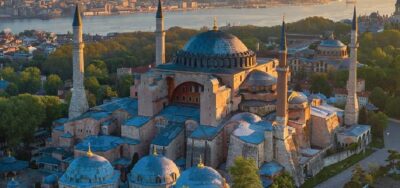
Hagia Sophia Skip-the-Line Ticket & Museum Option
Read our review →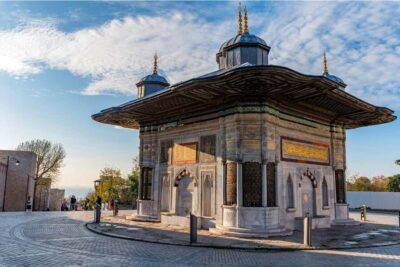
Topkapi Palace & Harem Museum Ticket & Audio Guide
Read our review →
Blue Mosque & Hagia Sophia Guided Tour w/ Tickets
Read our review →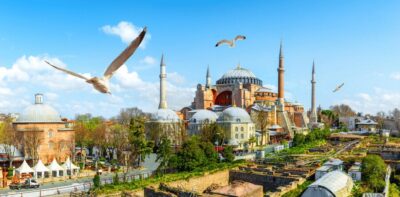
Hagia Sophia Skip-the-Line Ticket and Audio Guide
Read our review →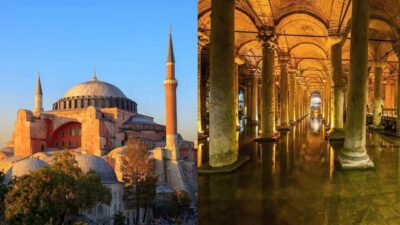
Blue Mosque, Hagia Sophia, & Basilica Cistern Tour
Read our review →Browse the lists this tour appears in