
Reviewed · ANCIENT SITES AND RUINS
Troy and Gallipoli Day Trip from Canakkale
Two ancient stories, one long day. This Troy and Gallipoli day trip links a legendary Bronze Age city with the solemn battlefields of the 1915 campaign. I like the way it puts Troy’s many archaeological layers into context, then gives you time to reflect at ANZAC Cove, Lone Pine, and Chunuk-Bair. The included lunch and shared minivan also make the day simple to manage.
My main caution is the pace. You cover a lot of ground in about 10 hours, and the tour costs $250 per person. That price is easier to justify if you want a guide, transport, ferry crossing, entrance fees, and lunch arranged together, but independent visitors may find it high.
The guide can make or break a day like this. Ercan earned especially warm praise for his scholarly yet friendly approach, while Ezgi at Hassle Free Travel was singled out for practical help and strong local recommendations. The group is capped at 15 people, which should feel more personal than a large coach tour.
In This Review
- Key points about the Troy and Gallipoli day trip
- Why combining Troy and Gallipoli works
- Troy’s buried cities and the story of the Trojan War
- The Odeon, city walls, and Trojan Horse
- Lunch in Canakkale before the battlefield route
- Gallipoli’s beaches and battle sites
- Cemeteries and memorials at Gallipoli
- What the guide adds to the experience
- Is $250 a fair price?
- Who should book this day trip?
- Practical tips for making the day easier
- Should you book the Troy and Gallipoli day trip?
- FAQ
- Where does the Troy and Gallipoli day trip begin?
- Where does the tour end?
- How long does the tour last?
- Is hotel pickup included?
- Is lunch included?
- Is the tour offered in English?
- How many people can join the tour?
Key points about the Troy and Gallipoli day trip
- Nine archaeological cities at Troy: See remains dating from about 3,500 BC, including ancient walls, altars, the Odeon, and later settlements.
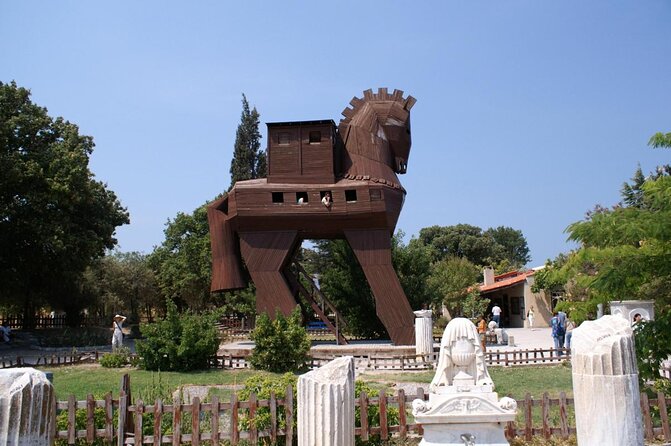
- The famous Trojan Horse: A replica wooden horse offers the most instantly recognizable photo stop connected with Homer’s tale.
- A full Gallipoli battlefield route: Visit Brighton Beach, ANZAC Cove, Johnston’s Jolly, the Nek, and Walker’s Ridge.
- Memorials on both sides of the conflict: Ari Burnu, Beach Cemetery, Lone Pine Cemetery, the Turkish Memorial, and Chunuk-Bair bring the human cost into focus.
- Transport and lunch included: The price covers shared minivan transport, the ferry ride, entrance fees, a local guide, and lunch, but not drinks or hotel transfers.
- A small-group format: With no more than 15 people, you should have a better chance to hear the guide and ask questions.
Why combining Troy and Gallipoli works
At first glance, Troy and Gallipoli seem like an odd pair. One belongs to epic poetry and Bronze Age archaeology. The other belongs to modern military history and national memory.
That contrast is exactly what makes the day worthwhile. Troy asks you to separate legend from evidence. Gallipoli asks you to confront the facts of a campaign that cost thousands of young lives. Moving between them in one day gives Canakkale a wider meaning, from ancient settlement to modern conflict.
You begin at 8:30 am at Anzac House Youth Hostel on Cumhuriyet Boulevard in central Canakkale. There is no hotel pickup or drop-off, so you need to reach the meeting point yourself. The tour ends back there, which is useful if you are staying in the center.
The shared air-conditioned minivan is a practical choice for this route. You avoid arranging separate buses, taxis, ferry tickets, and site admissions. The tradeoff is that you follow a fixed schedule, with limited freedom to linger at one ruin or skip a memorial.
More Day Trips in Turkey:
- Full Day Cappadocia Red and Green Combined Day Tour
★ 4.7 · 1,998 reviews - Ephesus Temple of Artemis and House of Mary Private Half Day Tour
★ 5.0 · 1,573 reviews - From Antalya/Kemer: Pamukkale & Hierapolis Day Trip w/Meals
★ 4.7 · 1,387 reviews
Troy’s buried cities and the story of the Trojan War
The road to Troy is not just dead time. Your guide uses it to explain the story associated with the site, including Homer’s Iliad, an 8th-century BC account of the Trojan War.
The familiar version centers on Helen, whose abduction by the Trojan prince Paris helped trigger the war between Greeks and Trojans. The wooden horse belongs to the later tale of how the city was taken. At Troy, you get to compare that famous story with the physical remains beneath your feet.
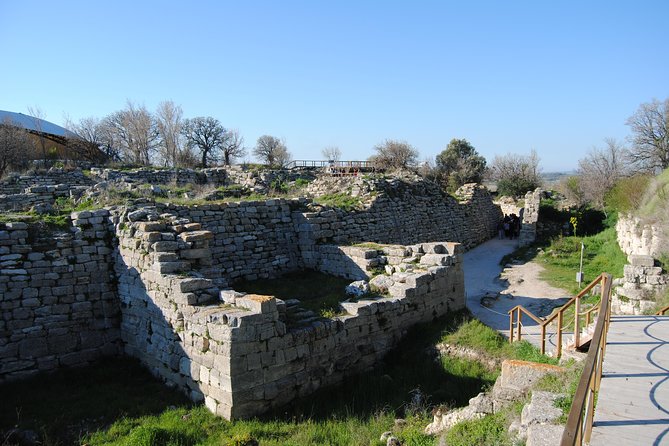
The ruins were identified in the 1870s, and excavation continues. Archaeologists have found nine city layers at the site, with settlements reaching back to about 3,500 BC. That number matters because Troy is not one neat ruin from one period. It is a stack of cities built, damaged, abandoned, and rebuilt over thousands of years.
A good guide helps you picture that process. You may see remains associated with Troy I, including the first house dating from about 3,000 to 2,500 BC, then later walls and structures leading to Troy IX. The ruins do not always announce their importance. Low stones, uneven foundations, and partial walls can look modest until someone explains what they represent.
That is where this tour earns its keep. Without interpretation, Troy can feel like a scattered collection of stones. With the layers explained, the site becomes a record of changing settlements and shifting power.
The Odeon, city walls, and Trojan Horse
Among the more distinctive remains is the Odeon, a concert hall that gives you a sense of Troy as a functioning city rather than only a battlefield from a poem. Ancient sites often become easier to understand when you can identify civic spaces, not just defensive walls.
The 3,700-year-old city walls are another major feature. They help explain why Troy mattered and why its position attracted so much attention. The walls also make the site more concrete for anyone traveling with children or anyone who finds archaeological foundations hard to read.
The replica wooden Trojan Horse is less ancient, but it is part of the experience’s appeal. It connects the archaeological site to the story most people already know. Expect it to be a photo stop, not surviving evidence from the war described in the poem.
That distinction is important. Troy is not a simple proof that every detail of the Trojan War happened exactly as Homer described it. It is an archaeological site with several cities, later linked to one of the world’s best-known epics. The guide’s job is to explain that difference without draining the story of its power.
A visit to the Troy Museum is also part of the day as described by the experience. This adds useful context to the open-air ruins, especially if you want to understand the objects and excavation story beyond what can be seen among the walls.
Lunch in Canakkale before the battlefield route
After Troy, the group returns to Canakkale for lunch. A Turkish meal is included, but drinks are not, so bring money for anything you want beyond the meal itself.
Lunch serves a practical purpose. Troy and Gallipoli are not quick stops, and a full day outdoors can become tiring. Sitting down in Canakkale gives you a pause before the more emotionally demanding part of the tour.
The meal also gives the day a local feel rather than treating Canakkale as a place you only pass through. One especially positive account described the lunch as Turkish cuisine shared with friendly local diners. That detail matters because the meal is more than a line in the inclusions list. It is a chance to slow down and reset.
Still, keep your expectations sensible. The exact menu, restaurant, and time available are not specified. If you have strict dietary needs, confirm them before booking rather than assuming the included lunch will meet them.
More Ancient Sites and Ruins in Turkey:
- FOR CRUISERS: Skip The Lines PRIVATE EPHESUS TOUR &On Time Return
★ 5.0 · 8,527 reviews - Top Choice For Cruisers: Ephesus, Mary’s House WITH TICKETS+LUNCH
★ 5.0 · 7,233 reviews - PRIVATE EPHESUS TOUR FOR CRUISERS: On-time Return and Skip-Line
★ 5.0 · 5,807 reviews - PRIVATE NO HIDDEN FEES Ephesus, Mary’s House Guided Tour /GRP OPT
★ 5.0 · 2,455 reviews
Gallipoli’s beaches and battle sites
After lunch, you cross toward the Gallipoli battlefields connected with the brutal Allied-Turkish campaign of 1915. The route includes Brighton Beach, ANZAC Cove, Johnston’s Jolly, the Nek, and Walker’s Ridge.
These names can seem abstract if you have only read about the campaign. Seeing the actual sites gives the story a stronger sense of distance, terrain, and movement. The guide fills in the facts behind the battles, helping you understand why particular ridges, beaches, and positions mattered.
ANZAC Cove is the emotional center for many people. It is closely tied to the landing and fighting involving Australian and New Zealand forces. The visit is not presented as a simple victory story. Instead, the route places Allied and Turkish experiences side by side.
Johnston’s Jolly, the Nek, and Walker’s Ridge add detail to the campaign. They show that Gallipoli was not one single battle at one single place. It was a series of attacks, defensive positions, and failed advances spread across difficult ground.
You should expect some walking at the sites, along with time in the minivan between stops. Exact walking distances and the order of visits can change, so wear comfortable shoes and avoid packing the day with another fixed activity afterward.
Cemeteries and memorials at Gallipoli
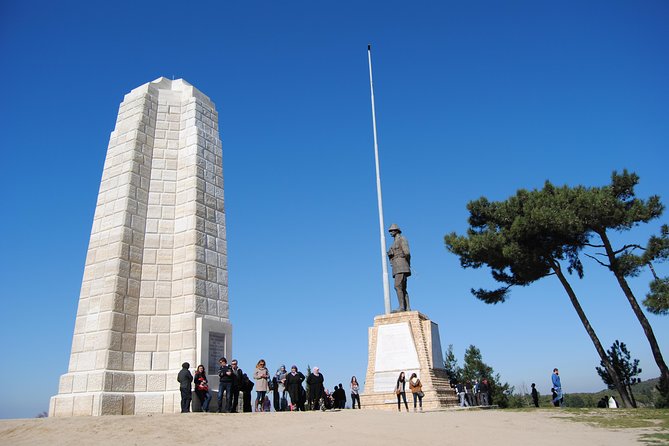
The memorial stops are where the day turns quiet. At Ari Burnu, Beach Cemetery, Lone Pine Cemetery, the Turkish Memorial, and Chunuk-Bair, the focus shifts away from military movements and toward the people who died.
Beach Cemetery and Lone Pine Cemetery are especially powerful because the graves make the age and scale of the losses personal. The campaign involved young soldiers from different countries, many of whom never left the peninsula. The cemeteries also offer a visual contrast with the conflict itself: ordered, peaceful spaces where the fighting once took place.
The Turkish Memorial and Chunuk-Bair broaden the story. This is not a tour that treats Gallipoli only as an ANZAC pilgrimage. You are shown sites connected with the Turkish side as well, which makes the visit more balanced and more respectful.
One of the strongest impressions from this part of the day is the sense of peace among cemeteries associated with both sides. That is a useful way to approach Gallipoli. You are not simply ticking off military landmarks. You are visiting a place where former enemies now lie close together.
If you prefer light sightseeing with constant movement, this section may feel heavy. That is not a flaw, but it is worth knowing before you book. Gallipoli asks for attention and respect, and the mood can stay with you after the minivan returns to Canakkale.
What the guide adds to the experience
The quality of explanation matters at both Troy and Gallipoli. At Troy, you need help sorting archaeological layers from myth. At Gallipoli, you need a clear account of several battle sites without reducing the campaign to a list of dates.
Ercan was praised for combining strong subject knowledge with a warm, friendly manner. That combination is useful here. A dry lecture would make Troy’s ruins harder to follow, while an overly casual tone would feel wrong at the cemeteries.
Ezgi, who arranged the tour through Hassle Free Travel in Canakkale, was also praised for practical support and local suggestions. That points to a helpful strength of using a local operator: assistance may extend beyond the main itinerary.
The tour is offered in English. With a maximum of 15 people, you are likely to have more access to the guide than you would on a large bus. Group size can still affect the pace, especially at narrow archaeological paths or crowded photo stops, but this is a reasonable limit for a full-day outing.
Is $250 a fair price?
At $250 per person, this is not a budget excursion. The value depends on how much convenience and explanation you want.
The price includes:
- A local English-speaking guide
- Round-trip shared transfer
- Air-conditioned minivan transport
- The ferry ride
- Entrance fees
- Lunch in Canakkale
You are paying for a long route that combines two separate destinations. The transport alone would take planning if arranged independently, and the ferry crossing, admissions, and battlefield route add more moving parts.
I consider the price reasonable for someone who wants a single organized day and does not want to rent a car or coordinate local transport. It is also more attractive if your time in Canakkale is short and you want both major sights without spending a second day on them.
The price is less compelling if you have plenty of time, enjoy arranging your own transport, or want to spend several hours at Troy alone. A private tour would offer more control, but this is a shared experience, not a custom itinerary.
Group discounts may be available. Since the experience is often booked 53 days in advance, checking dates early is sensible, especially if your schedule in Canakkale is tight.
Who should book this day trip?
I would recommend it most strongly to:
- First-time visitors to Canakkale
- People interested in archaeology, mythology, or military history
- Visitors without a car
- Families who want transport and admissions handled in one booking
- English-speaking visitors who value guided explanation
- Anyone with only one full day for Troy and Gallipoli
It suits curious, active sightseers better than people looking for a slow morning and a relaxed afternoon. The 10-hour schedule is efficient, but it is still a long day.
Children can take part, provided they are accompanied by an adult. Most people can participate, and service animals are allowed. The available information does not give specific details about every path or surface, so anyone with mobility concerns should confirm the practical conditions before booking.
Practical tips for making the day easier
Start at the central meeting point before 8:30 am. Since hotel pickup is not included, allow enough time to reach Anzac House Youth Hostel at Kemalpaşa, Cumhuriyet Blv. No. 59.
Wear shoes suitable for archaeological paths and outdoor memorial sites. You will be moving between ruins, beaches, ridges, cemeteries, and transport stops rather than spending the day in one museum.
Bring water or money for drinks. Lunch is included, but beverages are not.
Keep the emotional shift in mind. Troy is imaginative and archaeological, with a famous wooden horse and stories of princes and heroes. Gallipoli is quieter and more serious. Giving yourself time after the tour may help you process the second half of the day.
The tour returns to the original meeting point. That makes it easy to plan an evening in central Canakkale, but do not schedule anything too close to the advertised 10-hour duration. Road, ferry, and site timing can vary.
Should you book the Troy and Gallipoli day trip?
Book it if you want the most important Troy and Gallipoli sites in one organized day, with a guide to explain what you are seeing. The small group, included lunch, air-conditioned transport, ferry ride, and entrance fees remove much of the planning work. The strongest reason to go is the combination of Troy’s layered archaeology with Gallipoli’s carefully remembered battle sites and cemeteries.
Skip it if $250 feels too steep, or if you want to explore Troy and Gallipoli at your own pace. The schedule is full, the tour is non-refundable, and hotel transfers are not included.
For most first-time visitors with limited time in Canakkale, I would book it, then treat the day as a serious historical outing rather than a quick sightseeing circuit. That mindset makes the long hours worthwhile.
FAQ
Where does the Troy and Gallipoli day trip begin?
It begins at Anzac House Youth Hostel, Kemalpaşa, Cumhuriyet Blv. No. 59, in central Canakkale. The start time is 8:30 am.
Where does the tour end?
The activity ends back at the original meeting point in Canakkale.
How long does the tour last?
The tour lasts approximately 10 hours.
Is hotel pickup included?
No. Hotel pickup and drop-off are not included, so you need to reach the central meeting point yourself.
Is lunch included?
Yes. Lunch in Canakkale is included. Drinks are not included.
Is the tour offered in English?
Yes. The tour is offered in English and includes a local guide.
How many people can join the tour?
The group has a maximum of 15 participants. Children must be accompanied by an adult, most people can participate, and service animals are allowed.
Just added in Turkey
- Private Tour: Istanbul’s Ottoman Experience Including Topkapi Palace and Blue Mosque★ 4.5 · 16 reviews
- Private istanbul tour with transportation★ 5.0 · 36 reviews
- Private Customizable Istanbul Day Tour with Licensed Guide★ 5.0 · 64 reviews
- IstanbulBasilicaCistern/fastEntranceEnglish/Spanish (not tickets)★ 4.0 · 184 reviews
- Private Old City Guided Tour★ 5.0 · 129 reviews
- Private Princes’ Islands Tour★ 5.0 · 56 reviews
- Private Bosphorus Cruise and Egyptian Bazaar with Motor Yacht★ 4.0 · 24 reviews
- Istanbul Private Tour Designed for Layover Flight, Transfer incl.★ 5.0 · 164 reviews
Ancient Sites and Ruins, compared.
FOR CRUISERS: Skip The Lines PRIVATE EPHESUS TOUR &On Time Return
Read our review →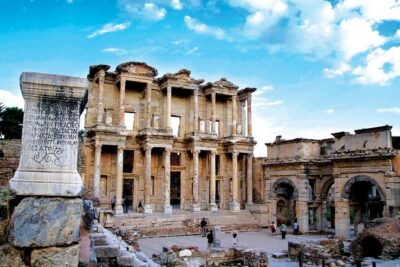
Top Choice For Cruisers: Ephesus, Mary’s House WITH TICKETS+LUNCH
Read our review →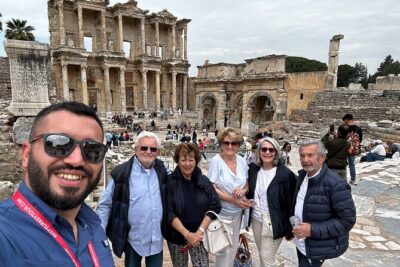
PRIVATE EPHESUS TOUR FOR CRUISERS: On-time Return and Skip-Line
Read our review →
PRIVATE NO HIDDEN FEES Ephesus, Mary’s House Guided Tour /GRP OPT
Read our review →
Pamukkale Hierapolis and Cleopatra’s Pool Tour with lunch from Antalya
Read our review →For Ship Guests:BEST SELLER EPHESUS PRIVATE TOUR & On Time Return
Read our review →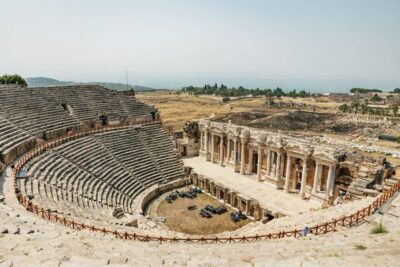
ALL INCLUDED: Ephesus Ruins, Mary’s House Tour incl ENTRY TICKETS
Read our review →Browse the lists this tour appears in