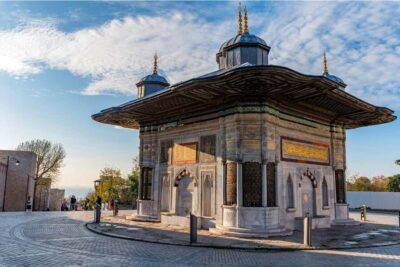
Reviewed · ISTANBUL TOURS
Ancient Rome Under Istanbul
Istanbul keeps its oldest rooms underground. This small-group walk leads you beneath modern shops, hotels, and streets to Roman and Byzantine remains that are easy to miss. I like the chance to see ancient cisterns and buried chapels, and I especially value the guide’s historical storytelling, which connects scattered stones to the city’s long Roman and Byzantine past. The main drawback is that access and timing can vary, and some visitors found the three-hour version shorter than expected.
You meet at 10:00 a.m. in Sultanahmet, near Divan Yolu, and return to the same point. I also like the maximum group size of 15, though the tour can become a private or nearly private outing when few people book. Plan for plenty of walking, comfortable shoes, and clear expectations about the hotel pickup: the stated starting point is in the old city, while pickup from your hotel may involve an extra taxi fare.
In This Review
- What makes this underground Istanbul walk worth your time
- Why Istanbul has so much history beneath your feet
- Starting in Sultanahmet at 10:00 a.m.
- Looking beneath modern shops and hotels
- Constantine’s Palace and the imperial city
- Küçük Ayasofya, a church turned mosque
- The Hippodrome and Sultanahmet Square
- How good is the $45 value?
- Walking, weather, and group comfort
- Who will enjoy this tour most?
- My advice before you book
- Should you book Ancient Rome Under Istanbul?
- FAQ
- Where does the tour start?
- What time does the tour begin?
- Where does the tour end?
- How long does the tour last?
- What sites are included?
- Is food included?
- How large is the group?
- Can I cancel for a refund?
What makes this underground Istanbul walk worth your time
- Buried Roman and Byzantine remains: Look beneath present-day shops and hotels for traces of the city’s earlier buildings.
- Constantine’s Palace: The tour includes a visit to remains associated with the imperial center of ancient Constantinople.
- Küçük Ayasofya: See a former church later converted into the Gazi Süleyman Paşa Mosque, with an explanation of its architectural importance.
- Small-group format: A maximum of 15 people allows more room for questions and conversation.
- Strong guide-led experience: Guides such as Ece, Ege, Erkan, and AJ have been praised for making complex history clear and engaging.
- A useful price point: At $45, the tour can offer good value for access and interpretation, but it is less attractive if you expect a full five-hour sightseeing day.
Why Istanbul has so much history beneath your feet
Istanbul was not built once. It was rebuilt again and again, with new streets, homes, businesses, churches, mosques, and hotels placed over older structures. That layered growth explains why Roman and Byzantine remains often appear below ordinary modern buildings rather than inside a neat archaeological park.
This is the central idea behind the walk. You are not simply moving from one famous monument to another. You are looking at fragments in their modern setting and trying to picture the imperial city that came before today’s Sultanahmet neighborhood.
That can be exciting for anyone who enjoys archaeology and urban history. It can also require patience. Some remains are partial, tucked below a commercial building, or reached through a place that feels more like a shop or hotel than a museum. If you want polished displays, labels, and a predictable route, this may feel informal. If you enjoy finding traces that guidebooks often pass over, the unusual setting is the point.
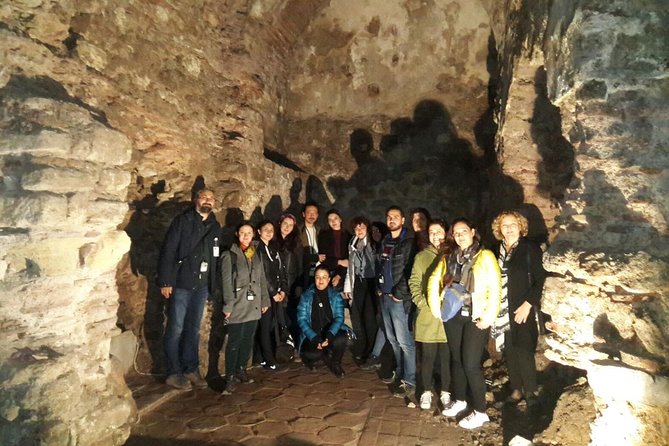
The guide makes a big difference. Ece received repeated praise for her clear explanations, kindness, and ability to connect Roman-era history with modern Turkish life. Ege was singled out for his energy and passion, while AJ was praised for making the city feel alive. The individual guide assigned to your tour can vary, but the best part of this outing is clearly the human interpretation.
A few more options to weigh up in Istanbul
- Istanbul: Bosphorus Dinner Cruise & Show with Private Table
★ 4.8 · 44,561 reviews - Istanbul: Daytime or Sunset Sightseeing Cruise & Audio Guide
★ 4.8 · 14,430 reviews - Istanbul: Bosphorus Dinner Cruise with Turkish Night Show
★ 4.8 · 10,127 reviews
Starting in Sultanahmet at 10:00 a.m.
The meeting point is at Binbirdirek, Divan Yolu Cd. No:15, in Istanbul’s Fatih district. This places you in the old city, close to the main historic sights and public transportation. The activity ends back at the same meeting point, which makes it easier to continue sightseeing afterward.
The official duration is approximately three to five hours. The scheduled route gives about three hours to the general Roman and Byzantine remains, followed by 20 minutes at Küçük Ayasofya and 15 minutes at the Hippodrome. In practice, a small group may move faster, and one account describes a tour that lasted about three hours rather than five.
I would treat the timing as flexible rather than promising a full half-day. That is not necessarily a problem. Three focused hours can work well if you are fitting this between the Blue Mosque, Topkapı Palace, Hagia Sophia, or a meal. It matters more if you are booking it as your main full-day activity.
The group limit is 15 people. Some departures may be much smaller, including one-on-one tours. A small group is useful here because the sites can be confined, and the subject calls for questions. Solo participants should also know that the tour may operate even when no one else books.
Looking beneath modern shops and hotels
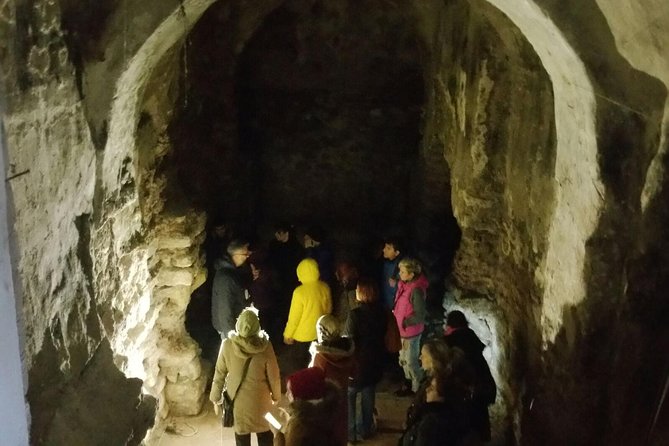
The first and longest part of the walk takes you through Roman and Byzantine remains below modern Istanbul buildings. This is where the tour’s title makes sense. Instead of seeing only the grand monuments above ground, you look for the older city under businesses and accommodations operating today.
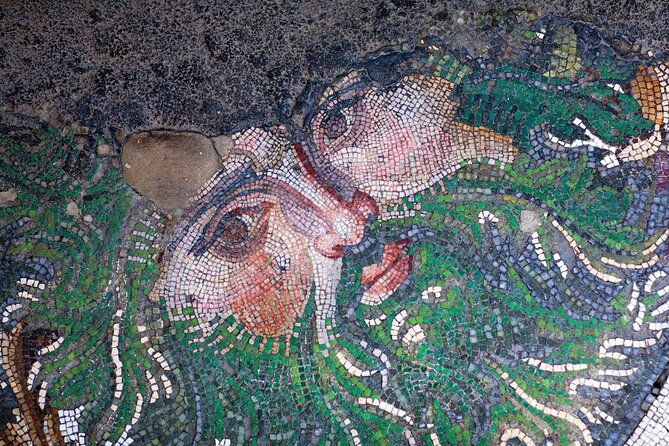
The exact sites can depend on access and the route on that day. The stated highlights include ancient cisterns, Constantine’s Palace, and Byzantine chapels. Accounts of the walk also describe entering several shops, hotels, and other buildings to see Roman artifacts, masonry, cisterns, and small mosaic work.
That mix is what gives the tour its character. You may find yourself stepping through an ordinary commercial space and then encountering a remnant of the old city below it. The contrast is hard to get from a standard monument tour. One moment you are dealing with present-day Istanbul, and the next you are examining evidence of the city’s earlier rulers and communities.
The setting also creates the tour’s biggest uncertainty. Access to privately occupied or commercially used buildings is not the same as entering a major state museum. A door may be unavailable, a site may be viewed briefly, or the route may change. One dissatisfied account complained that some places seemed inaccessible, while the operator stated that the scheduled sites had been entered. The sensible approach is to expect a guided look at lesser-known remains, not guaranteed access to every underground space named in promotional material.
Your guide supplies the missing labels. You will hear about Roman rule, Byzantine society, religious buildings, conquest, and the changing groups that shaped Istanbul. Strong guides explain why a fragment matters instead of simply pointing at it. That context is especially important when you are looking at broken walls or tiny pieces of mosaic rather than a complete monument.
Constantine’s Palace and the imperial city
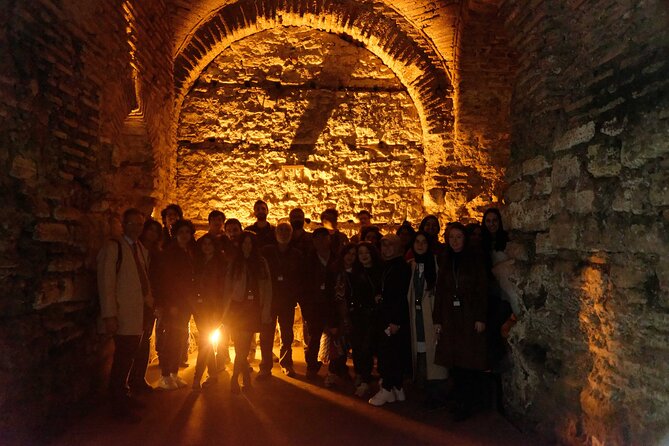
Constantine’s Palace is one of the major historical draws. The name points to the imperial world that formed around Constantinople, the Roman capital on the Bosphorus. The tour presents the palace remains as part of a larger picture, helping you understand how the city’s political and religious life once centered in this area.
Do not expect a restored palace with grand rooms and complete decoration. The value lies in seeing what has survived and learning how those remains fit into the old city. A guide with a strong background in Classical history can help you imagine the function of a site even when the physical evidence is fragmentary.
This is also where expectations matter most. If you are hoping for a major palace visit comparable to Topkapı Palace, this stop may feel modest. If you enjoy piecing together a vanished city from foundations, fragments, and expert explanation, it can be one of the most rewarding parts.
The tour is particularly suited to you if you already know Istanbul’s headline sights and want a different angle. It is also a useful introduction for a first visit, provided you are happy with a less formal archaeological route.
A completely different kind of day out:
- Best of Istanbul 1, 2 or 3-Day Private Guided Istanbul Tour
★ 5.0 · 8,922 reviews - Istanbul: Basilica Cistern Fast-Track Entry and Audio Guide
★ 4.6 · 7,521 reviews - Istanbul: Hagia Sophia Skip-the-Line Ticket & Museum Option
★ 3.7 · 4,958 reviews - Istanbul: Hodjapasha Whirling Dervishes Show & Exhibition
★ 4.4 · 4,790 reviews
Küçük Ayasofya, a church turned mosque
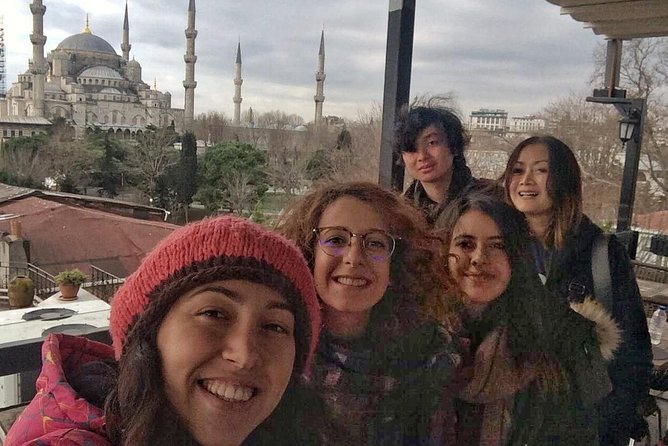
The 20-minute stop at Küçük Ayasofya adds a visible monument to the more concealed remains. Like Hagia Sophia, this building began as a church and was later converted into a mosque. The guide explains its architecture and the stories connected with the building.
The site is presented as an important model for the architects who later built Hagia Sophia. That comparison gives you a practical way to look at the structure. Rather than treating it as an isolated religious building, you can consider how its design relates to the architectural ideas that shaped Constantinople.
The short stop means the guide’s explanation is central. You are not spending hours studying every detail. Instead, you receive a focused account of the building’s changing use and place in Istanbul’s architectural history.
Because it is now a mosque, normal rules for visiting a functioning religious site apply. The supplied information does not specify exact clothing or visiting restrictions, so check current conditions before you go. The tour description identifies this stop as Gazi Süleyman Paşa Mosque as well as Küçük Ayasofya, so keep both names in mind when meeting your guide or following directions.
The Hippodrome and Sultanahmet Square
The final listed stop is the Hippodrome, now known as Sultanahmet Square. The scheduled visit lasts about 15 minutes, making it a brief orientation rather than a long archaeological lesson.
The Hippodrome was the center of Byzantine chariot racing, public celebrations, and political spectacle. Today, the square is filled with monuments, pedestrians, shops, and the daily movement of modern Istanbul. Your guide helps you read the space as more than an open plaza.
I find this stop useful because it ties the underground remains to a place you can easily see. The cisterns and buried structures show what survives below, while the Hippodrome gives you a sense of the public life that once unfolded above ground.
Still, do not book this tour mainly for the Hippodrome. You can visit the square independently, and 15 minutes is enough only for a compact explanation. The real reason to join is the combination of the square with the less obvious Roman and Byzantine remains elsewhere in the neighborhood.
How good is the $45 value?
At $45, the tour includes a professional guide, local taxes, and all taxes, fees, and handling charges. Food, drinks, and lunch are not included. Group discounts are available, and the mobile ticket makes the booking simple.
I consider the price fair when the tour delivers what it does best: access to unusual remains plus a strong explanation. You are paying less for admission to a major blockbuster site and more for the guide’s time, route planning, and ability to get you into places you might pass without noticing.
The value is strongest for history and art enthusiasts. Several people praised guides for showing sites absent from ordinary guidebooks, including small ruins and mosaic fragments. A one-on-one departure can also feel like a personal history lesson, although the price should be judged against the actual duration.
It is less convincing if you expect five hours, hotel transportation, meals, or guaranteed entry to every named location. The published meeting point is in the old city. Hotel pickup may be offered, but it is not included in the tour price, and one person had to pay a taxi fare to reach Sultanahmet.
Before booking, I would confirm three things: the expected duration for your date, the exact meeting arrangement, and which underground sites are currently open. That quick check can prevent the main sources of disappointment.
Walking, weather, and group comfort
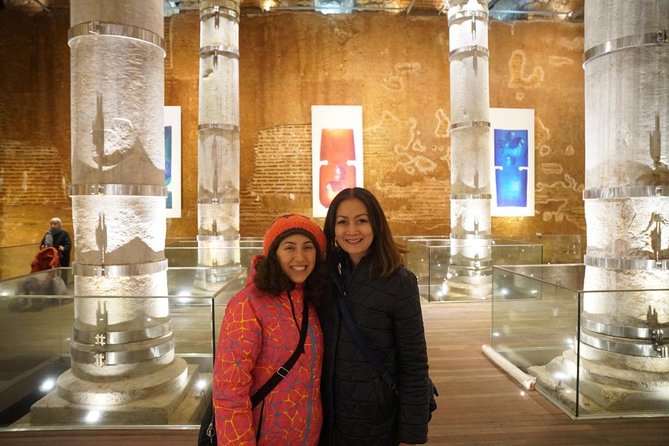
You should wear comfortable shoes. The route involves walking through Sultanahmet and moving between different buildings and historic areas. The supplied information does not give a total distance or list every surface condition, so you should be ready for a walking tour rather than a seated museum visit.
Rain can affect the pace and mood. One guide, Ece, extended a tour when rain caused delays, which shows that some flexibility may be possible. Do not count on extra time, though. Ask your guide at the start if weather has changed the route.
The tour is near public transportation, and most people can participate. Service animals are allowed. The information does not specify wheelchair access, stair counts, or the condition of underground spaces, so anyone with mobility concerns should ask before booking.
The small maximum group is a real advantage. You can hear explanations more easily, ask about a Roman artifact, and spend more time discussing the odd details of Istanbul’s past. On a larger departure, some narrow or busy stops may feel less relaxed, but the limit of 15 keeps the outing manageable.
Who will enjoy this tour most?
I would choose this for you if you like:
- Roman and Byzantine history
- Archaeology in ordinary city settings
- Small museums, fragments, cisterns, and mosaics
- Guides who explain context rather than rush between photo stops
- Walking through Sultanahmet beyond the headline monuments
- A flexible route with less familiar sites
It is also a good choice for repeat visitors who have already seen Hagia Sophia and the Blue Mosque. The tour gives you another way to understand the same district.
I would be more cautious if you want a fixed museum-style itinerary, a guaranteed five-hour schedule, included hotel transport, or a polished presentation at every stop. The tour’s appeal comes from discovery and interpretation, so it may feel underwhelming if you measure it only by the size or completeness of the ruins.
The guide’s language ability is worth confirming if that is important to you. Most accounts praise the guides’ explanations and communication, including Ece and Ege. One person found the assigned guide difficult to understand, while the operator described him as an Istanbul University Classic Department academic and an Ancient Greek teacher. That disagreement suggests an occasional mismatch, not a clear pattern, but you can still request confirmation of your preferred language when booking.
My advice before you book
Keep the morning free, eat beforehand, and bring water because food and lunch are not included. Arrive at the stated Sultanahmet meeting point rather than assuming a hotel pickup is part of the deal.
I would also plan a second activity nearby instead of treating this as a guaranteed five-hour program. The return to the starting point makes it easy to continue to the Hippodrome, major mosques, or another old-city sight.
The cancellation terms are straightforward: cancel at least 24 hours before the 10:00 a.m. start for a full refund. Changes or cancellations made within 24 hours are not refunded, and cut-off times use Istanbul local time.
Should you book Ancient Rome Under Istanbul?
Book it if you want less obvious Roman and Byzantine remains, a small group, and a guide who can explain why Istanbul’s past keeps appearing beneath modern buildings. At $45, it is a sensible buy for history-minded visitors who value access and interpretation more than grand interiors.
Skip it if you need a tightly timed five-hour tour or a guaranteed palace-and-cistern showcase. Confirm the duration, meeting arrangement, and current site access first. With those expectations in place, this is a distinctive way to see Sultanahmet, especially if Ece, Ege, Erkan, or another strong guide is available.
The current score of 4.8 from 35 ratings, with 94 percent recommending it, reflects the tour’s main strength: exceptional guiding can turn scattered ruins into a memorable picture of Roman Istanbul.
FAQ
Where does the tour start?
It starts at Binbirdirek, Divan Yolu Cd. No:15, 34122 Fatih, Istanbul, Türkiye.
What time does the tour begin?
The stated start time is 10:00 a.m.
Where does the tour end?
The activity ends back at the meeting point.
How long does the tour last?
The approximate duration is three to five hours. The scheduled stops include about three hours around the Roman and Byzantine remains, 20 minutes at Küçük Ayasofya, and 15 minutes at the Hippodrome.
What sites are included?
The experience includes ancient cisterns, Constantine’s Palace, Byzantine chapels, Küçük Ayasofya, and the Hippodrome. Access to particular underground remains may depend on conditions at the time of the visit.
Is food included?
No. Food, drinks, and lunch are not included.
How large is the group?
The maximum group size is 15 people.
Can I cancel for a refund?
Yes. You can cancel at least 24 hours before the local start time for a full refund. Cancellations or changes made less than 24 hours before the tour are not refunded.
Just added in Istanbul
- Private Tour: Istanbul’s Ottoman Experience Including Topkapi Palace and Blue Mosque★ 4.5 · 16 reviews
- Private istanbul tour with transportation★ 5.0 · 36 reviews
- Private Customizable Istanbul Day Tour with Licensed Guide★ 5.0 · 64 reviews
- IstanbulBasilicaCistern/fastEntranceEnglish/Spanish (not tickets)★ 4.0 · 184 reviews
- Private Old City Guided Tour★ 5.0 · 129 reviews
- Private Princes’ Islands Tour★ 5.0 · 56 reviews
- Private Bosphorus Cruise and Egyptian Bazaar with Motor Yacht★ 4.0 · 24 reviews
- Istanbul Private Tour Designed for Layover Flight, Transfer incl.★ 5.0 · 164 reviews
Istanbul Tours, compared.
Bosphorus Dinner Cruise & Show with Private Table
Read our review →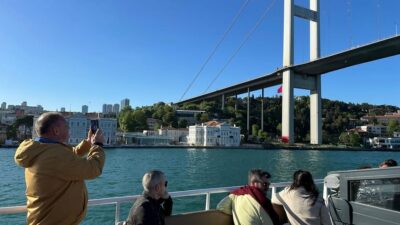
Daytime or Sunset Sightseeing Cruise & Audio Guide
Read our review →
Bosphorus Dinner Cruise with Turkish Night Show
Read our review →
Best of Istanbul 1, 2 or 3-Day Private Guided Istanbul Tour
Read our review →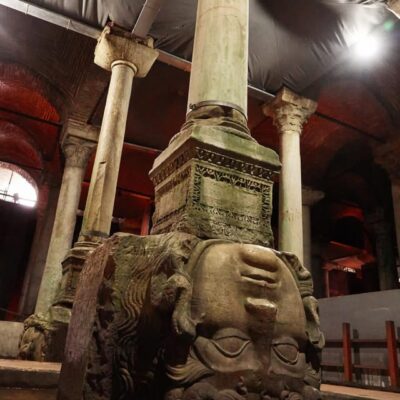
Basilica Cistern Fast-Track Entry and Audio Guide
Read our review →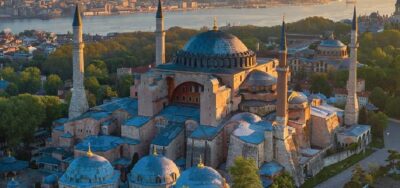
Hagia Sophia Skip-the-Line Ticket & Museum Option
Read our review →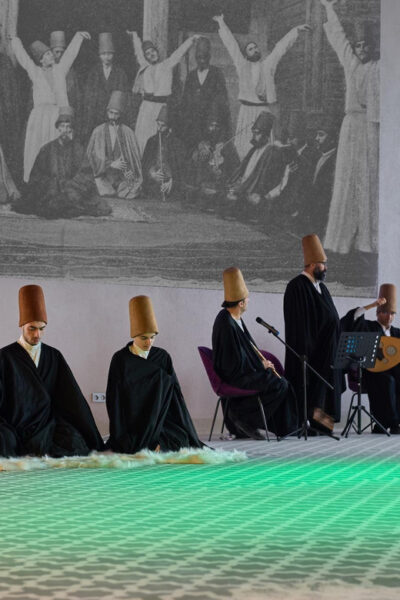
Hodjapasha Whirling Dervishes Show & Exhibition
Read our review →