
Reviewed · MUSEUMS AND GALLERIES
Istanbul Hodjapasha Whirling Dervishes Show & Exhibition
Let the quiet do the talking. At Istanbul’s Hodjapasha Cultural Centre, you sit close to a solemn Sufi ceremony of music, prayer, bowing, and controlled spinning. This is not a theatrical dance production with jokes, narration, or changing scenes. It is a public presentation of a spiritual ritual connected with Sufi tradition and the poetry of Rumi.
I like the small, intimate venue, where you can observe the performers closely, and I like the exhibition in the foyer, which gives useful context before the ceremony. The live traditional music, soft singing, and low lighting create a calm atmosphere that many people find moving. The main consideration is simple: if you expect an energetic stage show, the repeated movements and quiet mood may feel slow.
I also like that the ticket costs about $32 per person and includes admission, a multilingual booklet, and bottled water. The central location makes it easy to pair with dinner, the Spice Market, or a walk around the historic district. Still, you need to treat this as a religious ceremony first and entertainment second.
In This Review
- Key points to know before you go
- What actually happens at Hodjapasha
- Why the foyer exhibition matters
- The ceremony, step by step
- A close seat and a strict atmosphere
- Is the experience authentic?
- The music and the meaning of silence
- Getting there without a frustrating start
- Is $32 a fair price?
- Who should book this ceremony?
- Practical details before booking
- Should you book Hodjapasha?
- FAQ
- How long does the Hodjapasha Whirling Dervishes experience last?
- Where does the experience begin and end?
- Is admission included in the ticket?
- What else is included?
- Is hotel transportation provided?
- Are children allowed to attend?
- Can I take photos or videos during the ceremony?
- Can I cancel for a full refund?
Key points to know before you go
- The one-hour program is a ceremony, not a dance spectacle: Music, prayer, bows, and preparation take time before the whirling begins.
- The foyer exhibition is worth arriving early for: Displays explain Sufi beliefs, Rumi, and the meaning behind each stage of the ritual.
- Photography, video, and applause are not allowed: The rules help preserve the serious atmosphere.
- The small theater gives you a close view: Seating is assigned, and the audience sits near the performance area.
- The location is central but can be tricky to find: Taxis stop on Ankara Caddesi, not in the narrow lane leading to the venue.
- The $32 price is fair for a cultural evening: You receive a one-hour ceremony and exhibition access, but no meal or hotel transportation.
What actually happens at Hodjapasha
Your entire visit takes place at Hodjapasha Cultural Centre in the Fatih district. The address is Hoca Paşa Mahallesi, Ankara Caddesi, Hoca Paşa, Hocapaşa Hamamı Sokak No. 3. It is near public transportation and within a useful sightseeing area, but the final approach is easier on foot than by taxi.
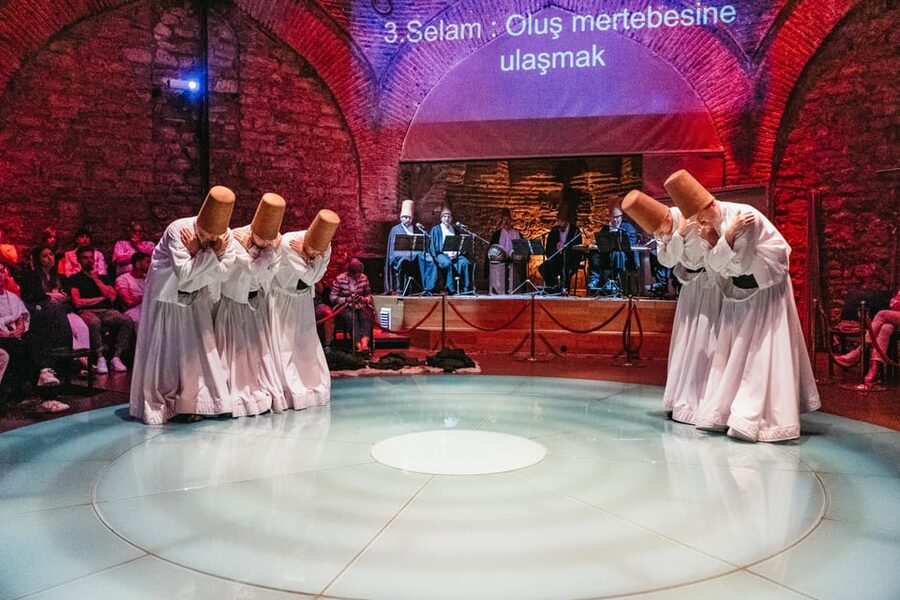
The program lasts about one hour. You enter the historic venue, look through the exhibition area, and then take your assigned seat for the ceremony. The performance space is small, with seating close enough for you to see facial expressions, hand positions, clothing, and the careful physical control involved in the spinning.
The evening follows the general form of a Sufi ritual. There is music, singing, bowing, and a gradual movement toward the whirling section. Some of the ceremony may feel repetitive, by design. The performers are not trying to keep you entertained with constant changes. Their focus is prayer, discipline, and spiritual concentration.
That distinction matters. If you attend expecting a folk dance show, you may wonder when the main event begins. The whirling may not start until partway through the hour. If you arrive prepared to watch a meditative religious practice, the same pacing can feel purposeful and even absorbing.
More Museums and Galleries in Istanbul
- Istanbul: Hagia Sophia Skip-the-Line Ticket & Museum Option
★ 3.7 · 4,958 reviews - Istanbul: Hodjapasha Whirling Dervishes Show & Exhibition
★ 4.4 · 4,790 reviews - Istanbul: Topkapi Palace & Harem Museum Ticket & Audio Guide
★ 4.1 · 3,977 reviews
Why the foyer exhibition matters
Do not rush straight into the theater. The exhibition is one of the most useful parts of the evening because it gives you a basic framework for what you are about to see.
The displays cover Sufi traditions, Rumi poetry, and the origins of the whirling dervish practice. Information about the stages of the ceremony may also appear through illuminated text, video, or slides during the presentation. That background helps you understand why the performers bow, how the ritual progresses, and why the spinning is not simply a physical trick.
I would allow at least 20 minutes for the exhibition if you want more than a quick look. You do not need to be an expert in Islam or Sufism to appreciate it. A little preparation makes the hour more meaningful, especially because the ceremony itself offers limited spoken explanation.
The multilingual booklet is included with admission. It can help you follow the ideas presented, although the exact languages are not specified. The exhibition also gives you a chance to settle down before the low lighting and quiet music begin.
The ceremony, step by step
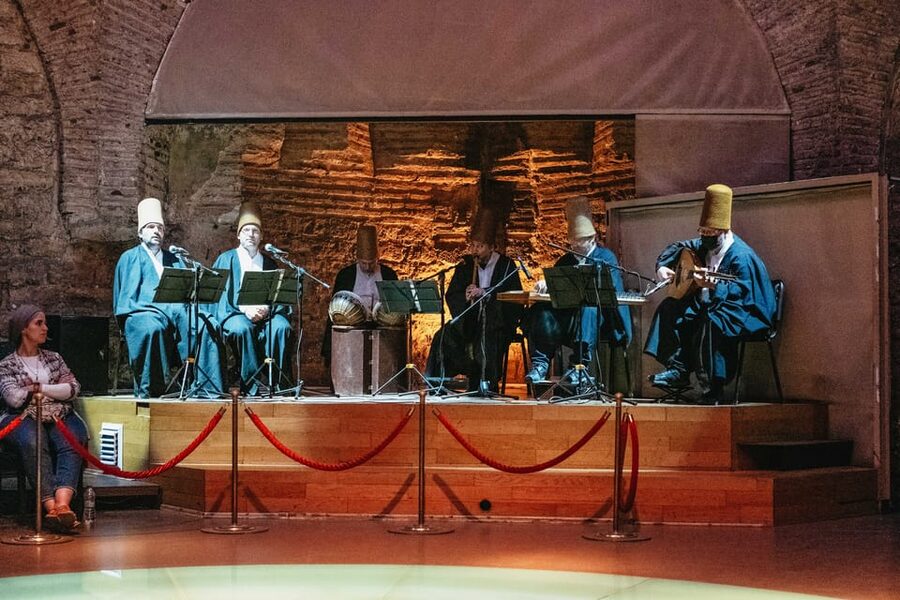
The opening portion establishes a serious, prayerful mood. Performers and musicians appear in traditional dress, and the ceremony develops through music, singing, and formal bows. The live sound is a major part of the experience. Traditional instruments and voices fill the small room without the need for a large production.
The bowing and opening movements can seem slow if you are waiting for the spinning. I found that this part makes more sense when you think of the ceremony as a sequence of prayer rather than as a performance built around one visual effect.
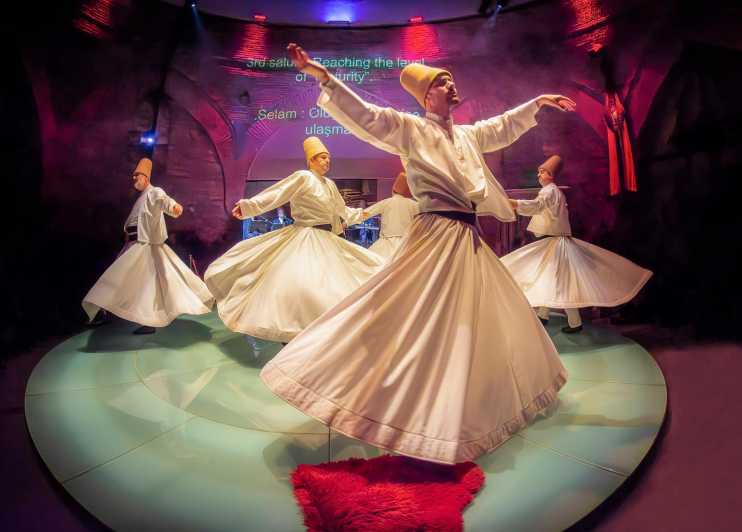
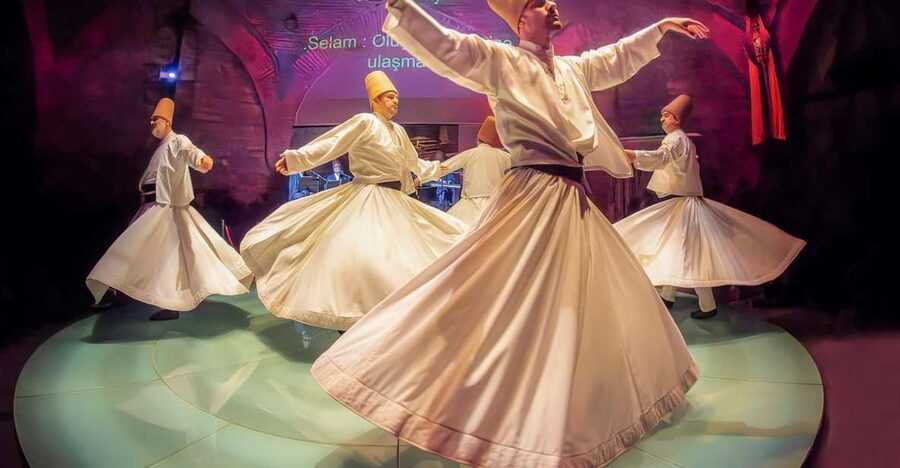
The whirling begins later. The dervishes extend one arm upward and the other downward while turning in a controlled circle. The movement repeats for an extended period, creating the trance-like quality that gives the ceremony its power.
You may be impressed by the physical discipline alone. Maintaining balance while turning for so long requires focus and practice. Yet the purpose is not to show off stamina. The spinning represents a spiritual practice, and the subdued setting keeps attention on concentration rather than spectacle.
Some people find the repeated movement mesmerizing. Others find it boring. Both reactions are reasonable. I would not recommend this program to anyone who needs constant action, comic commentary, or a fast pace. The repetition is the point, and you need to be comfortable sitting quietly with it.
A close seat and a strict atmosphere
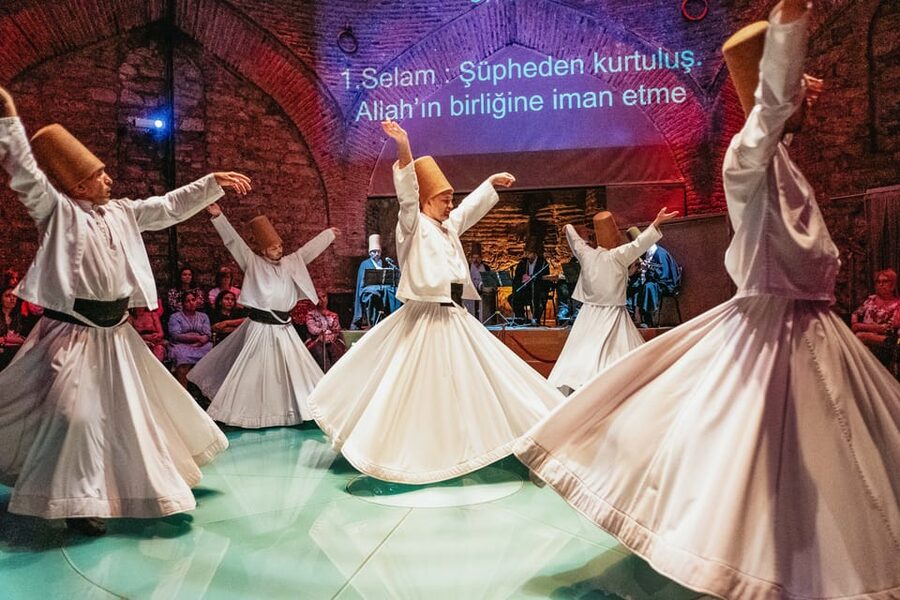
The compact venue works in your favor if you want to see the details. The seating is assigned, so you do not have to compete for the best chair. The close arrangement also means that the ceremony feels more personal than a large auditorium production.
The audience is asked not to take photographs, record video, or applaud. This can surprise people who have booked it as a typical evening show. The restrictions are appropriate for a ceremony presented as a spiritual practice, and they help keep phones from breaking the mood.
You should also avoid treating the ritual as a photo opportunity. Put your phone away, watch carefully, and let the music carry the evening. The lack of applause at the end may feel unusual, but it fits the tone of the event.
The room is comfortable, though low light and soft music can make some people sleepy. That is not necessarily a problem. The ceremony is designed to quiet the mind, not to keep you alert with constant stimulation.
A completely different kind of day out:
- Istanbul: Bosphorus Dinner Cruise & Show with Private Table
★ 4.8 · 44,561 reviews - Istanbul: Daytime or Sunset Sightseeing Cruise & Audio Guide
★ 4.8 · 14,430 reviews - Istanbul: Bosphorus Dinner Cruise with Turkish Night Show
★ 4.8 · 10,127 reviews - Best of Istanbul 1, 2 or 3-Day Private Guided Istanbul Tour
★ 5.0 · 8,922 reviews
Is the experience authentic?
This question needs a careful answer. Hodjapasha presents a staged public event in a cultural center, so you are not attending a private religious gathering or accidentally encountering worship in a mosque. It is arranged for an audience and sold as an evening cultural experience.
At the same time, the program is presented as a serious ritual rather than a flashy imitation. The performers maintain a solemn manner, and the audience is expected to respect the religious character of what is being shown. Some people consider it a strong representation of the tradition, while others feel that a commercial presentation cannot be fully authentic.
I would describe it as a cultural presentation of a Sufi ceremony. That makes it valuable for a first introduction, especially if you have limited time in Istanbul. It does not replace deeper study or a personal connection with Sufi communities, but it can give you a thoughtful look at an important Turkish tradition.
The best approach is to avoid demanding a simple yes or no answer about authenticity. Go for the music, ritual structure, poetry, and chance to observe the practice respectfully. If your main goal is a pure religious encounter, this format may not satisfy you.
The music and the meaning of silence
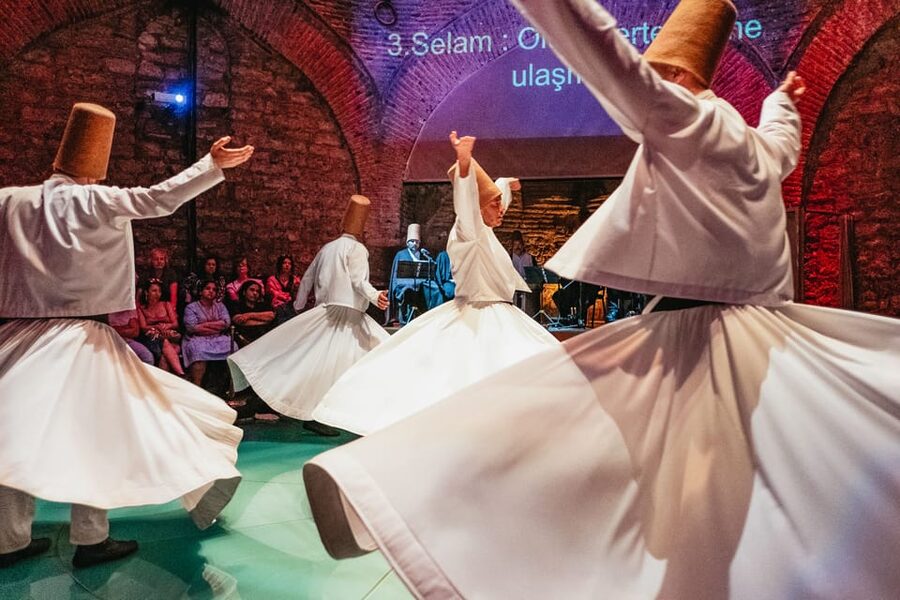
The music may be the most immediately enjoyable part of the experience. Traditional musicians and singers provide a steady sound that supports the ceremonial movements rather than competing with them. The result is peaceful and, at times, haunting.
The silence from the audience matters just as much. No clapping and no camera shutters leave space for the sound of the instruments and voices. You may notice details that would be lost in a standard show, such as the pace of the breathing, the folds of the clothing, or the concentration on a performer’s face.
The ceremony can also appeal across religious lines. You do not need to share the beliefs behind the ritual to appreciate the discipline and devotion. The presentation offers a look at how prayer, music, poetry, and movement can work together.
I would suggest reading a little about Rumi and Sufism beforehand. Even a short introduction will help you recognize that the whirling is tied to ideas about spiritual movement, devotion, and the search for a closer relationship with God.
Getting there without a frustrating start
The location is central and near public transportation. It is also close to restaurants, cafés, the Spice Market, and other historic sights, making it easy to build the ceremony into an evening in the old city.
The last stretch can be confusing. The venue is on Hocapaşa Hamamı Sokak, a smaller lane off Ankara Caddesi. A taxi may stop on the main street rather than at the theater entrance, so you should expect to walk the final section.
I would not rely on a taxi to take you directly to the door. Use public transportation or walk from a nearby stop when practical, then check the street address carefully. Allow extra time because arriving late could mean missing part of the opening ceremony or viewing less of the exhibition.
The activity ends back at the same meeting point. There is no hotel pickup or drop-off, so you are responsible for reaching the center and arranging your own return.
Is $32 a fair price?
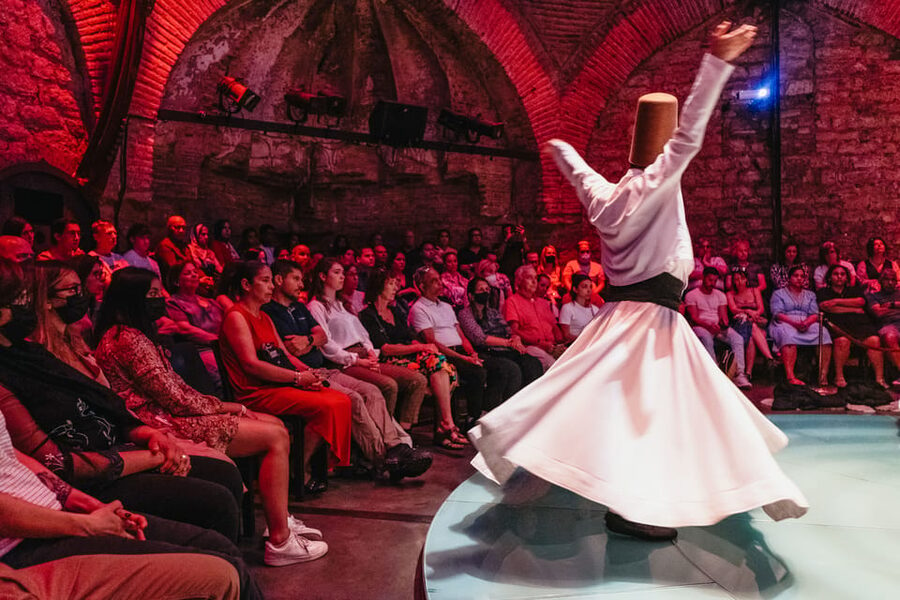
At around $32 per person, the ticket is reasonably priced for a one-hour cultural program in central Istanbul. You receive admission to the ceremony, access to the exhibition, a multilingual booklet, and bottled water. The nearby restaurants and cafés also make it easy to turn the visit into a full evening without paying for a separate organized dinner package.
The value depends on what you want. If you want a polished entertainment show with varied scenes, this may feel expensive for an hour of slow, repetitive movement. If you want a convenient introduction to Sufi ceremony, live traditional music, and Rumi-related culture, the price is sensible.
You are paying for atmosphere and access rather than a long itinerary. There is only one stop, no transportation, and no meal. That keeps the experience simple, but it also means you should judge the ticket mainly by your interest in the subject.
The program is open to children age seven and older, though I would use caution with younger children. The quiet pace and repeated spinning can be difficult for children who need activity. Adults and older children who enjoy cultural experiences are more likely to appreciate the format.
Who should book this ceremony?
I would recommend Hodjapasha to you if you enjoy religious traditions, live music, poetry, history, or quiet observation. It is especially useful if this is your first time seeing whirling dervishes and you want a central, organized introduction.
It suits people who can sit patiently and accept repetition. The most rewarding part may come after you stop waiting for a conventional performance to begin. Once you understand that the turning is a form of devotion, the slow pace becomes easier to accept.
I would hesitate to recommend it to you if you want a family-friendly stage show, strong visual variety, or a lively evening of entertainment. Children can attend from age seven, but the provider does not promise a program designed to hold a young child’s attention.
The ceremony is also a good fit for visitors who want something different from Istanbul’s mosques, bazaars, and archaeological sights. It gives you another way to think about Turkish culture, through sound, movement, and spiritual practice.
Practical details before booking
Confirmation is provided at the time of booking, and the ticket is mobile, so you can keep it on your phone. The experience is offered in English, although the ceremony itself relies heavily on music, movement, and visual information rather than a conventional English-speaking guide.
The maximum group size is listed as 170 people, though the performance room may feel much smaller depending on the seating arrangement. Assigned seats remove some uncertainty once you are inside.
Free cancellation is available if you cancel at least 24 hours before the start time. Cancellations made less than 24 hours ahead are not refunded, and changes inside that same period are not accepted. The cut-off follows Istanbul local time.
The program is generally available to most people, and public transportation is nearby. Specific accessibility details are not provided, so you should confirm directly with the Hodjapasha Cultural Centre if you have mobility needs that require special arrangements.
Should you book Hodjapasha?
Book it if you want a respectful introduction to Sufi ritual and can accept that this is not a dance show in the usual sense. The close seating, live music, exhibition, and calm setting make it one of the more distinctive cultural evenings available in central Istanbul.
Skip it if you are looking for fast entertainment or if repetitive movement quickly loses your attention. For everyone else, arriving early, reading the exhibition, and keeping your expectations religious rather than theatrical will make a big difference.
At $32, it is a fair one-hour experience, especially when you use it as part of an evening near the Spice Market and historic Fatih. Treat the silence as part of the program, respect the no-photography rule, and give the ceremony time to reveal what it is trying to do.
FAQ
How long does the Hodjapasha Whirling Dervishes experience last?
The ceremony lasts approximately one hour.
Where does the experience begin and end?
It begins at Hodjapasha Cultural Centre, Hoca Paşa Mahallesi Ankara Caddesi, Hoca Paşa, Hocapaşa Hamamı Sokak No. 3, in Istanbul’s Fatih district. It ends back at the same meeting point.
Is admission included in the ticket?
Yes. Admission to the one-hour cultural ceremony is included.
What else is included?
A multilingual booklet and bottled water are included.
Is hotel transportation provided?
No. Hotel pickup and drop-off are not included, so you must make your own way to and from the venue.
Are children allowed to attend?
Yes. The minimum age is seven.
Can I take photos or videos during the ceremony?
No. The audience is asked not to take photographs, record videos, or applaud during the religious ceremony.
Can I cancel for a full refund?
Yes, if you cancel at least 24 hours before the experience start time. Cancellations made less than 24 hours before the start time are not refunded.
More Show in Istanbul
- Istanbul: Bosphorus Cruise with Dinner Show
★ 4.4 · 2,181 reviews - Bosphorus Dinner Cruise with Show and Private Table
★ 4.5 · 2,021 reviews - Istanbul: Hodjapasha Rhythm of The Dance Show
★ 4.7 · 1,451 reviews - Istanbul: Bosphorus Dinner Cruise with Turkish Night Show
★ 4.6 · 781 reviews
Just added in Istanbul
- Private Tour: Istanbul’s Ottoman Experience Including Topkapi Palace and Blue Mosque★ 4.5 · 16 reviews
- Private istanbul tour with transportation★ 5.0 · 36 reviews
- Private Customizable Istanbul Day Tour with Licensed Guide★ 5.0 · 64 reviews
- IstanbulBasilicaCistern/fastEntranceEnglish/Spanish (not tickets)★ 4.0 · 184 reviews
- Private Bosphorus Cruise and Egyptian Bazaar with Motor Yacht★ 4.0 · 24 reviews
- Private Old City Guided Tour★ 5.0 · 129 reviews
- Private Princes’ Islands Tour★ 5.0 · 56 reviews
- Istanbul Private Tour Designed for Layover Flight, Transfer incl.★ 5.0 · 164 reviews
Museums and Galleries, compared.
Hagia Sophia Skip-the-Line Ticket & Museum Option
Read our review →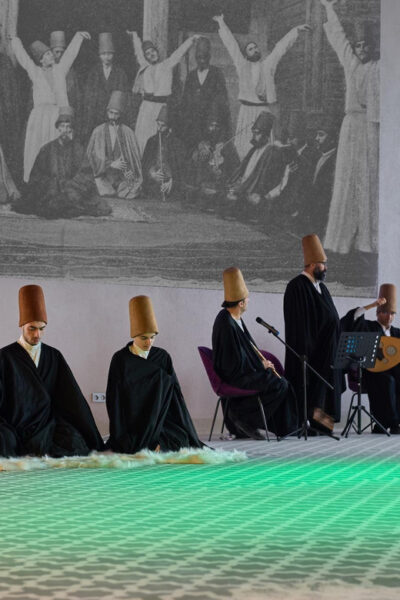
Hodjapasha Whirling Dervishes Show & Exhibition
Read our review →
Topkapi Palace & Harem Museum Ticket & Audio Guide
Read our review →
Small-Group Red Tour, Open Air Museum with Lunch
Read our review →
Topkapi Palace and Harem Museum Tour with Ticket
Read our review →
Official Museum Pass for 12 Most Popular Museums
Read our review →
Hagia Sophia Mosque and Museum Skip-The-Line Combo
Read our review →Browse the lists this tour appears in