
Reviewed · ANCIENT SITES AND RUINS
Kusadasi: Ephesus & Temple of Artemis Tour with Entry Ticket
Ancient stones, very little filler. This 3.5-hour Kusadasi shore tour packs Ephesus and the Temple of Artemis into a well-managed half-day, with port pickup, a licensed guide, and return transport built around cruise schedules. I like the cool, clean vehicle and the strong guiding reported from names such as Ahmet, Aysel, Esra, Mesta, Celine, and Tarkan. I also like the chance to see both the grand ruins and one of antiquity’s famous wonders without arranging several separate rides.
The main consideration is simple: the Temple of Artemis is mostly gone, with only its foundation and one column remaining. Also check which booking option you choose, since entry tickets may be included or excluded. On a hot, crowded day, Ephesus demands good shoes, water, and a hat.
In This Review
- Key points to know before you book
- Why this Kusadasi shore tour works well
- The drive from Ege Ports to ancient Ephesus
- Entering Ephesus through its monumental streets
- The Great Theatre and the story of St. Paul
- The Library of Celsus, Ephesus’s great photograph
- Odeon, Hadrian, Trajan, and the marble road
- The Temple of Artemis: a famous ruin with one column
- Guides, group size, and the quality of the explanation
- Extra stops and the question of shopping
- Timing, heat, and cruise-day safety
- Cancellation, tickets, and what the $27 price really buys
- Who should book this Ephesus excursion?
- Final verdict: a smart half-day from Kusadasi Port
- FAQ
- How long does the tour last?
- Where does pickup take place?
- Are entry tickets included?
- What languages are available?
- Is this tour suitable for cruise passengers?
- What should I bring?
Key points to know before you book
- Cruise-port timing is the priority: Pickup and return are arranged at Kusadasi Port, with the tour time adjusted to your ship’s schedule.
- Ephesus gets the main share of time: You spend about 2.5 hours exploring the ancient city with a guide.
- The Library of Celsus is the visual star: Its restored facade is one of the most recognizable sights in Turkey.
- The Temple of Artemis is a brief but worthwhile stop: Expect ruins rather than a complete temple.
- Air conditioning matters: The ride takes about 30 minutes each way, and the vehicle is a welcome break from the sun.
- Choose your ticket option carefully: Some versions include admission, while others require payment to the guide in cash.
Why this Kusadasi shore tour works well
Kusadasi is a common stop for cruise ships, but Ephesus is not right beside the pier. The drive takes about 30 minutes each way, so a dependable vehicle and a firm return plan matter as much as the ruins themselves.
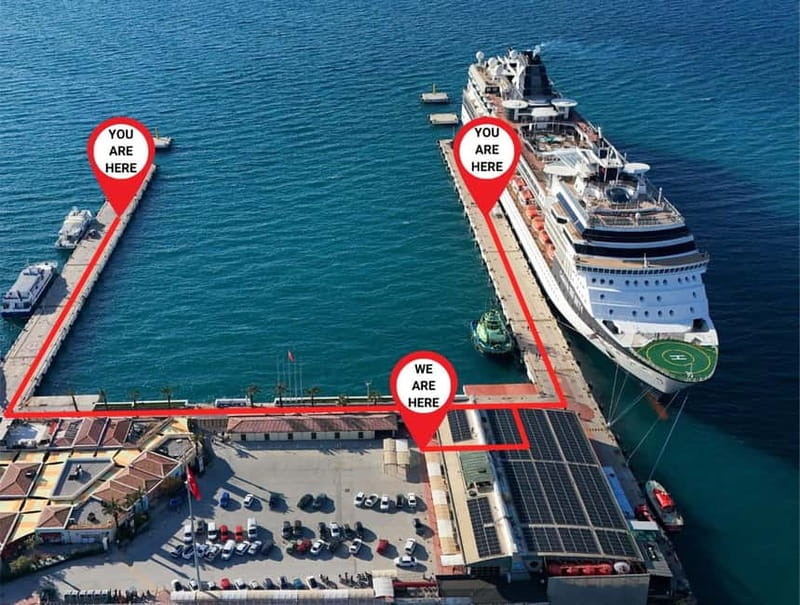
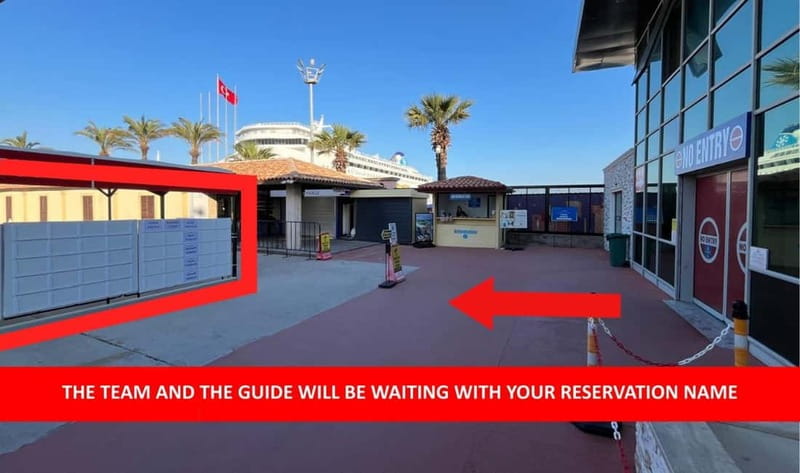
This excursion is designed for that exact problem. You meet your guide outside the cruise terminal arrival hall, where a sign with your name is used to identify the pickup. The operator asks you to confirm your pickup time through WhatsApp or email, which is a sensible step when ship schedules change.
The tour lasts around 3.5 hours, with roughly 2.5 hours at Ephesus and 45 minutes at the Temple of Artemis. That leaves little room for wandering far from the group, but it gives you a focused introduction without consuming your whole port day.
I would choose the small-group version if you want some social energy and a lower price. A private tour makes more sense for families, couples, or anyone who wants to control the pace. Private groups also give you a better chance to ask detailed questions or pause longer at favorite sites.
The published price is about $27 per person, which can be excellent value for port transport, guiding, and parking. But do not assume that figure always includes the Ephesus admission fee. The booking choices include versions with and without entry tickets, and the information also says the admission fee may be paid directly to the guide in euros, dollars, or Turkish lira. Read the selected option carefully before paying.
More Ancient Sites and Ruins in Kusadasi
- FOR CRUISERS: Skip The Lines PRIVATE EPHESUS TOUR &On Time Return
★ 5.0 · 8,527 reviews - Top Choice For Cruisers: Ephesus, Mary’s House WITH TICKETS+LUNCH
★ 5.0 · 7,233 reviews - PRIVATE EPHESUS TOUR FOR CRUISERS: On-time Return and Skip-Line
★ 5.0 · 5,807 reviews
The drive from Ege Ports to ancient Ephesus
The first practical test is finding the correct pickup point. The tour uses Ege Ports, also called Kusadasi Cruise Pier or Port Kusadasi. The guide is expected to wait outside the terminal arrival hall with your name displayed.
Once everyone is aboard, the road to Ephesus takes about half an hour. The vehicle is air-conditioned, a detail that becomes especially valuable during Turkey’s hot summer months. Several accounts describe clean, comfortable vans or buses, with drivers who handled the port transfers safely.
This is not a scenic road tour, and the transport section is mainly about getting you to the archaeological site without stress. That is exactly what you want on a cruise day. Keep your passport or ID card with you, and remember that smoking is not allowed in the vehicle.
The operator says the tour time can be adjusted to your ship’s docking and onboard schedule. That flexibility is useful, but you should still confirm the time in advance. A quick WhatsApp or email message can prevent a long wait at the terminal.
Entering Ephesus through its monumental streets
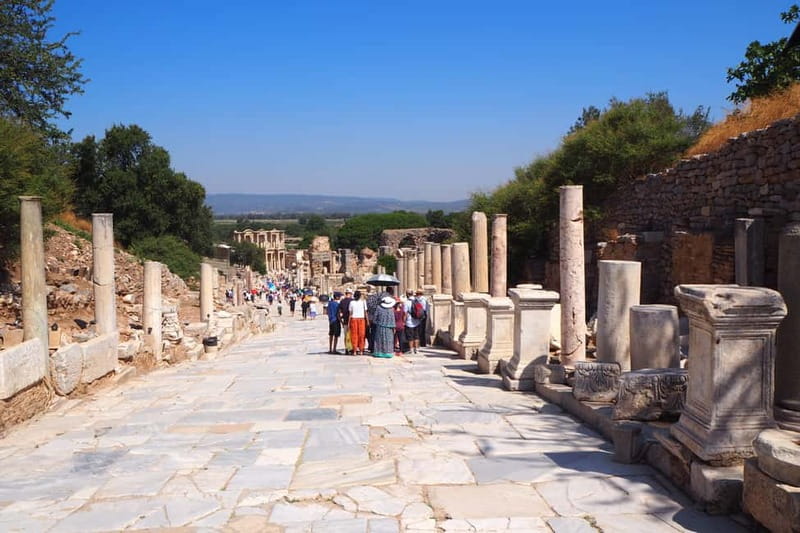
Ephesus is the heart of the outing. It is described as the best-preserved classical city in the eastern Mediterranean and Turkey’s largest open-air museum. The site includes more than 30 buildings and structures connected by ancient streets, some still marked by chariot-wheel grooves.
Your guide gives the ruins a human scale. Instead of seeing disconnected columns, you can follow the shape of a city: public squares, baths, theaters, temples, roads, fountains, and reading rooms. The setting helps you understand how Roman urban life worked, even if you are not an archaeology specialist.
The walking surface is a key consideration. You will be moving over ancient marble and uneven ground, so supportive shoes are more useful than stylish sandals. Bring water and a hat. There is limited relief from the sun in exposed sections, and warm weather can make the 2.5-hour visit feel longer.
Crowds can also gather around the most famous structures. A good guide helps by explaining the site while the group moves, then allowing time for photographs and independent looks. Mesta is praised for combining humor with clear explanations, while Esra is described as passionate, personable, and easy to follow. Those qualities matter here because Ephesus can otherwise become a blur of names and dates.
The Great Theatre and the story of St. Paul
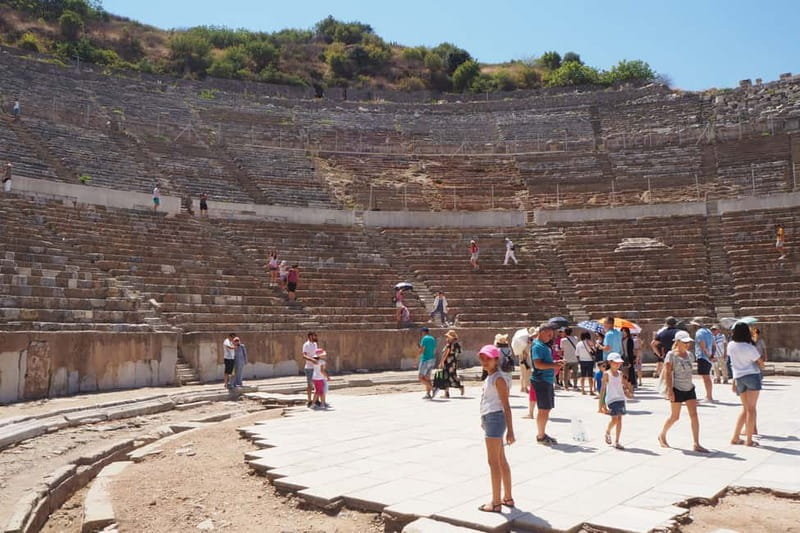
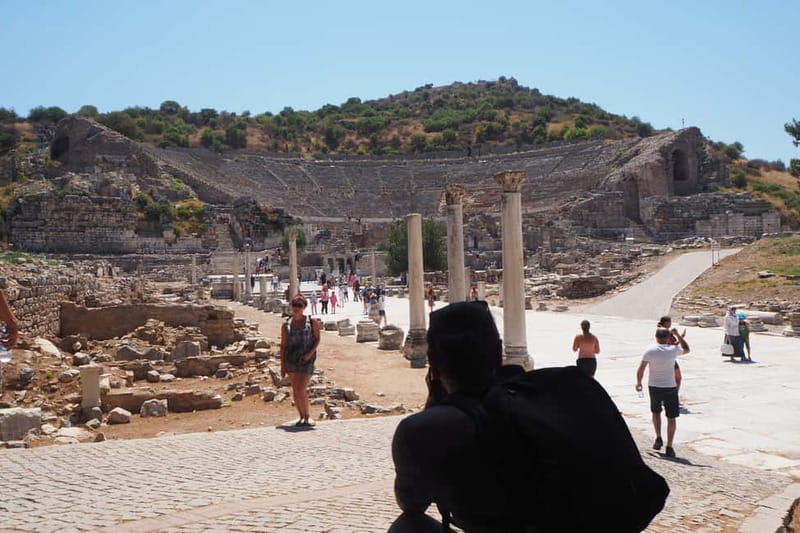
The Great Theatre is one of the first places to command your attention. It once held about 25,000 people and began in the Hellenistic period before Roman emperors renovated it.
The structure served as a performance space and was later adapted for gladiatorial contests. It also carries an important Christian connection. St. Paul preached in Ephesus, and his ministry was seen as a threat by those tied to the city’s traditional religious life.
Your guide can connect the theater’s architecture with those religious and political tensions. This is one of the better moments to listen closely rather than rush for a photograph. You are looking at a venue built for mass entertainment, public debate, and civic spectacle.
The theater is also large enough to make the city’s population feel real. A single column or fallen block is easy to admire in isolation. A theater sized for 25,000 people shows how ambitious Ephesus was at its peak.
More Skip-the-Line Tickets in Kusadasi
- SKIP-THE-LINE: Group & Private Ephesus Tour ENTRY FEE & LUNCH
★ 5.0 · 935 reviews - All Inclusive Private Access Ephesus Tour (SKIP-THE-LINE)
★ 5.0 · 843 reviews - PRIVATE Ephesus and House of Virgin Mary Tour (Skip-The-Line)
★ 5.0 · 558 reviews - SKIP-THE-LINE: Group or Private Ephesus & Artemis Tour with LUNCH
★ 5.0 · 462 reviews
The Library of Celsus, Ephesus’s great photograph
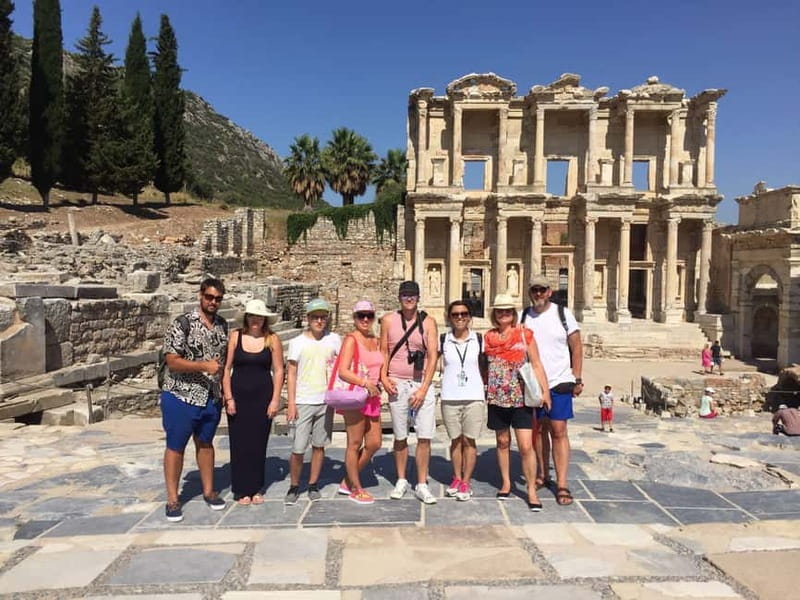
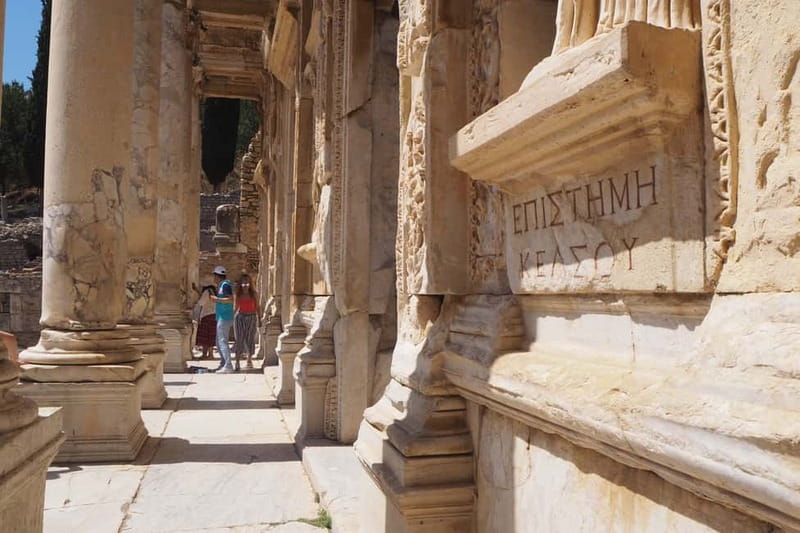
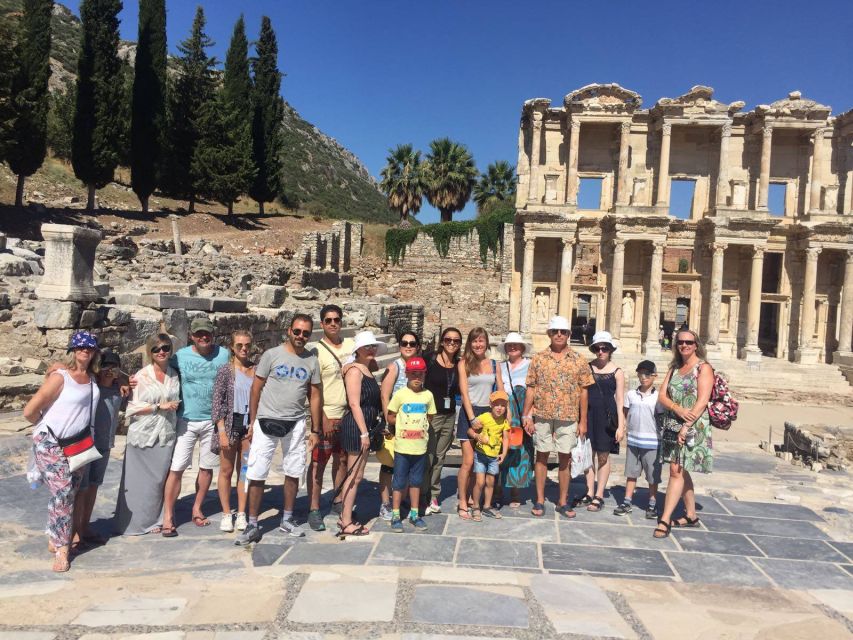
The facade of the Library of Celsus is the visual centerpiece of the visit. Built between 115 and 125, it has been carefully restored, making it one of the most photographed parts of the site.
The library was not simply a pretty wall. Its monumental facade expressed civic pride and respect for learning, while its scale reminded citizens and visitors that Ephesus was an important center of culture. The surviving statues and columns give the building a sense of ceremony even though the interior is largely gone.
This is where a guide’s timing helps. You want an explanation of the facade, time for photographs, and a chance to look at the details without being pushed through too quickly. Ali S is praised for clear explanations, and several guides are described as giving groups enough time to explore on their own.
The Library of Celsus can be crowded, particularly when cruise excursions arrive together. If your group pauses slightly away from the main photo angle, you may get a better look at the carvings before moving into the busiest spot.
Odeon, Hadrian, Trajan, and the marble road
Ephesus contains more than its two headline sights. Depending on the route and site conditions, you might see the Odeon, Fountain of Trajan, Temple of Hadrian, Scholastica Baths, the agora, and the Temple of Domitian.
The Odeon was a smaller performance and meeting space than the Great Theatre. Its presence shows that civic life required more than one gathering place. The Fountain of Trajan and the Temple of Hadrian add another layer, showing how monuments could honor emperors and support the public image of Roman power.
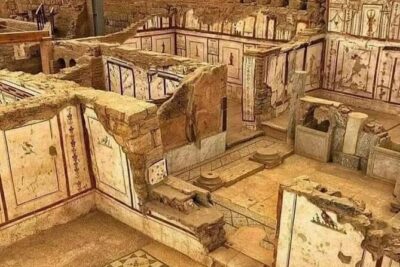
The Scholastica Baths offer a glimpse into everyday city life. Roman baths were social and civic spaces, not merely places to wash. The marble road links these remains into something that feels like a city plan rather than an isolated archaeological field.
I appreciate that the tour leaves room for these secondary structures. The famous library may bring you to Ephesus, but the smaller remains explain how people moved, met, worshipped, and spent time there.
The exact sequence can vary. The included schedule calls the Ephesus portion a guided visit and sightseeing stop, not a promise that every structure will receive equal attention. If one building matters especially to you, tell the guide early.
The Temple of Artemis: a famous ruin with one column
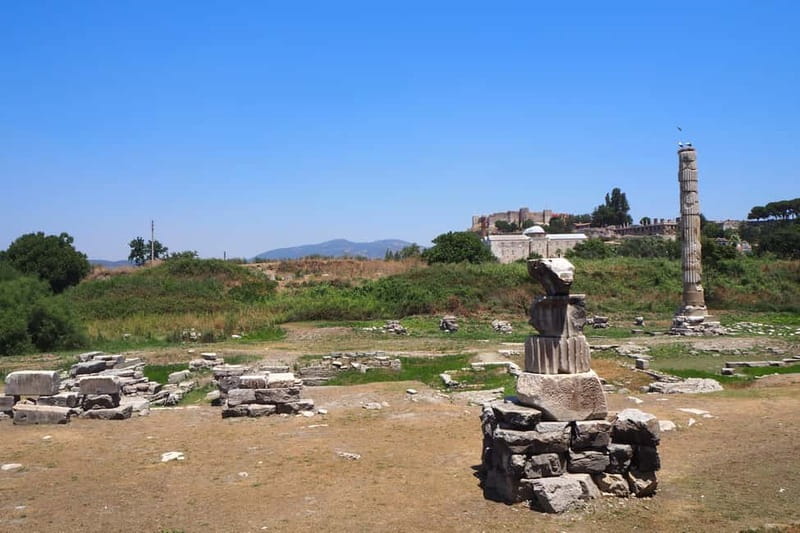
After Ephesus, the vehicle continues to the Temple of Artemis. This sanctuary was dedicated to Artemis, the goddess of the hunt, and was counted among the Seven Wonders of the Ancient World.
The numbers help explain its former scale. The temple measured about 425 feet by 220 feet, yet today only the foundation and one column remain. That contrast can be startling. You are not visiting a standing wonder in the way you might visit a complete monument. You are seeing the footprint of a place whose fame survived long after most of its structure vanished.
The stop lasts about 45 minutes and is mainly for a guided explanation and photographs. It is a quieter, shorter visit than Ephesus, but it adds useful context. St. Paul’s successful work in Ephesus was viewed as a threat to the old temple’s religious importance, linking the Christian story to the wider changes taking place in the city.
I would keep expectations realistic. If you need grand architecture at every stop, this may feel underwhelming. If you enjoy historical puzzles and the idea of standing beside the remains of an ancient wonder, it earns its place on the route.
Guides, group size, and the quality of the explanation
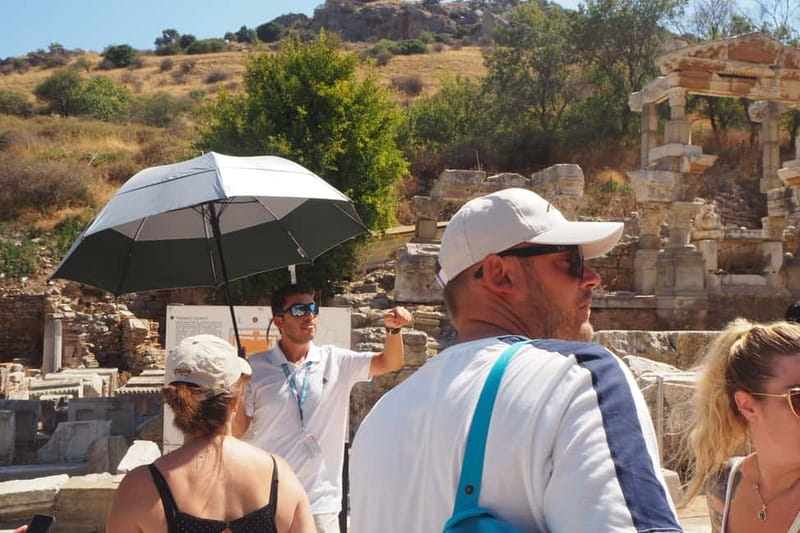
The most consistent strength of this experience is the guide. The tour is offered in English, Russian, or Japanese, and the guide is licensed.
Specific guides praised in the supplied feedback include Ahmet, Aiden, Aysel, Celine, Effe, Esra, Isok, Mehmet, Mesta, Selin, Tarkan, and Zeynep. The descriptions repeatedly emphasize clear English, humor, patience, good pacing, and a willingness to answer questions. Aysel and Esra are noted for being warm and personable, while Tarkan is described as attentive to the group’s needs.
That matters at Ephesus. The ruins are impressive, but the meaning is not always obvious from the stones alone. A guide who explains the chronology and points out the links between Roman culture, early Christianity, and local traditions can turn a quick port stop into a coherent visit.
Group size affects the experience. Small groups make it easier to hear, ask questions, and move at a reasonable pace. Private touring gives you the most control. Larger groups can still work well, but you may spend more time waiting for people to regroup.
One useful detail from the feedback is that guides generally allowed breaks and independent exploration. That balance is important. You want instruction, not a nonstop lecture.
Extra stops and the question of shopping
Some versions or days may include a stop at a carpet center, ceramic workshop, candy shop, or a place where you can see Turkish carpet making. The carpet visit can include a demonstration of women weaving carpets, and lunch may be provided on certain altered or extended arrangements.
These additions are not clearly guaranteed in the core 3.5-hour schedule, so treat them as possible extras rather than promised stops. Some accounts describe a carpet showroom and local Turkish lunch, while another mentions a ceramic workshop with no pressure to buy.
A shopping stop can be interesting when it shows a real craft. It becomes less appealing if you want every minute at the ruins. If you are on a private tour, ask the guide what is planned and say clearly if you prefer more archaeological time.
The same applies to lunch. One group was moved to a full-day arrangement without paying extra, and lunch was included. That sounds generous, but it should not be treated as the normal package. Confirm what your chosen option covers before you count on a meal.
Timing, heat, and cruise-day safety
The tour is scheduled to finish around 1:00 PM, followed by the return to Kusadasi Port. The operator specifically promises timely return for cruise passengers, and that is the central reason to choose a port-focused excursion rather than arranging separate transport.
Still, build good habits into the day. Confirm your pickup time, stay aware of the group meeting points, and do not wander off during free time without telling the guide. Cruise ships do not wait for independent sightseeing plans that run late.
The heat is the other major practical issue. The ruins are exposed, and the marble can reflect the sun. Wear sturdy walking shoes, carry water, and use a hat. The air-conditioned vehicle provides relief between stops, but it cannot cool the archaeological site itself.
The tour does not list special accessibility details, so ask the provider directly if you have mobility concerns. Ancient streets and uneven surfaces can make walking difficult.
Cancellation, tickets, and what the $27 price really buys
You can cancel up to 24 hours before departure for a full refund, and the reserve-now, pay-later option lets you hold a place without paying immediately. Those policies are useful when cruise schedules or shore plans are still changing.
The price of about $27 is attractive for a guided port excursion, especially when you compare it with the cost of arranging a private vehicle and guide. You receive pickup and drop-off, an air-conditioned vehicle, a licensed guide, and parking fees.
The ticket issue needs close attention. One option includes entry tickets, while another excludes them. The ancient Ephesus admission fee may also be paid directly to the guide in cash, using euros, US dollars, or Turkish lira. The guide can prepay skip-the-line tickets, which helps avoid a ticket queue, but that does not mean admission is free.
I would check three things before finalizing:
- Confirm that your selected version includes or excludes entry tickets as you expect.
- Confirm the pickup time through WhatsApp or email.
- Confirm whether any carpet, ceramic, candy, or lunch stop is part of your exact booking.
Who should book this Ephesus excursion?
I would recommend it to cruise passengers who want the main sights with little planning. It suits first-time visitors, history fans, and anyone who values a guide to explain the Roman and Christian connections.
It is also a good fit if you want a small group, cool transport, and a firm route back to the ship. Families may prefer private touring, especially if children need more breaks or adults want to adjust the pace.
I would hesitate if you want a slow archaeological study, long independent photography sessions, or a full day at Ephesus. The schedule is compact, and the Temple of Artemis is a short ruin stop rather than a complete monument. You may also want to ask about possible shopping detours if your main goal is time among the ancient stones.
Final verdict: a smart half-day from Kusadasi Port
I would book this tour if I had one port day and wanted Ephesus handled efficiently. The strongest reasons are the experienced guides, comfortable air-conditioned transport, small-group and private options, and attention to getting you back to the ship.
The Library of Celsus, Great Theatre, marble road, and Roman public buildings provide the main reward. The Temple of Artemis adds an important historical connection, even though its physical remains are sparse.
Choose the entry-ticket option carefully, confirm your schedule, and arrive ready for heat and uneven ground. With those details settled, this is a practical, good-value way to see two of the Aegean coast’s most important ancient sites.
FAQ
How long does the tour last?
The tour lasts about 3.5 hours. The listed schedule includes about 30 minutes by vehicle each way, around 2.5 hours at Ephesus, and about 45 minutes at the Temple of Artemis.
Where does pickup take place?
Pickup is available from Kusadasi Port, including Ege Ports, Kusadasi Cruise Pier, and Port Kusadasi. The guide meets you outside the cruise terminal arrival hall with a sign showing your name.
Are entry tickets included?
Entry tickets depend on the option you select. Some versions include them, while others exclude them. The Ephesus admission fee can be paid directly to the guide in euros, dollars, or Turkish lira.
What languages are available?
The live tour guide is available in English, Russian, or Japanese.
Is this tour suitable for cruise passengers?
Yes. The tour is designed for cruise passengers, and pickup and return are arranged around the ship’s docking and onboard times. You should contact the provider to confirm your pickup time.
What should I bring?
Bring your passport or ID card, water, a hat, and comfortable walking shoes. Smoking is not allowed in the vehicle.
Just added in Kusadasi
- Ephesus Ancient City Highlight Tour For Cruisers★ 4.8 · 35 reviews
- Shore Excursions: Half Day Ephesus & Şirince Village Tour★ 4.9 · 39 reviews
- Kusadasi: Ephesus and Artemis Skip-the-line Small Group Tour★ 4.9 · 113 reviews
- From Kusadasi Port: Ephesus Full-Day Private Trip★ 4.9 · 20 reviews
- Private Tour in Ephesus and TraditionalTurkishBath from Port★ 4.7 · 22 reviews
- Kusadasi: Ephesus, Mary’s House, Artemis 4 to 6 hours Tours★ 4.7 · 219 reviews
- Ephesus, Priene, Miletos and Didyma Tour★ 4.9 · 21 reviews
- Ephesus: Half-Day Tour from Kusadasi★ 4.1 · 39 reviews
Ancient Sites and Ruins, compared.
FOR CRUISERS: Skip The Lines PRIVATE EPHESUS TOUR &On Time Return
Read our review →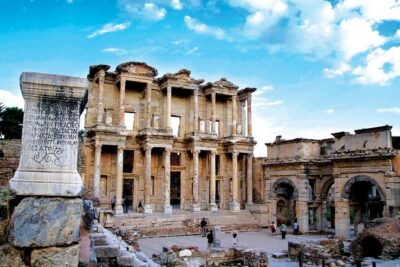
Top Choice For Cruisers: Ephesus, Mary’s House WITH TICKETS+LUNCH
Read our review →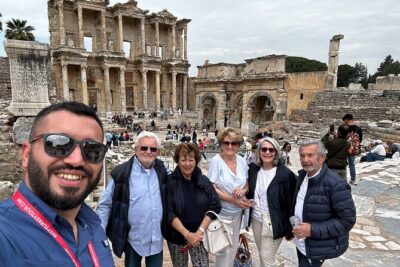
PRIVATE EPHESUS TOUR FOR CRUISERS: On-time Return and Skip-Line
Read our review →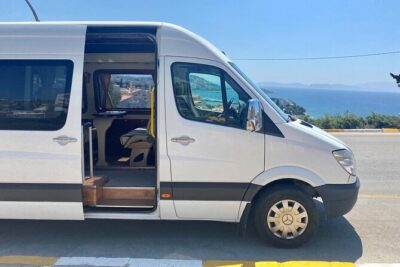
PRIVATE NO HIDDEN FEES Ephesus, Mary’s House Guided Tour /GRP OPT
Read our review →
Pamukkale Hierapolis and Cleopatra’s Pool Tour with lunch from Antalya
Read our review →For Ship Guests:BEST SELLER EPHESUS PRIVATE TOUR & On Time Return
Read our review →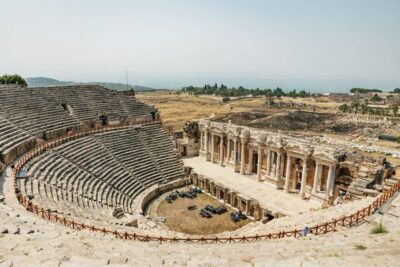
ALL INCLUDED: Ephesus Ruins, Mary’s House Tour incl ENTRY TICKETS
Read our review →Browse the lists this tour appears in