Reviewed · ISTANBUL TOURS
Turkey Biblical Tour (Private)
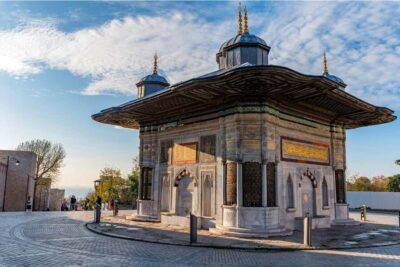
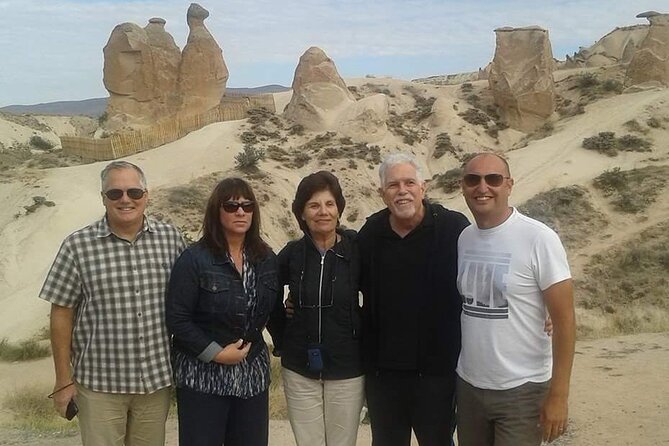
The Bible comes alive across Turkey. This private 10-day journey links Istanbul’s imperial monuments with Troy, the Seven Churches of Revelation, Ephesus, and Cappadocia, all with your own guide, driver, transport, lunches, and entrance fees arranged. I especially like the private format, which lets you move at your group’s pace, and the way guides such as Ertunga and Umut connect ruins to Acts and Revelation. The main catch is the pace: long drives, several domestic transfers, and full sightseeing days demand moderate physical fitness.
I also like the practical care built into the trip. Past guests describe comfortable vehicles, clean hotels, generous lunches, fresh fruit and drinks on the road, and guides who helped with medical problems when needed. You will need to budget separately for dinners, tips, and Cappadocia’s hot-air balloon ride, and the $3,604.57 price per person is a serious investment even though it covers a great deal.
In This Review
- Five details that shape the experience
- Istanbul begins with emperors, sultans, and market lanes
- The Bosphorus shows Istanbul from the water
- Troy and the coast where Paul traveled
- Pergamon, Thyatira, and Smyrna bring Revelation into focus
- Sardis and Philadelphia show the quieter side of the route
- Laodicea and Colossae reward careful attention
- Ephesus is the archaeological centerpiece
- Cappadocia trades columns for cave churches
- Underground Kaymaklı and the final Cappadocian valleys
- What the $3,604.57 price really covers
- Who should book this private biblical journey?
- FAQ
- How long is the Turkey Biblical Tour?
- Is this a private tour?
- What meals are included?
- Are entrance fees included?
- Is the hot-air balloon ride included in Cappadocia?
- What level of fitness is needed?
Five details that shape the experience
- Paul and the Seven Churches: Pergamon, Smyrna, Sardis, Philadelphia, Laodicea, and nearby biblical sites give the tour a clear Christian focus.
- A genuinely private setup: Only your party and the guide and driver take part, so the day can be adjusted more easily than on a large coach tour.
- Domestic flights save time: Flights connect Istanbul with Izmir and Cappadocia with Istanbul, avoiding even longer overland transfers.
- Lunch and entrance fees are covered: Eight lunches, parking, transport, guiding, and listed admission fees are included.
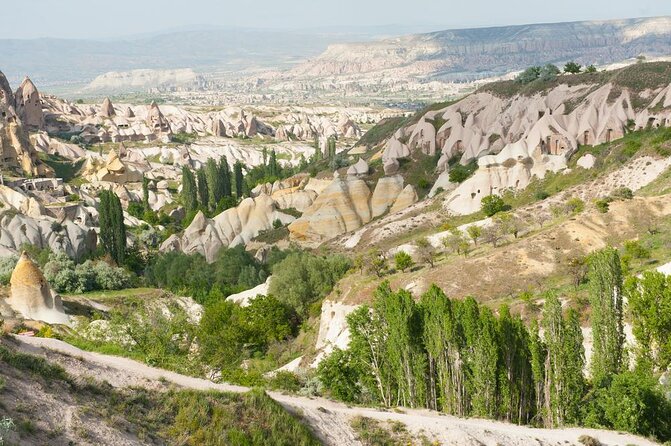
- Cappadocia provides a dramatic finish: Underground cities, cave churches, fairy chimneys, valleys, and old villages bring a very different side of Turkey.
- Guides add biblical context: Ertunga is praised for explaining Scripture alongside Turkish culture, archaeology, geography, and daily life.
Istanbul begins with emperors, sultans, and market lanes
Your first day is mainly arrival day. You are collected at the airport, taken to your hotel, and given the night to settle in. Pickup can be arranged from the airport or your hotel lobby, which is useful after an international flight.
Day two begins at the Byzantine Hippodrome, once the setting for public entertainments organized by emperors. It is an easy place to begin because you can picture Istanbul as Constantinople before moving into its Ottoman chapter.
The Blue Mosque follows. Its official name is the Sultan Ahmed Mosque, but the familiar nickname comes from the handmade blue ceramic tiles inside. The visit is listed as free admission, though religious sites can have changing access arrangements. Dress respectfully and expect to remove your shoes.
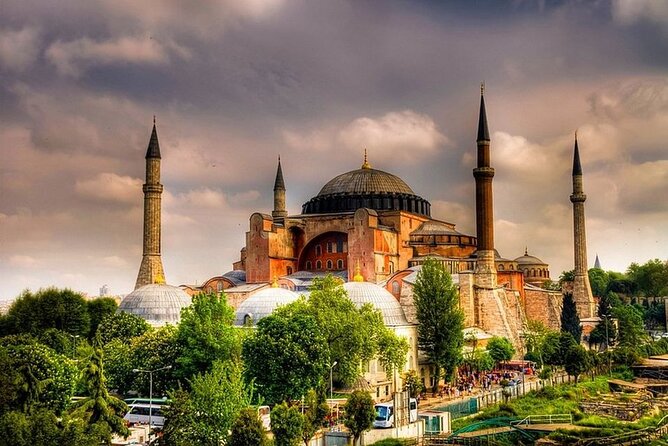
Hagia Sophia Grand Mosque receives about 90 minutes. This is one of the world’s great buildings, first known as the Church of Holy Wisdom and later used as a mosque, museum, and mosque again. The building’s long religious and political story is exactly why a good local guide matters here. You will get more from the site if someone explains what changed across the centuries instead of simply pointing out the dome.
Topkapı Palace takes another 90 minutes and is the day’s main paid sight. This former residence of Ottoman sultans spreads across a large complex and displays Ottoman art and architecture. Give yourself room for the scale of the place. Afterward, you finish at the Grand Bazaar, a covered market with more than 4,000 shops. You can browse, shop, and watch the salesmanship without needing to buy anything. This is a good place to keep your sense of humor and compare prices before committing.
A few more options to weigh up in Istanbul
- Istanbul: Bosphorus Dinner Cruise & Show with Private Table
★ 4.8 · 44,561 reviews - Istanbul: Daytime or Sunset Sightseeing Cruise & Audio Guide
★ 4.8 · 14,430 reviews - Istanbul: Bosphorus Dinner Cruise with Turkish Night Show
★ 4.8 · 10,127 reviews
The Bosphorus shows Istanbul from the water
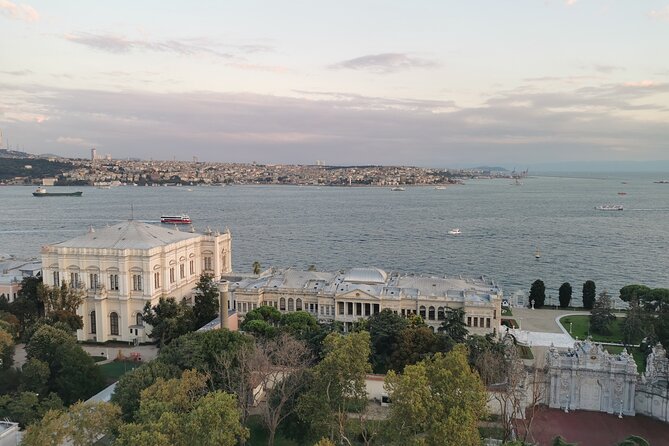
Day three shifts the view from monuments to the Bosphorus Strait. The two-hour boat trip passes Istanbul’s bridges, Dolmabahçe and Beylerbeyi Palaces, Anadolu and Rumeli fortresses, and the houses lining the water. It is a valuable change of rhythm after a day on foot, and it helps you understand Istanbul as a city shaped by its two shores.
You then visit the Misir Çarşısı, or Spice Market, a covered 17th-century market once central to the city’s spice trade. The stop lasts about an hour. It is more compact than the Grand Bazaar, so you can enjoy the colors and aromas without losing an entire afternoon.
After sightseeing, you are transferred to the airport for a flight to Izmir, then driven to your hotel in Kuşadası. This is efficient, but it is also a long transition day. Keep important medication, documents, and a light layer in your hand luggage rather than buried in the main bags.
Troy and the coast where Paul traveled
Day four takes you north along the Aegean coast. Troy is tied to Homer’s legendary war, and the replica wooden horse gives the site an instantly recognizable starting point. The ruins themselves require imagination, since the archaeological story involves several settlement layers rather than one perfectly preserved city.
Alexandria Troas adds the biblical connection. Acts 16:8 places Paul here before he sailed toward Greece, and Acts 20:5 to 12 connects the area with the raising of Eutychus. The visit is short, about 30 minutes, so the guide’s explanation will help you understand why this otherwise quiet site matters.
Assos is the final stop. Acts 20:5 to 6 and 13 to 14 describe Paul walking from Alexandria Troas to Assos, where he met companions who had traveled by sea. The setting gives you a chance to connect the written route with the physical distances and terrain. This day includes several short visits, but the time on the road is real. You are not simply hopping between nearby attractions.
Pergamon, Thyatira, and Smyrna bring Revelation into focus
Day five begins with a three-hour drive from Assos to Pergamon. That is one of the tour’s heavier road stretches, but Pergamon rewards the effort. The Acropolis includes the Temple of Athena, the Library of Pergamon, the theater, the Temple of Trajan, the Altar of Zeus, and other remains. You also see the Serapis Temple, Heroon, and Red Court.
Pergamon is identified as the third of the Seven Churches of Asia in Revelation 1:11. Revelation 2:13 refers to the city as the place of Satan’s throne. Those references give the guide a strong framework for explaining the political and religious pressures surrounding the early Christian community.
The stop at Akhisar corresponds with ancient Thyatira, another of the Seven Churches. Revelation 2:18 to 28 addresses the church here, while Acts 16:14 identifies Lydia, the seller of purple, as coming from this city. The visit is only about 45 minutes and admission is listed as free, so set your expectations correctly. This is more about location and interpretation than a large, intact ruin field.
Izmir is ancient Smyrna, the second city to receive a letter from John in Revelation 2:8 to 11. The modern city is Turkey’s third largest, and the point is not only to inspect stones. You are seeing how an ancient Christian center fits within a living Turkish city.
A completely different kind of day out:
- Best of Istanbul 1, 2 or 3-Day Private Guided Istanbul Tour
★ 5.0 · 8,922 reviews - Istanbul: Basilica Cistern Fast-Track Entry and Audio Guide
★ 4.6 · 7,521 reviews - Istanbul: Hagia Sophia Skip-the-Line Ticket & Museum Option
★ 3.7 · 4,958 reviews - Istanbul: Hodjapasha Whirling Dervishes Show & Exhibition
★ 4.4 · 4,790 reviews
Sardis and Philadelphia show the quieter side of the route
Sardis receives about 90 minutes on day six. It was the capital of ancient Lydia and one of the Seven Churches mentioned in Revelation 3:1 to 6. The remains include the gymnasium, a Jewish synagogue, the Temple of Diana, and an early church. The mixture of civic, Jewish, pagan, and Christian remains gives this stop unusual breadth.
You then continue to Alaşehir, ancient Philadelphia. Founded after 189 BC, it was another seat of the Seven Churches and is associated with brotherly love. The visit lasts only about 30 minutes. It is one of the places where the biblical importance is much greater than the amount of visible excavation, so a guide who can supply context is essential.
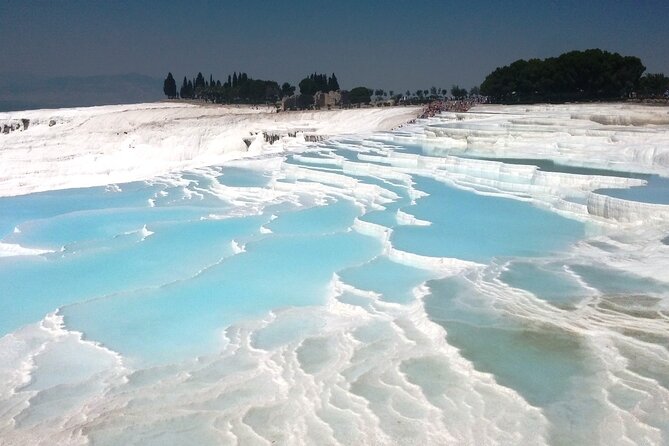
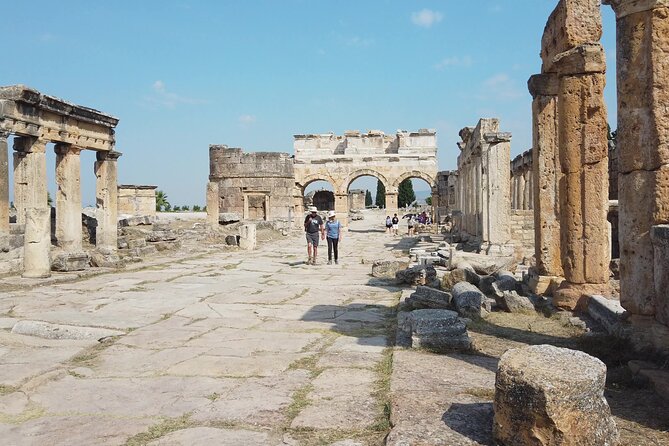
Pamukkale changes the mood completely. White travertine terraces were formed by mineral-rich thermal waters, and the nearby ancient city of Hierapolis was a Roman spa center founded around 190 BC. You visit the Gate of Domitian, Arcadian Way, the long necropolis, and the tomb associated with Apostle Philip.
The listed visit takes two hours, but Pamukkale can be physically demanding because of uneven surfaces and walking. The famous white terraces are the visual prize, while Hierapolis supplies the archaeological depth. Together they make one of the most memorable days of the trip.
Laodicea and Colossae reward careful attention
Day seven visits Laodicea, called the Lukewarm Church in the biblical context. Revelation’s final letter to the churches of ancient Asia Minor was addressed here. The remains include Christian ruins, the statue of Emperor Augustus, an aqueduct, a stadium, and the Ephesian Gate.
This is a broad archaeological site, not a single polished monument. You will get the most from it by listening closely as the guide connects the visible remains with the city’s place in the New Testament.
Colossae is different. The ancient city remains largely unexcavated, and the stop lasts about 30 minutes. It is associated with Paul’s letter to the Colossians and with Philemon. Do not expect a dramatic ruin field. The value is standing near the location of a church known chiefly through its texts.
After Colossae, you face about three hours of driving to Kuşadası. By now, the private vehicle becomes more than a convenience. You can ask questions, pause for practical needs, and travel without managing a large group.
Ephesus is the archaeological centerpiece
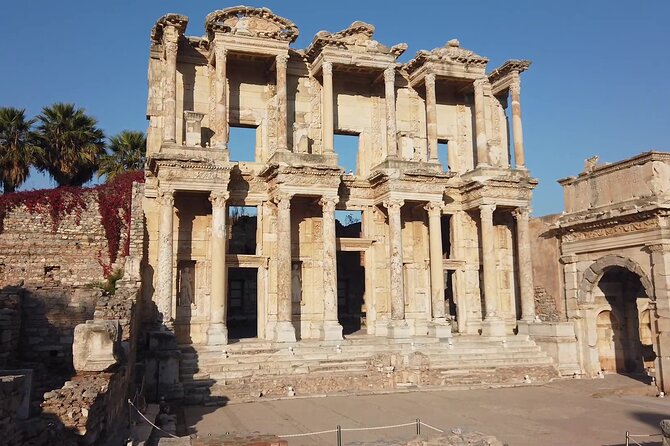
Day eight is one of the tour’s strongest days. Ephesus connects directly with Paul, John, and the Christian communities addressed in the New Testament. The visit covers the Baths of Scholastica, Library of Celsus, Temple of Hadrian, theater, and the Temple of Artemis, once counted among the Seven Wonders of the ancient world.
Paul visited Ephesus briefly during his second missionary journey and later spent more than three years there. That long association gives the site special weight for anyone studying Acts. The ancient streets and public buildings also make this one of the easiest places to picture city life in the Roman period.
Meryemana, known as the House of the Virgin Mary, follows. It is believed to be where Mary lived her final years. The stop takes about 45 minutes and carries a different tone from Ephesus, with a more devotional focus.
The Basilica of St. John is the final major visit. Built by Justinian I in the sixth century, it rises over the believed burial site of John the Apostle. You then transfer to Izmir Airport for the flight to Cappadocia. This creates a full day followed by airport logistics, so pack the night before and keep your schedule flexible.
Cappadocia trades columns for cave churches
Day nine opens at the Esentepe viewpoint, where you look across Göreme. It is a short stop, but it gives you the broad view before you walk among the rock formations.
The Göreme Open-Air Museum is the main attraction. This UNESCO World Heritage site preserves a rocky monastic settlement used from the fourth through the 13th centuries. Cave churches and carved spaces make this a fitting continuation of the tour’s Christian theme, though the setting and art belong to a later period than the sites connected with Paul.
Paşabağ, or Monks Valley, is known for its fairy chimneys, shaped by ancient lava, ash, and basalt. You can walk among the formations and into the surrounding hills. The paths and uneven ground are another reason the tour asks for moderate fitness.
Avanos introduces pottery and the Kızılırmak River. The town’s earthenware tradition remains an important part of local life, and you may visit a pottery workshop. Devrent Valley, also called Imaginary Valley, finishes the day with unusual rock shapes that are often compared to animals. The stop is brief, but it adds variety to an already scenery-heavy day.
Underground Kaymaklı and the final Cappadocian valleys
Day ten begins below ground at Kaymaklı Underground City. Eight subterranean levels were built for protection from attacking armies and raiders, though only four are currently open. The passageways can feel tight, so this is worth considering if you dislike confined spaces.
Red Valley follows with a short walk among vineyards and gardens. Çavuşin, an old Greek village, includes a fifth-century Church of Saint John and views toward the Rose and Red Valleys. Pigeon Valley gets its name from the many dovecotes carved into the soft volcanic rock.
Love Valley finishes the sightseeing with tall, tower-shaped formations and sunset views. The route then continues to Kayseri Airport for your flight to Istanbul. The final day packs five stops into a limited schedule, so think of them as focused visits rather than long hikes.
A hot-air balloon ride is not included. It can be a major Cappadocia highlight, but you should treat it as an optional extra and arrange your budget accordingly.
What the $3,604.57 price really covers
At $3,604.57 per person, this is not a budget tour. Its value depends on how much planning you want removed from your hands. The price includes private transport, guiding, parking, entrance fees, eight lunches, and the Cappadocia to Istanbul flight. The itinerary also includes the Istanbul to Izmir flight, though the included section specifically calls out the Cappadocia to Istanbul ticket, so confirm the full domestic flight arrangement before paying.
You also choose among different hotel options. Since the exact hotel category is not specified here, ask what is included at each level. Dinners are not covered, and neither are tips or the hot-air balloon ride.
The strongest value comes from combining difficult-to-arrange archaeological sites with private transport. Several places have limited visible remains, long distances between them, or complicated biblical context. A guide such as Ertunga, praised for patient explanations and for reading the relevant passages at the sites, can make those stops worthwhile.
The trip’s service record is also encouraging. Ertunga and driver Vecdi are described as helping with medication, hospital arrangements, translation, insurance calls, and itinerary changes after injuries or illness. Other guides, including Umut, are praised for linking Acts and Revelation with local culture. That kind of support matters on a 10-day route.
Who should book this private biblical journey?
I would choose this tour if you want Scripture, archaeology, Turkish culture, and major sights in one carefully managed trip. It suits couples, families, church groups, and small private parties who value interpretation and convenience more than free time in each city.
I would think twice if you dislike long drives, early starts, uneven ruins, airport transfers, or a tightly packed schedule. You also need to be comfortable with a tour built around biblical sites, including places with little excavation left to see.
The overall rating is 5 from 16 ratings, with 100 percent recommending it. That matches the tour’s strongest features: personal guides, careful drivers, generous lunches, and help when plans go wrong. Book it for the human guidance and the route, not just for a list of attractions. If you do, ask about hotel categories, all domestic flights, daily walking demands, and the extra cost of ballooning before you commit.
FAQ
How long is the Turkey Biblical Tour?
The tour lasts approximately 10 days, beginning with airport pickup and a hotel night in Istanbul and ending with a flight from Kayseri to Istanbul.
Is this a private tour?
Yes. Only your party and the guide and driver participate, with private transport and guiding.
What meals are included?
Eight lunches are included. Dinners are not included, and tips are also excluded.
Are entrance fees included?
Yes. The tour includes listed entrance fees, along with parking fees, transport, guiding, and lunch. Some stops already have free admission.
Is the hot-air balloon ride included in Cappadocia?
No. The hot-air balloon experience is specifically excluded from the tour price.
What level of fitness is needed?
A moderate level of physical fitness is advised. The route includes walking through archaeological sites, uneven ground, valleys, terraces, and the Kaymaklı Underground City, where only four of its eight levels are open to the public.
Just added in Istanbul
- Private Tour: Istanbul’s Ottoman Experience Including Topkapi Palace and Blue Mosque★ 4.5 · 16 reviews
- IstanbulBasilicaCistern/fastEntranceEnglish/Spanish (not tickets)★ 4.0 · 184 reviews
- Private istanbul tour with transportation★ 5.0 · 36 reviews
- Private Customizable Istanbul Day Tour with Licensed Guide★ 5.0 · 64 reviews
- Private Old City Guided Tour★ 5.0 · 129 reviews
- Private Princes’ Islands Tour★ 5.0 · 56 reviews
- Private Bosphorus Cruise and Egyptian Bazaar with Motor Yacht★ 4.0 · 24 reviews
- Istanbul Private Tour Designed for Layover Flight, Transfer incl.★ 5.0 · 164 reviews
Istanbul Tours, compared.
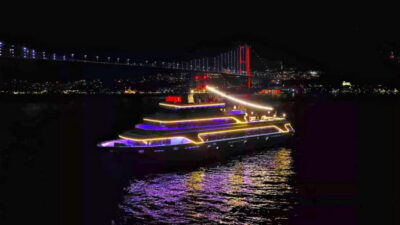
Bosphorus Dinner Cruise & Show with Private Table
Read our review →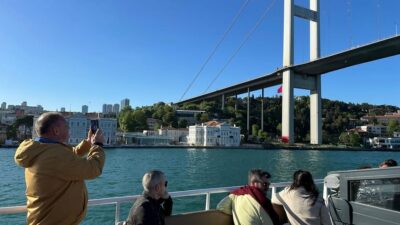
Daytime or Sunset Sightseeing Cruise & Audio Guide
Read our review →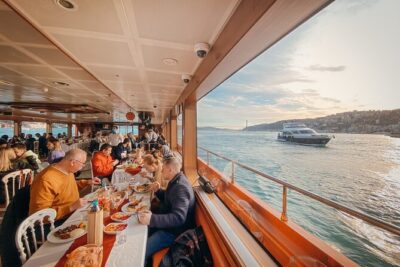
Bosphorus Dinner Cruise with Turkish Night Show
Read our review →
Best of Istanbul 1, 2 or 3-Day Private Guided Istanbul Tour
Read our review →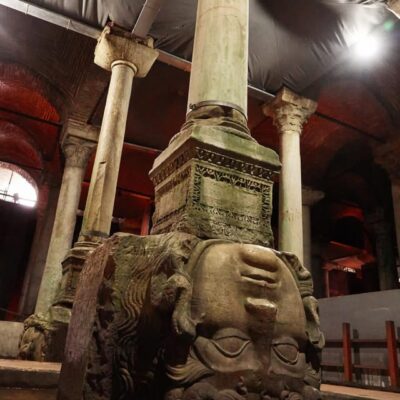
Basilica Cistern Fast-Track Entry and Audio Guide
Read our review →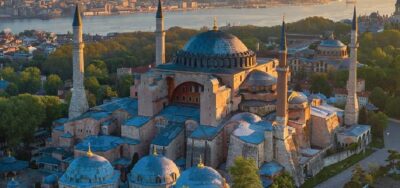
Hagia Sophia Skip-the-Line Ticket & Museum Option
Read our review →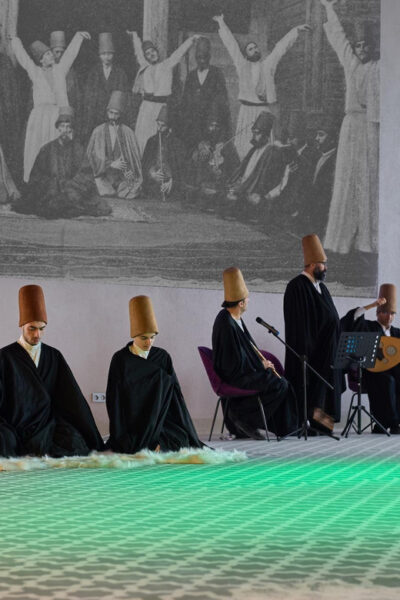
Hodjapasha Whirling Dervishes Show & Exhibition
Read our review →