
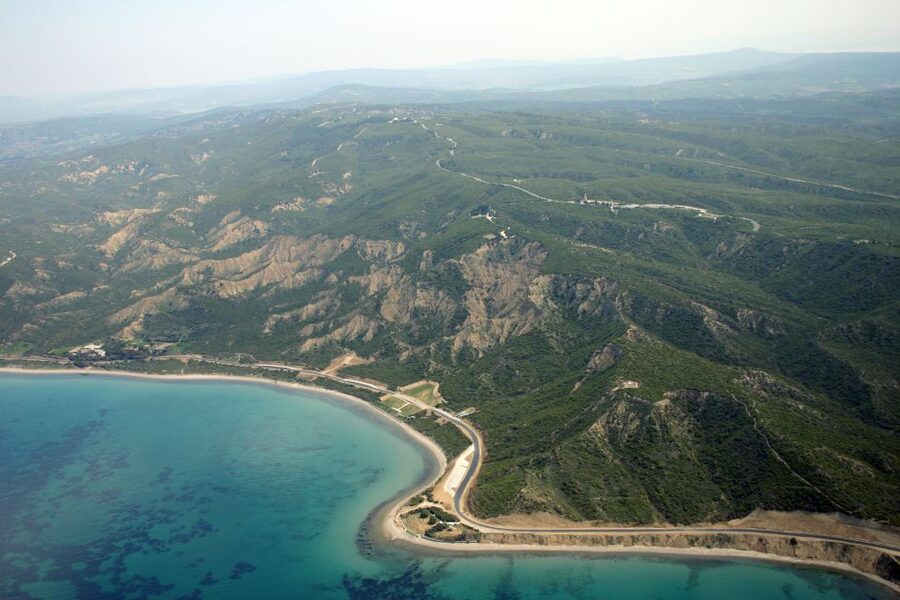
Reviewed · CANAKKALE TOURS
Canakkale: 6-Hour Gallipoli Tour with Lunch
Gallipoli makes history feel close. This six-hour trip from Çanakkale combines the short Dardanelles ferry crossing with a focused tour of the 1915 battlefields. I like the way the guides connect military decisions to the ground beneath your feet, and I like the small minivans, which keep the group more personal than a large coach. The main drawback is the one-hour lunch stop: if you are eager to spend more time at the memorials, that hour can feel too long.
The tour is especially useful if Gallipoli is new to you. Guides such as Burak, Charlie, Hasan, Ibrahim, Ibo, and Bulent have been praised for clear explanations, good storytelling, and a respectful sense of humor. You will see the key ANZAC sites in half a day, but the schedule is tight, and summer heat can make the afternoon visits tiring.
In This Review
- Key points to know before you go
- Starting at Çanakkale and crossing the Dardanelles
- What lunch in Eceabat is really like
- The short ride to Gallipoli’s battlefields
- Brighton Beach and ANZAC Cove
- Second Ridge, the trenches, and Johnston’s Jolly
- Lone Pine and the Australian memorial
- The 57th Regiment Turkish Memorial
- Chunuk Bair and the end of the campaign
- Guide quality, group size, and the pace
- Is $81 a fair price?
- Who should book this Gallipoli tour?
- FAQ
- Where does the tour start?
- Is hotel pickup and drop-off included?
- How long is the tour?
- What meal is included?
- Is the guide available in English?
- Which Gallipoli sites are visited?
- Can I cancel the booking?
- Should you book it?
Key points to know before you go
- The ferry is part of the history lesson: You cross the Dardanelles in about 25 minutes, linking Çanakkale with Eceabat on the Gallipoli Peninsula.
- Lunch comes before the battlefields: Expect a simple local meal in Eceabat, usually including soup, a chicken and beef plate with rice, and watermelon. Drinks cost extra.
- ANZAC Cove is a place for context, not just photographs: Your guide explains why the beach was chosen, how the landing unfolded, and why the advance stalled almost immediately.
- The small minivans are a real advantage: Groups are commonly split into vans of about 15 people, with air-conditioning and better access to the narrow battlefield roads.
- Lone Pine and Chunuk Bair tell different stories: One centers on Australian losses and remembrance, while the other explains the New Zealand attack and the Ottoman counterattack.
- This is an introduction, not a complete study of Gallipoli: Four and a half hours on the peninsula covers the central sights, but not every track, cemetery, or battlefield.
Starting at Çanakkale and crossing the Dardanelles
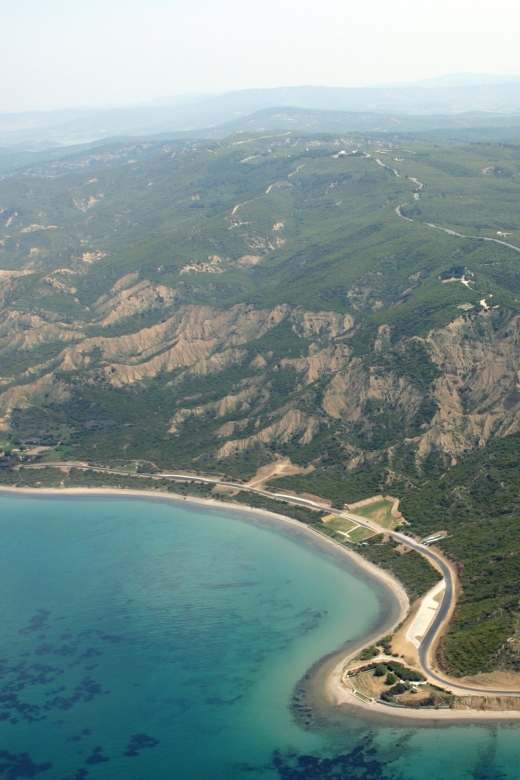
The meeting point is in front of the Tourist Information Center at the ferry harbor in Çanakkale. City-center hotel pickup may be available around 10:45 AM, but hotels outside the central area are assigned a nearby meeting point instead. Hotel drop-off is not included, although the tour provides a long list of possible return points around central Çanakkale.
A passenger escort meets you and walks you to the ferry. This is a useful start because you do not need to work out the terminal on your own. The crossing takes about 25 minutes, giving you a short break before the battlefield portion begins.
The Dardanelles is not just transport between two places. It is the waterway that gave the campaign its strategic purpose. The Allied attempt to force this strait and reach Istanbul was central to the wider Gallipoli operation. Crossing it before visiting the peninsula helps you understand the geography, even though the ferry ride itself is brief.
On arrival, you reach Eceabat, known in ancient times as Madytos. The town is the practical base for the peninsula tour. From there, the group walks to a local restaurant for lunch.
A few more options to weigh up in Turkey
- Top Choice For Cruisers: Ephesus, Mary’s House WITH TICKETS+LUNCH
★ 5.0 · 7,233 reviews - Antalya/Kemer: Suluada Island Small-Group Boat Tour w/ Lunch
★ 4.4 · 4,207 reviews - Antalya: Ziplining, Rafting, Jeep Tour & Quad Safari w/Lunch
★ 4.6 · 3,260 reviews
What lunch in Eceabat is really like
Lunch is included in the $81 price, and it keeps the day simple. A typical meal described on the tour includes lentil soup, chicken and beef served with rice, and watermelon. It is filling rather than fancy, which suits a day built around battlefield visits.
Drinks are not included. Water is available, but you should bring extra water for the afternoon, especially from late spring through summer. Some people have wished bottled water was supplied on the bus, and the heat can be strong once you begin walking around the memorials.
The one-hour lunch has two sides. If you are coming directly from Istanbul or prefer an organized day with no restaurant decisions, it is convenient. If you have eaten breakfast late or are traveling independently from Çanakkale, you may find the meal takes time away from the peninsula.
That is the clearest weakness of the experience. Several people have suggested dropping lunch or shortening it, particularly for those staying in Çanakkale. You cannot change the schedule once the tour begins, so consider your appetite and priorities when booking. The lunch option is most useful if you want an all-in-one package.
The short ride to Gallipoli’s battlefields
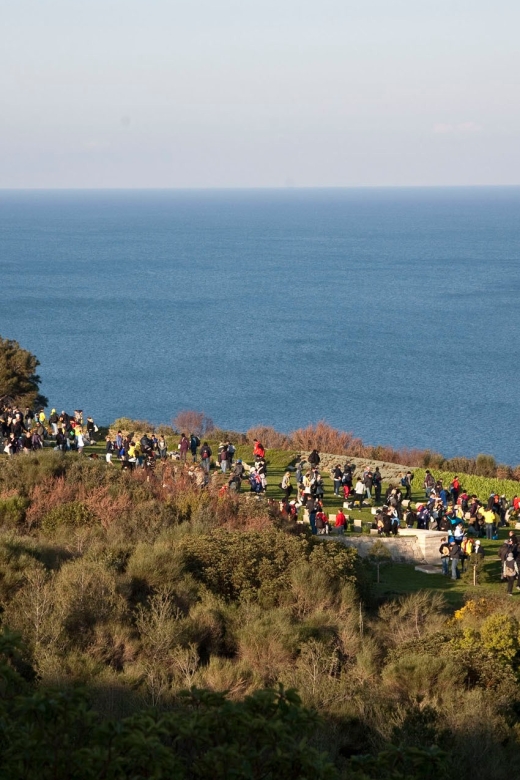
After lunch, you board an air-conditioned, non-smoking vehicle for the roughly 15-minute drive toward the battlefields. The larger group may be divided among smaller minivans, often with no more than about 15 people in each.
This arrangement matters. A minivan can use the battlefield roads more easily than a full-size bus, and a smaller group makes it easier to hear the guide. Air-conditioning is welcome in hot weather. One practical caution: if you sit in the back, you may have more trouble hearing commentary over the air-conditioning, so choose a forward seat if possible.
The guided battlefield section lasts about four and a half hours. You move from the Aegean coast inland and uphill, following the broad shape of the campaign rather than visiting sites in random order. The best guides use maps and repeated references to ridges, slopes, and beaches so the events become easier to picture.
This is where the tour earns its price. Gallipoli can look like a string of quiet beaches, scrub, roads, and cemeteries if you visit without background. A strong guide shows how a rise of ground or narrow valley affected what soldiers could see, reach, or defend.
Brighton Beach and ANZAC Cove
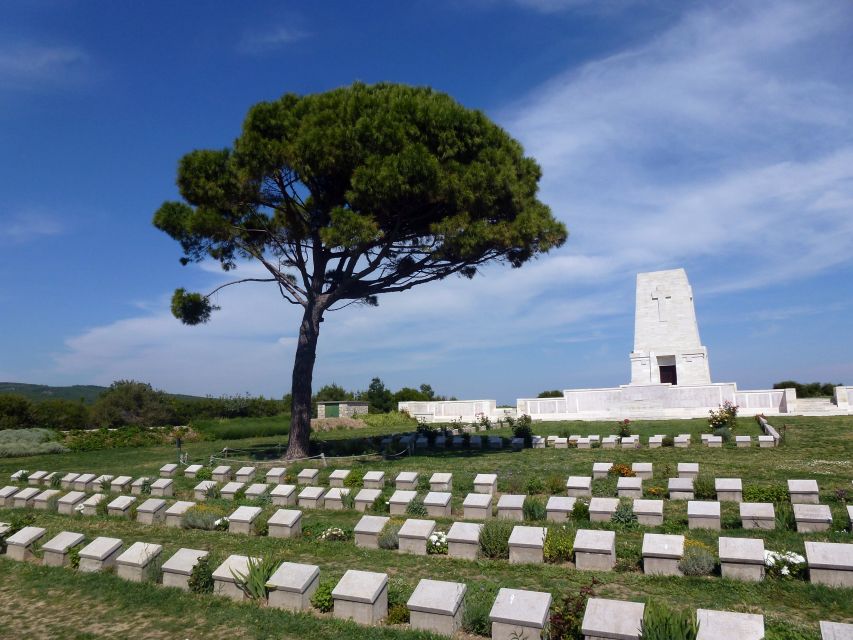
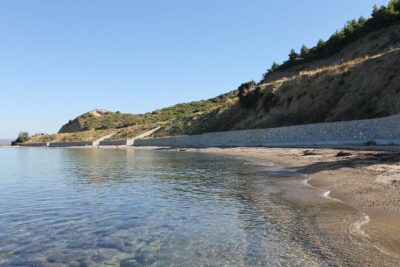
Brighton Beach was the intended landing point for the ANZAC troops on April 25, 1915. It is an important opening stop because it shows the plan before you learn how badly the landing location changed in practice.
You then reach ANZAC Cove, the site of the first landing. The cove is closely associated with the Australian and New Zealand Army Corps, but the guide should also explain the Turkish defense and the confusion of the opening hours. This is not simply a stop for national memory. It is a place where opposing plans, difficult terrain, and fast decisions collided.
The shore and nearby hills make the campaign’s basic problem easier to grasp. Troops landed below steep ground and then had to push upward against Ottoman defenders. The famous story of Gallipoli is often reduced to courage and sacrifice. The visit is stronger when courage is placed beside poor maps, difficult movement, command decisions, and the determined Turkish response.
Ariburnu Cemetery, at the northern end of ANZAC Cove, gives the first landing area a more personal scale. The cemetery is quiet and carefully maintained, with individual graves replacing the broad military story told on the beach. Allow time to read names and inscriptions rather than treating it as a quick photo stop.
The emotional tone can be heavy. Guides including Hasan and Burak have been praised for handling that weight with care, using humor only when it fits the moment. That balance helps, but you should still expect a serious afternoon.
A completely different kind of day out:
- Istanbul: Bosphorus Dinner Cruise & Show with Private Table
★ 4.8 · 44,561 reviews - Istanbul: Daytime or Sunset Sightseeing Cruise & Audio Guide
★ 4.8 · 14,430 reviews - Istanbul: Bosphorus Dinner Cruise with Turkish Night Show
★ 4.8 · 10,127 reviews - Best of Istanbul 1, 2 or 3-Day Private Guided Istanbul Tour
★ 5.0 · 8,922 reviews
Second Ridge, the trenches, and Johnston’s Jolly
From the beaches, the tour climbs into the hills above ANZAC Cove and follows the line known as Second Ridge. The Allied advance was stopped here on the first day, and the front line remained in this general area for the next seven months.
This section is valuable because it moves you beyond the famous names. The guide points out the position of the Allied and Turkish trenches, which remain visible on either side of the road. You can begin to see how close the opposing positions were and why the fighting became a long struggle over small sections of ground.
Johnston’s Jolly Cemetery includes abandoned trenches and tunnel entrances. Walking through these remains gives you a more direct sense of the conditions than a memorial alone. You are not seeing a rebuilt exhibit. You are looking at surviving traces of a battlefield where soldiers lived and fought for months.
Wear comfortable shoes with a firm sole. The tour involves getting out at several places and walking around cemeteries, memorials, and trench areas. The supplied information does not promise an accessibility setup, so anyone needing specific assistance should confirm arrangements before booking.
The schedule gives you time at each main stop, but not unlimited time. One benefit of a guide is that you do not lose half an hour trying to find the correct trench line or cemetery entrance. The tradeoff is that you cannot linger at every site as long as you might on a self-guided return visit.
Lone Pine and the Australian memorial
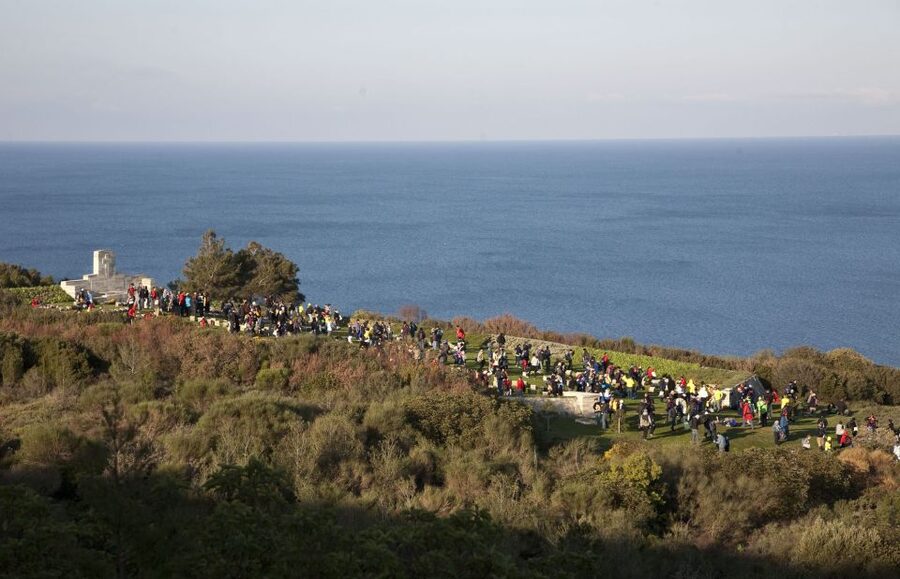
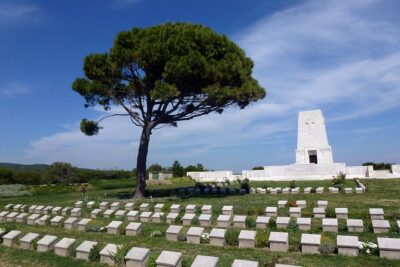
Lone Pine is one of the tour’s central stops. The Australian memorial commemorates almost 5,000 Australians with no known grave. That number gives the site great force, but your guide’s explanation is what turns it from a name on the route into part of the campaign’s story.
The memorial also helps explain the Australian experience of Gallipoli without presenting it in isolation. The wider campaign involved Australian, New Zealand, British, French, Indian, and Ottoman forces, and a good guide keeps the Turkish side in view. Charlie has been praised for connecting the Australian and New Zealand viewpoint with the Turkish viewpoint in an even-handed way.
If you have family connections to the campaign, bring the names with you. Guides have helped visitors locate relatives on memorial walls, including great-uncles and family members whose names were not previously easy to find. This can become the most personal part of the day, so write down full names and any service details before you go.
Lone Pine can be particularly meaningful for Australian visitors, but you do not need an Australian or New Zealand connection to value it. The memorial addresses the cost of a campaign in which so many men died far from home.
The 57th Regiment Turkish Memorial
The 57th Regiment Turkish Memorial shifts the focus to the Ottoman defenders. This is an essential part of the route, not an optional footnote. Gallipoli is remembered in Australia and New Zealand through ANZAC service, but it is also a foundational story in modern Turkey.
The memorial honors the Turkish soldiers of the 57th Regiment who fought during the campaign. Here, your guide can explain the Ottoman military response and the importance of Mustafa Kemal, who later became the first president of modern Turkey.
This stop gives the tour a better balance. You are encouraged to remember the fallen on both sides, not to view the peninsula through only one national story. Several guides have been praised for correcting common myths and explaining events without turning the visit into a one-sided patriotic speech.
For Turkish visitors, the memorial can be especially useful. One Turkish participant described arriving with some hesitation and leaving pleased with the depth of the historical explanation and the guide’s lively approach. The tour is designed for an international audience, but it does not treat Turkish history as secondary.
Chunuk Bair and the end of the campaign
The final major stop is Chunuk Bair, one of the highest points on the peninsula and the location of the New Zealand National Memorial. More than 850 New Zealand soldiers who fell in the area are commemorated there.
The hill was captured by New Zealand troops in August and held for two days before Ottoman forces recaptured it under Mustafa Kemal’s personal command. The fighting here was among the fiercest of the campaign. Its recapture ended Allied hopes of victory at Gallipoli, which makes Chunuk Bair a fitting closing point.
Ending here gives the tour a clear shape. You begin at the landing beaches, move through the stalled advance and trench lines, and finish at the high ground where the campaign’s outcome became clear. You may not leave knowing every operation, but you will understand the broad movement of the battle.
New Zealand visitors often find Chunuk Bair the emotional high point. Australian visitors may feel the same pull at Lone Pine. For everyone else, the stop completes the Turkish, Australian, and New Zealand sides of the story.
Guide quality, group size, and the pace
The guide is the strongest part of this experience. Names frequently associated with especially good days include Burak, Charlie, Hasan, Ibo, Ibrahim, Bulent, Orkan, Okan, Çağrı, and Hasim. Guide assignments can change, so you cannot request a particular person with certainty, but the repeated strengths are clear: strong command of the subject, clear English, humor used with care, and an ability to connect events to places.
Some guides use maps to make troop movements easier to follow. Others help you find family names or answer questions in detail. The best commentary does not simply recite dates. It explains why commanders made choices and how the ground shaped the result.
The tour is advertised as English-language only. If you need another language, this is probably not the right choice. Also remember that a six-hour schedule cannot give you a long, quiet visit at every cemetery and memorial.
The smaller vehicles improve the experience, but the tour still has a fixed group pace. If you want to walk every trail, stop for extended reflection, or study military details alone, plan an extra day on the peninsula. One visitor used the guided tour as an introduction, then returned independently the next day to follow a family connection more slowly. That is an excellent way to use this tour.
Is $81 a fair price?
At $81 per person, the cost includes the professional English-speaking guide, lunch, both ferry crossings, and all transportation in an air-conditioned vehicle. Hotel pickup and drop-off are not included, and drinks at lunch cost extra.
For a first visit, I consider the price fair. The ferry tickets and transport remove several small logistical tasks, while the guide provides the geographic and military context that is difficult to assemble on your own in a single afternoon. The value is strongest for anyone with only one day in Çanakkale or no rental car.
The value is less clear if you dislike organized meals or already know the campaign well. In that case, you may prefer a private visit or a longer independent stay. The fixed lunch and limited time at the sites are the parts most likely to bother an experienced visitor.
Free cancellation up to 24 hours before departure and the option to reserve now and pay later make the booking less risky. Check the current start time when choosing a date, since hotel pickup from central Çanakkale is around 10:45 AM and the tour may be coordinated with arrivals from Istanbul.
Who should book this Gallipoli tour?
I would choose this tour if you are visiting Gallipoli for the first time, especially from Australia or New Zealand. It gives you the key ANZAC locations, the Turkish memorial, the main trench area, and Chunuk Bair without requiring you to organize ferries, transport, and battlefield navigation yourself.
It also suits families and mixed-age groups. One family with children aged four and eight found the stops and lunch workable, while the small vans make the day less tiring than a large bus. Still, the subject is solemn, and some children may not enjoy the cemetery and battlefield focus.
You should think twice if you want a slow visit, dislike a set lunch, or plan to study every section of the peninsula. In that case, book the tour as your first orientation and add another day for independent exploration.
FAQ
Where does the tour start?
The meeting point is in front of the Tourist Information Center at the ferry harbor in Çanakkale. Pickup from central city hotels may be arranged around 10:45 AM.
Is hotel pickup and drop-off included?
Pickup from central hotels is optional, but hotel pickup and drop-off are not included as standard. If your hotel is outside the city center, a nearby meeting point close to the ferry harbor is arranged.
How long is the tour?
The full experience lasts about six hours. This includes two ferry crossings of about 25 minutes each, one hour for lunch, and about four and a half hours touring the Gallipoli Peninsula.
What meal is included?
Lunch is served at a local restaurant in Eceabat. The meal may include lentil soup, chicken and beef with rice, and watermelon. Drinks are not included.
Is the guide available in English?
Yes. The tour includes a live, professional English-speaking guide.
Which Gallipoli sites are visited?
The route includes Brighton Beach, ANZAC Cove, Ariburnu Cemetery, Lone Pine, Johnston’s Jolly, the 57th Regiment Turkish Memorial, and Chunuk Bair with the New Zealand National Memorial.
Can I cancel the booking?
You can cancel up to 24 hours in advance for a full refund. The reserve-now, pay-later option is also available.
Should you book it?
Book it if you want a clear, moving introduction to Gallipoli with the major ANZAC and Turkish sites arranged in a sensible order. The guides are the main reason to go, and names such as Burak, Charlie, Hasan, and Ibo have become associated with strong storytelling and thoughtful explanations.
The one caution is time. The lunch takes an hour, and the battlefield visit covers only the main points. For most first-time visitors, that is a fair trade for an organized day at $81. If Gallipoli has family meaning for you, bring the names you want to find, listen closely at Lone Pine and Chunuk Bair, and consider returning for a slower second look.
Just added in Turkey
- Private Tour: Istanbul’s Ottoman Experience Including Topkapi Palace and Blue Mosque★ 4.5 · 16 reviews
- Private istanbul tour with transportation★ 5.0 · 36 reviews
- Private Customizable Istanbul Day Tour with Licensed Guide★ 5.0 · 64 reviews
- IstanbulBasilicaCistern/fastEntranceEnglish/Spanish (not tickets)★ 4.0 · 184 reviews
- Private Old City Guided Tour★ 5.0 · 129 reviews
- Private Princes’ Islands Tour★ 5.0 · 56 reviews
- Private Bosphorus Cruise and Egyptian Bazaar with Motor Yacht★ 4.0 · 24 reviews
- Istanbul Private Tour Designed for Layover Flight, Transfer incl.★ 5.0 · 164 reviews
Canakkale Tours, compared.
Gallipoli ANZAC Battlefields Tour from Canakkale
Read our review →
Full Day Troy & Gallipoli Tour ( From Canakkale )
Read our review →
Browse the lists this tour appears in