
Reviewed · CANAKKALE TOURS
Gallipoli ANZAC Battlefields Tour from Canakkale
Gallipoli asks you to remember, not just look. This half-day tour from Canakkale links the Dardanelles crossing with the main ANZAC battle sites, cemeteries, and memorials, giving you a clear way to understand a difficult stretch of First World War history. I especially like the small group of up to 15 people and the chance to hear detailed explanations from guides such as Ercan Yavuz, Adem, and Apo, when assigned.
I also like the included Turkish lunch at Maydos Restaurant & Bar, served before the battlefield visits begin in earnest. The main consideration is time: six to seven hours lets you see many important places, but a site this large can feel rushed if you want long, quiet stops at every memorial.
In This Review
- Key points to know before you go
- Why this Gallipoli tour matters
- Crossing the Dardanelles by car ferry
- Brighton Beach and the first ANZAC landing area
- Beach Cemetery and the cost of the campaign
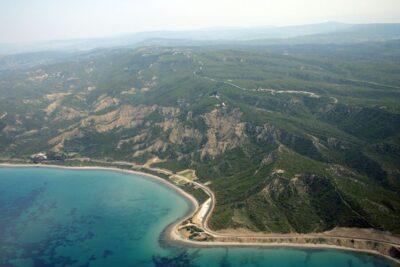
- Ari Burnu Cemetery and the shape of ANZAC Cove
- Lone Pine and the Australian memorial
- Johnston’s Jolly and the trench remains
- The 57th Regiment Turkish Memorial
- The Nek and Chunuk Bair
- What the guide adds to the day
- Is $140 a fair price?
- Timing, transport, and practical points
- Who should book this Gallipoli visit?
- Should you book it?
- FAQ
- How long does the Gallipoli ANZAC Battlefields Tour last?
- What time does the tour start?
- Where does the tour start and finish?
- Is lunch included?
- Which sites are visited?
- How many people can join the tour?
- What happens if bad weather cancels the tour?
Key points to know before you go
- The Kilitbahir Car Ferry begins the experience, carrying you across the Dardanelles before lunch and the battlefield visits.
- At least six major sites are included, from Brighton Beach and Beach Cemetery to Lone Pine, The Nek, and Chunuk Bair.
- The guide makes the difference, with past tours praised for detailed accounts of Australian, New Zealand, and Turkish forces.
- Lunch at Maydos Restaurant & Bar is included, but drinks cost extra.
- The tour is capped at 15 people, a useful size for asking questions without managing a large coach group.
- The $140 price covers transport, guiding, lunch, and selected hotel transfers, making it strongest for visitors who want an organized one-day visit.
Why this Gallipoli tour matters
Gallipoli is not a site you understand by ticking off a few monuments. The ground is spread across a wide area, and the names that shaped ANZAC memory can otherwise blur together. This tour gives you a route through the key locations, with a guide supplying the links between them.
You begin in Canakkale, a practical base for seeing the peninsula. The meeting point is Hassle Free Travel on Kemalpaşa, Cumhuriyet Boulevard, with a listed start time of 11:20 am. The tour departs at about 11:45, although the operator notes that the time can change with the season or weather, so you should confirm before setting out.
The late start suits you if you want a morning in Canakkale. It is less useful if you prefer to reach Gallipoli at first light or spend a full day walking. This is a focused overview, not a slow archaeological or hiking trip.
A few more options to weigh up in Turkey
- Canakkale: 6-Hour Gallipoli Tour with Lunch
★ 5.0 · 168 reviews - Gallipoli Tour from Çanakkale – Lunch Included
★ 5.0 · 114 reviews - Full Day Troy & Gallipoli Tour ( From Canakkale )
★ 5.0 · 45 reviews
Crossing the Dardanelles by car ferry
The first meaningful step is the Kilitbahir Car Ferry across the Dardanelles. That crossing gives the day a sense of place before you reach the memorials. Gallipoli was never just an isolated patch of battlefield. Control of the strait was central to the campaign, and crossing the water helps you see the setting that made the peninsula so important.
You travel by ferry rather than simply being driven around the shoreline. That adds a modest but useful local touch to the trip. The ride is also a natural break before lunch, and it avoids making the day feel like one long coach transfer.
After the ferry, the group stops at Maydos Restaurant & Bar for lunch. Turkish-style food is included, and past feedback gives the meal unusually strong praise. That matters because the battlefield portion takes about five hours, with several stops and plenty of information to absorb.
Drinks are not included, so budget for those separately. A vegetarian option is available, but you need to request it when booking. Since the lunch comes before the main site visits, it is worth thinking ahead about any dietary need rather than waiting until you arrive.
Brighton Beach and the first ANZAC landing area
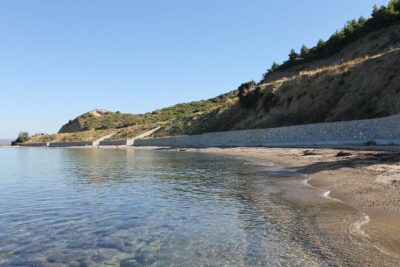
From the restaurant, an air-conditioned tour bus carries you into the battlefield area. The first listed stop is Brighton Beach, the intended landing point. Weather permitting, you may be able to swim here, which gives the stop a different feel from the cemetery and memorial visits that follow.
That swimming option is not the main reason to come, and it depends on conditions. Still, Brighton Beach helps you picture the opening movement of the campaign in a physical way. You are looking at the shore where the landing plan was meant to unfold, not at a distant monument removed from its setting.
The guide is important here. A bare beach does not explain itself, and the value comes from hearing how the intended landing area fits into the wider operation. You may find the stop more meaningful after the guide connects the shoreline to the next site, ANZAC Cove.
Beach Cemetery and the cost of the campaign
Beach Cemetery sits at the southern end of ANZAC Cove, described as the landing place of the first wave of ANZAC troops. It also served an area that held up to 30,000 troops during the campaign. Those figures give the site scale, but the cemetery makes the human cost easier to grasp.
John Simpson Kirkpatrick, remembered through the story of Simpson and his donkey, is buried here. His grave gives the visit a personal focus, while the surrounding cemetery places one familiar name among many others.
I would plan to slow down at this stop. The route includes several important locations, so it can be tempting to stay close to the guide and move on quickly. Take the quiet moments you can. A cemetery asks for a different pace from a viewpoint or a trench line.
This is also where the tour’s emotional weight becomes clearer. Past feedback repeatedly describes the difficulty of understanding the number of deaths on both sides, and that response is easy to understand. The day is not built around one national story. It presents Australian, New Zealand, and Turkish losses in the same confined area.
A completely different kind of day out:
- Istanbul: Bosphorus Dinner Cruise & Show with Private Table
★ 4.8 · 44,561 reviews - Istanbul: Daytime or Sunset Sightseeing Cruise & Audio Guide
★ 4.8 · 14,430 reviews - Istanbul: Bosphorus Dinner Cruise with Turkish Night Show
★ 4.8 · 10,127 reviews - Best of Istanbul 1, 2 or 3-Day Private Guided Istanbul Tour
★ 5.0 · 8,922 reviews
Ari Burnu Cemetery and the shape of ANZAC Cove
The route continues to Ari Burnu Cemetery at the northern end of ANZAC Cove. Seeing both ends of the cove helps you understand the limited space in which the landing and later fighting took place.
The two cemetery stops are not interchangeable. Beach Cemetery connects to the first wave and Simpson’s grave, while Ari Burnu helps complete your sense of the cove itself. I like that the route places the visitor between these two points instead of showing only one famous memorial.
You should expect the guide to carry much of the explanation during these stops. The published details do not promise long independent exploration time, and the overall schedule has many locations to cover. If you want extended photography or silent reflection at each cemetery, a two-day option may suit you better, as one past participant specifically suggested.
Lone Pine and the Australian memorial
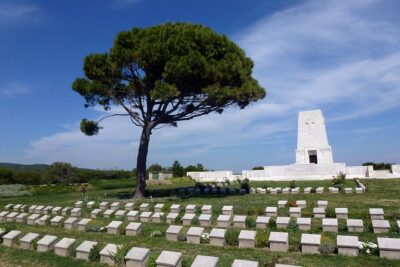
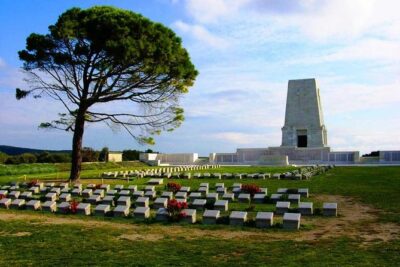
The next major stop is the Lone Pine Australian Memorial, located at the site of the attack and capture of Turkish trenches by Australian forces. For Australian visitors, this is likely to be one of the day’s central moments. For everyone else, it provides a direct way to understand how a particular action became tied to national memory.
The guide’s role here goes beyond naming the monument. Ercan Yavuz has been praised for explaining the operations, key people, and defining moments involving all three forces. That wider view is important at Lone Pine, where it would be easy to hear only a single side of the story.
You will probably gain more from this stop if you ask questions. The small group helps. With no more than 15 people, you have a better chance of getting an answer about the sequence of events, the people connected with the site, or how the Australian position related to the Turkish trenches nearby.
Johnston’s Jolly and the trench remains
Johnston’s Jolly brings you to Allied and Turkish trenches and tunnels. This is one of the most useful stops for turning military terms into something you can actually picture.
Cemeteries and memorials tell you who died and how later generations remembered the campaign. Trenches and tunnels show the cramped physical conditions in which soldiers lived and fought. The contrast gives the tour a better balance. You are not only looking at polished stone, but also at the remains of the positions that shaped the fighting.
The site can also make the tour feel more demanding. The day involves several stops across open ground, and you may be standing while listening to the guide. The supplied information says most people can participate, but it does not promise a fully step-free route or detailed accessibility arrangements. If mobility is a concern, ask the operator before booking.
The 57th Regiment Turkish Memorial
The 57th Regiment Turkish Memorial shifts the focus clearly to the Turkish side. That is essential to understanding Gallipoli as more than an ANZAC pilgrimage.
The strongest praise for this tour goes to guides who explain the campaign from both perspectives. Guides named Ercan Yavuz, Adem, and Apo have been singled out for their command of the subject and their ability to answer questions. Apo, in particular, was praised for adding background stories about individual soldiers and sharing the results of his own research.
Those details can change how a memorial feels. Instead of treating the Turkish position as a footnote, you see the campaign as a national struggle with its own losses, choices, and memories. This balance is one of the tour’s real strengths.
The Nek and Chunuk Bair
The Nek is another major stop, known to many people through the film Gallipoli. The location carries a strong connection to the Australian story, but the guide’s explanation should help place it within the larger campaign rather than leaving it as a movie reference.
The final listed location is Chunuk Bair New Zealand. For New Zealand visitors, this is likely to be the emotional high point of the day. The stop also completes the tour’s broad national picture, moving from Australian memorials and sites to a place closely linked with New Zealand remembrance.
By this point, you will have seen beaches, cemeteries, memorials, trench remains, and battle positions. That variety gives the tour its value. You are not receiving the same type of stop six times. The route keeps changing the way you approach the campaign.
The drawback is pace. The battlefield portion is listed at about five hours, yet it includes a long run of major sites. You will see a great deal, but you may not have the time to sit at every place or follow every question as far as you wish.
What the guide adds to the day
I would put the guide at the center of your booking decision. The transport and lunch are useful, but the interpretation is what turns a route into an experience.
The strongest guide feedback centers on Ercan Yavuz, described as exceptionally strong on operations, people, and key moments. Adem is praised as an expert on the history of the sites, while Apo is noted for his passion, personal research, and soldier stories. You cannot guarantee a particular guide unless the company confirms one, but these names show the level of guiding the operator has provided.
A small group of up to 15 people improves the odds of a personal exchange. You are not simply listening from the back of a packed coach. Ask about the relationship between the Turkish and ANZAC positions, the sequence of the landings, or the names connected with a cemetery. Good questions can make the difference between a pleasant sightseeing trip and a day you remember.
Is $140 a fair price?
At $140 per person, the price is not the cheapest way to reach Gallipoli. It is also not just a bus transfer. The fee includes a professional guide, an air-conditioned vehicle, lunch, and hotel pickup and drop-off at selected hotels.
The ferry crossing is part of the route, and the battlefield visit covers at least six important sites. If you arranged separate transport, found your own meal, and tried to connect the locations without a guide, you might spend less or more, depending on your choices. The harder part would be building a sensible route and understanding what you were seeing.
For me, the value is strongest if you have only one day for Gallipoli and want the major locations explained in English. The included lunch removes one practical decision during a long afternoon. The small group adds further value, especially if you care about questions and historical context.
The price is less compelling if you want a private guide, long periods of reflection, or a slower two-day visit. In that case, you may prefer a longer format rather than trying to stretch this half-day schedule.
Timing, transport, and practical points
The total experience lasts about six to seven hours, with around five hours listed for the battlefield portion. You meet at 11:20 am, depart at about 11:45, and return to the meeting point in Canakkale at the end.
Selected hotels receive pickup and drop-off. If your hotel is not included, you will need to use the stated meeting point at Hassle Free Travel. The vehicle is air-conditioned, which is useful during a long afternoon on the peninsula.
The tour is offered in English and uses a mobile ticket. Group discounts may be available. Departure times can change with the season or weather, so confirm the details with Hassle Free Travel before the day begins.
The experience is non-refundable and cannot normally be amended after booking. If poor weather cancels the tour, you are offered another date or a full refund. The same applies if the minimum number of participants is not reached. Those rules make weather and schedule checks worth doing before you commit.
Who should book this Gallipoli visit?
I would recommend it to you if you are staying in Canakkale, have one available day, and want the main ANZAC and Turkish sites without arranging complicated transport. It is particularly well suited to visitors who want a guide to explain the military movements and personal stories rather than simply photograph memorials.
It also suits Australian and New Zealand visitors who want to see the places linked to national remembrance, while still hearing the Turkish side of the campaign. The route includes the major names most people hope to visit.
I would hesitate if you dislike scheduled group travel or need a lot of time alone at each site. I would also think twice if you want a full historical study. A two-day tour would likely give you more breathing room.
Should you book it?
Book this tour if efficient sightseeing, strong guiding, and balanced history matter most to you. The ferry, lunch, air-conditioned coach, and selected hotel transfers make the day easy to manage, while the compact group gives you a better chance to speak with the guide.
Skip it if your priority is solitude, extensive walking, or hours at each cemetery and trench. For most first-time visitors with limited time, though, the $140 cost is reasonable for the range of places covered and the quality of explanation you may receive from guides such as Ercan Yavuz, Adem, or Apo.
FAQ
How long does the Gallipoli ANZAC Battlefields Tour last?
The experience lasts approximately six to seven hours. The battlefield portion is listed as about five hours.
What time does the tour start?
The listed meeting time is 11:20 am, with departure at approximately 11:45 am. Departure times may change by season or weather, so confirm before the tour.
Where does the tour start and finish?
It starts at Hassle Free Travel, Kemalpaşa, Cumhuriyet Blv. No:59, Çanakkale Merkez. The activity ends back at the meeting point.
Is lunch included?
Yes. Lunch at Maydos Restaurant & Bar is included. Drinks are not included, and a vegetarian meal can be requested when booking.
Which sites are visited?
The route includes Brighton Beach, Beach Cemetery, Ari Burnu Cemetery, the Lone Pine Australian Memorial, Johnston’s Jolly trenches and tunnels, the 57th Regiment Turkish Memorial, The Nek, and Chunuk Bair New Zealand.
How many people can join the tour?
The maximum group size is 15 people.
What happens if bad weather cancels the tour?
If poor weather causes cancellation, you are offered a different date or a full refund. The same options apply if the minimum number of participants is not reached.
Just added in Turkey
- Private Tour: Istanbul’s Ottoman Experience Including Topkapi Palace and Blue Mosque★ 4.5 · 16 reviews
- Private istanbul tour with transportation★ 5.0 · 36 reviews
- Private Customizable Istanbul Day Tour with Licensed Guide★ 5.0 · 64 reviews
- IstanbulBasilicaCistern/fastEntranceEnglish/Spanish (not tickets)★ 4.0 · 184 reviews
- Private Old City Guided Tour★ 5.0 · 129 reviews
- Private Princes’ Islands Tour★ 5.0 · 56 reviews
- Private Bosphorus Cruise and Egyptian Bazaar with Motor Yacht★ 4.0 · 24 reviews
- Istanbul Private Tour Designed for Layover Flight, Transfer incl.★ 5.0 · 164 reviews
Canakkale Tours, compared.
Full Day Troy & Gallipoli Tour ( From Canakkale )
Read our review →
Browse the lists this tour appears in