
Reviewed · MUSEUMS AND GALLERIES
Istanbul Archaeological Museums Entry Ticket & Audio Guide
Ancient stone makes Istanbul’s past feel close. I like the 25-language audio guide, which lets you explore Greek, Egyptian, Mesopotamian, Anatolian, and Ottoman objects at your own speed. I also like the digital QR ticket, since it can save you from waiting at the ticket counter. The main drawback is value: at $25, the visit may feel expensive if renovation limits access or you move quickly through the galleries.
This is a self-guided museum visit, not a tour with a person leading you from room to room. You will need an internet connection to display the QR codes, and the ticket system has occasionally caused trouble, so allow a little patience at the entrance. The Japanese audio option has clear pronunciation, but some room numbers may be missing and broad gallery explanations are limited.
In This Review
- Key points to know before you go
- Why this museum matters in Istanbul
- Getting there from the T1 tram
- What the QR ticket really saves you
- The Archaeological Museums and their ancient collection
- The Alexander Sarcophagus and major tomb pieces
- The Statue of Hermes and Aphrodite
- The Old Eastern Works Museum
- The Enameled Kiosk Museum and early Ottoman art
- Using the audio guide without losing your own pace
- How long you need and what the $25 price buys
- Toilets, security, and small practical details
- Who will appreciate this ticket most
- Should you book the Istanbul Archaeological Museums ticket?
- FAQ
- Where are the Istanbul Archaeological Museums?
- How do I reach the museums by public transport?
- What does the $25 ticket include?
- Is this a guided tour?
- Can I skip the security line?
- Do children need passports?
- How will I receive my tickets?
- Do I need internet access?
- Which languages are available for the audio guide?
- Can I cancel the booking?
Key points to know before you go

- Three museums in one complex: Your admission covers the Archaeological Museums, the Old Eastern Works Museum, and the Enameled Kiosk Museum.
- Major ancient treasures: Look for the Alexander Sarcophagus, Crying Women Tomb, Lykia Tomb, Statue of Hermes, and Aphrodite.
- Twenty-five audio languages: Options include English, Turkish, Arabic, Japanese, Korean, Spanish, French, German, Persian, Urdu, and more.
- Gülhane access: Take the T1 tram to Gülhane station, then walk about 5 to 10 minutes.
- QR entry is not security bypass: You can skip the ticket line, but everyone must still pass through security.
- Bring your passport and phone: All adults and children must show a valid passport, and the QR ticket appears only near the museum entrance.
Why this museum matters in Istanbul

Istanbul is often presented through its mosques, palaces, and waterfront views. The Archaeological Museums give you another way to understand the city: through the objects made, used, buried, and worshipped by the civilizations around the eastern Mediterranean and Near East.
The collection reaches far beyond Istanbul itself. You will encounter material connected with Greece, Egypt, Mesopotamia, Anatolia, Arabia, and other ancient cultures. That geographic spread matters because Istanbul has long sat between major worlds, and the displays help show how ideas, artistic styles, religions, and political power moved across the region.
I like museums that let you make connections rather than simply admire isolated objects. Here, a statue of a god, a carved tomb, and a small everyday object can each point toward different parts of ancient life. You might learn about burial customs in one room, religious practice in another, and the skill of an ancient craftsperson a few steps later.
The collection is large enough to reward a slow visit, but it is also possible to make a shorter stop. That flexibility is useful in Istanbul, where the same day may include Topkapı Palace, Hagia Sophia, the Blue Mosque, and the Grand Bazaar. Plan your visit around your energy, not around the idea that you must see every label.
More Museums and Galleries in Istanbul
- Istanbul: Hagia Sophia Skip-the-Line Ticket & Museum Option
★ 3.7 · 4,958 reviews - Istanbul: Hodjapasha Whirling Dervishes Show & Exhibition
★ 4.4 · 4,790 reviews - Istanbul: Topkapi Palace & Harem Museum Ticket & Audio Guide
★ 4.1 · 3,977 reviews
Getting there from the T1 tram
The simplest route is the T1 Bağcılar to Kabataş tram. Get off at Gülhane station, then expect a walk of about 5 to 10 minutes to the museum entrance.
This is a practical location for a sightseeing day in the historic center. The museum is close enough to combine with other major sights in the Sultanahmet area, although you should watch your timing if you have several timed admissions.
Your phone matters from the beginning. The supplier sends the entry QR codes and audio guide link in separate emails. The QR codes are shown only when you are near the museum entrance, so do not assume you can pull them up days earlier while sitting in your hotel.
You also need mobile internet to access the tickets. Downloading or checking the emails before leaving your hotel is sensible, but the stated instructions still require an internet connection at the entrance. I would keep both emails easy to find and increase your phone brightness before approaching the scanner.
What the QR ticket really saves you
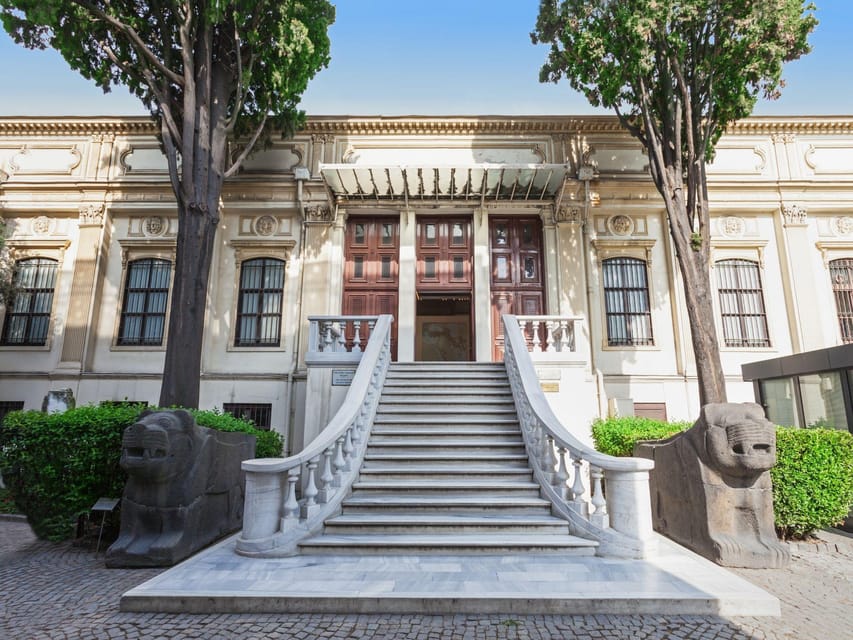
The digital ticket is designed to bypass the ticket-buying line. That can be useful at a major central museum, especially when you are trying to fit the visit between other Istanbul sights.
But skip the line does not mean walk straight through every checkpoint. Security checks are mandatory for all visitors, and the security line cannot be bypassed. There may also be a line at the entrance itself.
There is another important practical point: all people, including children, must show a valid passport so the museum can validate age. Carry the actual passport rather than relying on another form of identification.
The ticket technology is not flawless. One entry experience had QR codes that would not scan until the supplier was contacted. This does not mean your ticket will fail, but it does mean you should avoid arriving with only a few spare minutes before another booking. Keep the supplier’s contact details available and leave room for a short delay.
The Archaeological Museums and their ancient collection
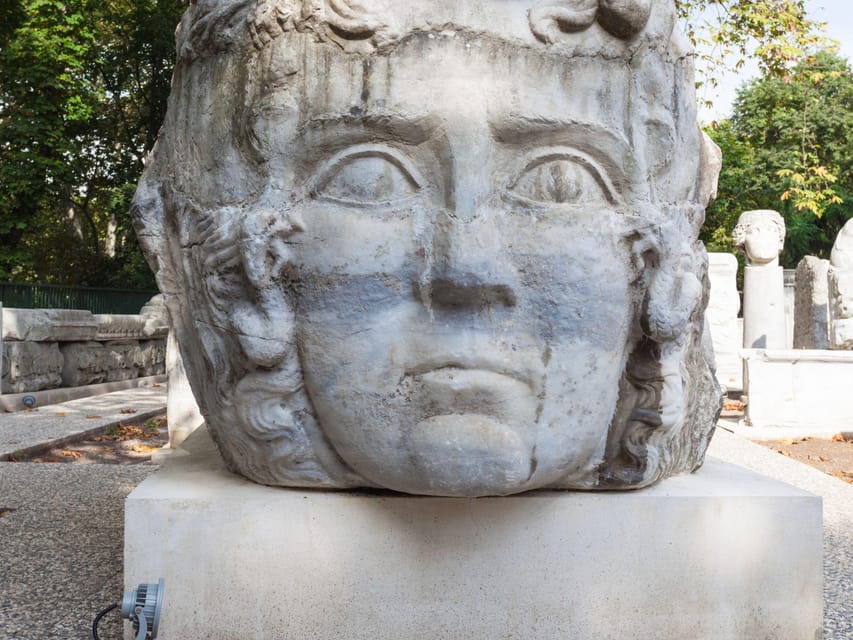
The main Archaeological Museums are the heart of the visit. The displays cover objects from several ancient cultures, including Greek, Egyptian, and Mesopotamian traditions.
You can expect a mix of monumental sculpture, carved stone, tomb pieces, statues, and smaller objects. The large works attract the eye first, but the smaller carvings often explain more about ordinary life, ritual, and artistic technique.
The collection is best approached with a little structure. Start by getting a sense of the building and the general layout. Then use the audio guide for the objects that interest you most instead of trying to listen to every available track.
The audio guide is available in 25 languages:
- Arabic
- Bulgarian
- Chinese
- Croatian
- Dutch
- English
- French
- German
- Greek
- Hindi
- Hungarian
- Indonesian
- Italian
- Japanese
- Korean
- Persian
- Polish
- Portuguese
- Romanian
- Russian
- Spanish
- Swedish
- Turkish
- Ukrainian
- Urdu
That range is one of the strongest reasons to consider this ticket. You do not have to depend on English labels or translate every paragraph on your phone. The audio option can make the collection more approachable if you are not comfortable reading long museum descriptions.
Still, treat it as a helpful layer rather than a complete guided tour. The experience does not include a museum guide, and the audio tracks may not cover every room in a clear sequence. The Japanese audio is easy to hear and understand, but some numbers reportedly skip ahead, and broader introductions to each room would improve the experience.
If your preferred language has uneven coverage, use the written labels as well. A phone translation app may help, but remember that mobile data is needed for the QR ticket and may also be useful for other digital tools.
More Skip-the-Line Tickets in Istanbul
- Istanbul: Basilica Cistern Fast-Track Entry and Audio Guide
★ 4.6 · 7,521 reviews - Istanbul: Blue Mosque & Hagia Sophia Guided Tour w/ Tickets
★ 4.8 · 3,600 reviews - Istanbul: Basilica Cistern Skip-the-Line Entry Ticket
★ 4.6 · 2,270 reviews - Istanbul: Hagia Sophia Skip-the-Line Ticket and Audio Guide
★ 4.3 · 2,246 reviews
The Alexander Sarcophagus and major tomb pieces
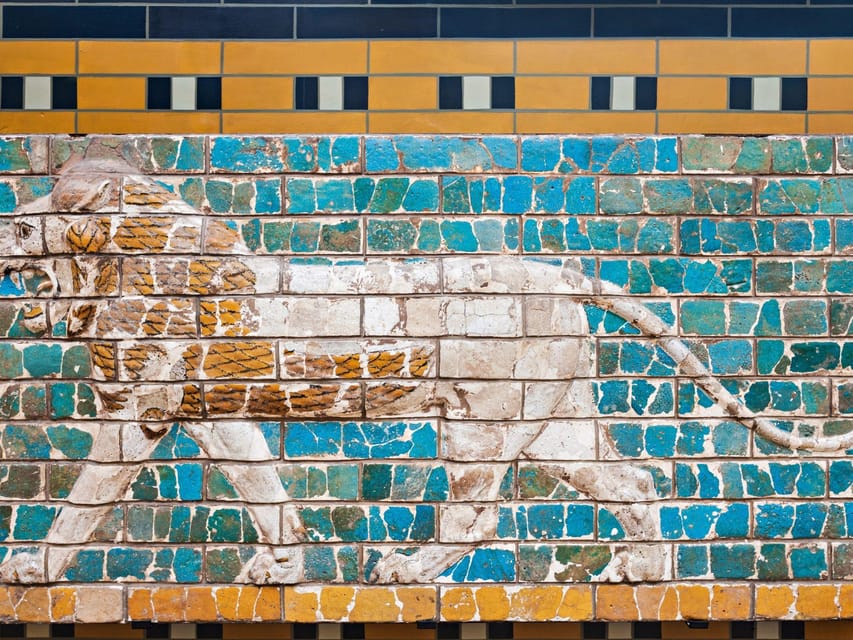
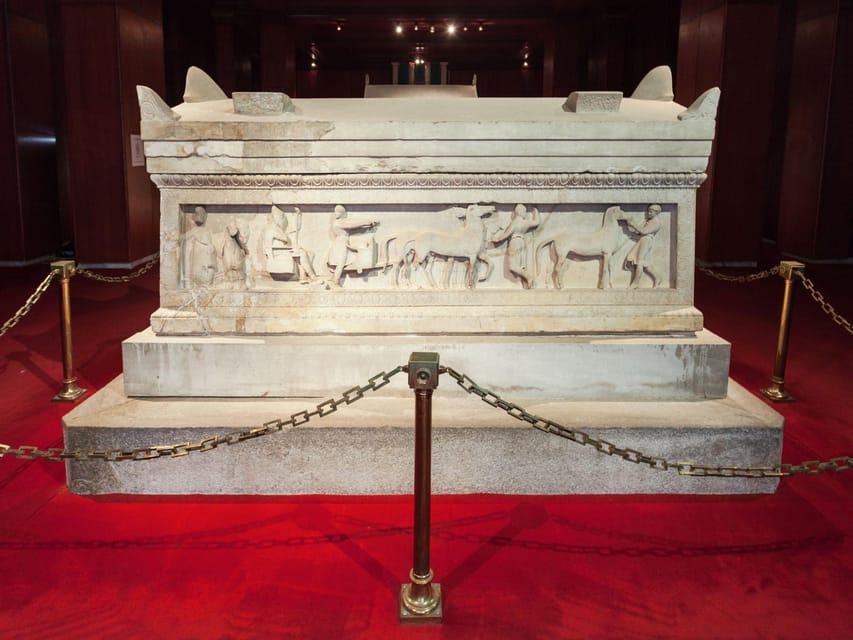
The Alexander Sarcophagus is one of the most important pieces to seek out. Its name draws attention, but the object is valuable for more than the association with Alexander. The carved scenes offer a look at how ancient artists represented rulers, conflict, movement, and ceremonial power.
Give this piece more than a quick photograph. Look closely at the figures and the treatment of clothing, bodies, and animals. Even without knowing every character, you can see how much information ancient sculptors packed into the surface.
The Crying Women Tomb is another major stop. Its name points to the emotional figures connected with mourning and burial. It gives you a direct link to ancient funerary customs and to the way communities honored the dead.
The Lykia Tomb adds another angle to the museum’s burial collection. These tomb pieces are not simply decorative stone. They show how architecture, memory, social status, and belief were tied together.
I would make these three tomb monuments part of your core route. They provide some of the clearest visual examples of the museum’s subject matter, and they are easier to appreciate when you have enough time to stand back and examine the carving.
The Statue of Hermes and Aphrodite
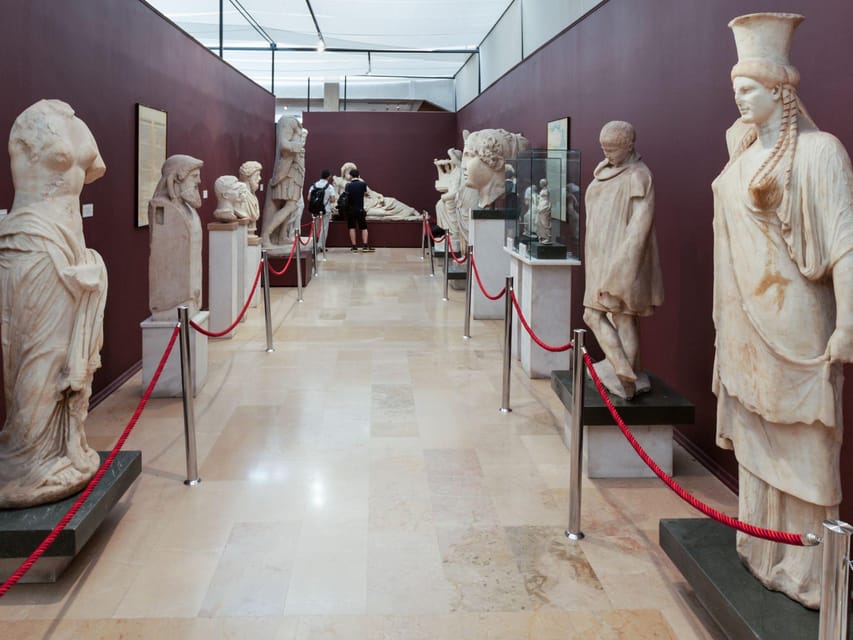
The Statue of Hermes and the Aphrodite are among the named works worth adding to your list. They offer a different experience from the tombs, with attention shifting from burial monuments to the human form and the ancient gods.
These pieces can be especially useful stops if you are visiting with someone who prefers sculpture to long rows of smaller artifacts. The recognizable subjects make the collection easier to navigate, while the surrounding works help place them within broader Greek artistic traditions.
Do not rush past less famous objects on the way to these names. A museum of this size often rewards a slower look at ordinary tools, carvings, and ritual objects. You might not remember every label, but you will gain a better sense of how ancient societies worked when you compare grand statues with objects made for daily use.
The Old Eastern Works Museum
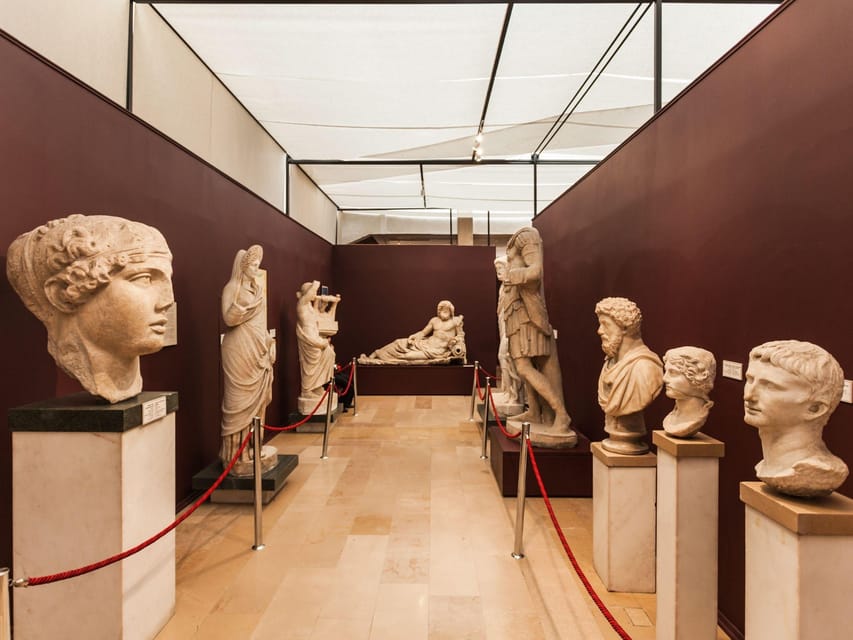
The Old Eastern Works Museum expands the visit beyond the Greek and Roman material many people expect. Its collection includes artifacts from Anatolia, Mesopotamia, Egypt, and Arabia.
This section is valuable because it puts several early cultures in the same visit. You can compare styles, materials, writing traditions, and religious objects without traveling to separate museums.
It also helps explain why the Istanbul Archaeological Museums are more than a single collection of classical sculpture. The surrounding regions shaped one another over long periods, and the objects here reflect that wider world.
If you have limited time, decide in advance whether ancient sculpture or the eastern collections matter more to you. Ideally, keep enough time for both. The Old Eastern Works Museum may be less immediately familiar, but it can provide the broader context that makes the main collection more meaningful.
The Enameled Kiosk Museum and early Ottoman art
The Enameled Kiosk Museum offers a change of mood and period. Fatih Sultan Mehmet established it in 1472, and it presents an early Ottoman art setting within a museum visit otherwise focused heavily on ancient civilizations.
This stop is important because it prevents the experience from becoming a single-period history lesson. Istanbul’s cultural story did not end with the ancient world, and the Enameled Kiosk connects the museum complex to the city’s Ottoman past.
The building itself is part of the appeal. Instead of looking only at objects in modern-style display rooms, you get a chance to consider an earlier Ottoman architectural and decorative tradition.
Access can vary with building work. One account noted renovation outside one of the buildings and reduced access, so check what is open when you arrive. If a section is closed, the $25 price may feel less attractive, especially if you planned the visit around a particular building.
Using the audio guide without losing your own pace
The audio guide is included, but it is not a live tour. That distinction shapes the whole visit.
A live guide can adjust the route, explain a confusing object, and answer questions. The audio guide gives you privacy and control. You can pause, skip, replay, or stop listening when you want to study a display.
I would use it selectively. Choose the Alexander Sarcophagus, the Crying Women Tomb, the Lykia Tomb, the Statue of Hermes, Aphrodite, and objects that connect with your own interests. Listening to every track can turn a flexible museum visit into a long series of instructions.
The audio guide is particularly useful for families or mixed-interest groups. One person can listen while another reads labels or looks at nearby objects. You can also move at different speeds without holding up a whole group.
The weak point is organization. Some audio numbers may not run in a perfect order, and room-level introductions are not always available. Keep an eye on the labels and do not assume the next number is always the next object.
How long you need and what the $25 price buys
The ticket is valid for one day, and the listed price is $25 per person. That is not the cheapest museum admission in Istanbul, so the value depends on how much of the complex you use.
For a quick visit focused on a few famous objects, I would question the price. The museum may not take long if you move briskly, and renovation can reduce access to part of the complex.
The value improves if you plan to visit all three museum sections, use the audio guide, and take time with the major tombs and sculptures. The ticket also saves you from buying admission at the counter, which has practical value when the entrance is busy.
I would allow enough time to avoid rushing, but the exact visit length depends on your pace and which buildings are open. Since the ticket is valid for one day, you have some flexibility, but the information provided does not promise re-entry rules or a particular starting time. Check availability for the time you want before booking.
Free cancellation up to 24 hours before the visit and reserve-now, pay-later terms reduce the risk of committing too early. Those policies are useful if your Istanbul schedule is still changing, though they do not solve an on-site ticket problem or a building closure.
Toilets, security, and small practical details
Museum basics are not always obvious here. Toilets are not well signposted, so locate them early rather than waiting until you need one urgently.
Security checks apply to everyone. Build that into your timing, especially if you are visiting with children or carrying items that may slow the process.
Keep your passport, phone, and QR emails together. Children need passports too, and the digital codes are not simply shown at any point in advance. The museum does not provide Wi-Fi as part of this activity, and transportation is not included.
These details sound minor, but they shape the experience. A charged phone, working internet connection, and extra time at security can make the difference between a calm museum visit and an irritating start.
Who will appreciate this ticket most
I would recommend it most to independent museum visitors who want background information without joining a group. It suits you if you enjoy setting your own pace, listening in your preferred language, and choosing only the objects that hold your attention.
It is also a good fit for visitors who want to combine several Sultanahmet sights in one day. The Gülhane tram stop is convenient, and the QR ticket can reduce time spent at the ticket counter.
Families may like the freedom to move separately, but the large collection can be tiring for younger children. Pick a short list of objects and make the visit active rather than expecting children to listen to every audio track.
I would be more cautious if you want a polished, fully explained route from a person. This is not a guided tour, and the audio numbering may be imperfect. I would also think twice at $25 if renovations have closed the building or section you most want to see.
Should you book the Istanbul Archaeological Museums ticket?
Book it if you value independent exploration, need an audio guide in one of 25 languages, and plan to see more than the main sculpture rooms. The QR entry is convenient, and the museum’s combination of ancient Greek, Egyptian, Mesopotamian, Anatolian, Arabian, and early Ottoman material gives you a broad view of the region.
Skip it, or wait until you confirm what is open, if you are looking for a short and inexpensive stop. The price is harder to justify when access is reduced, the audio guide skips numbers, or ticket scanning goes wrong.
My practical choice would be to book with a reasonable time cushion, keep your passport and phone ready, and arrive with a short must-see list. Start with the Alexander Sarcophagus, Crying Women Tomb, Lykia Tomb, Statue of Hermes, and Aphrodite, then give the Old Eastern Works and Enameled Kiosk Museums the time they deserve.
FAQ
Where are the Istanbul Archaeological Museums?
They are in Istanbul’s Marmara Region, near Gülhane station in the historic center.
How do I reach the museums by public transport?
Take the T1 Bağcılar to Kabataş tram and get off at Gülhane station. From there, the museum is about a 5 to 10 minute walk away.
What does the $25 ticket include?
It includes skip-the-ticket-line admission to the Archaeological Museums and an audio guide available in 25 languages.
Is this a guided tour?
No. This is an entry ticket with an audio guide, and you explore the museums on your own.
Can I skip the security line?
No. Security checks are mandatory for everyone, and the ticket does not bypass security.
Do children need passports?
Yes. All visitors, including children, must show a valid passport so their age can be checked.
How will I receive my tickets?
The supplier sends the entry QR codes and audio guide link by separate email. You will receive an email with instructions for redeeming the museum tickets.
Do I need internet access?
Yes. You need an internet connection on your smartphone to access the QR tickets. The museum does not include Wi-Fi access.
Which languages are available for the audio guide?
The audio guide is available in Arabic, Bulgarian, Chinese, Croatian, Dutch, English, French, German, Greek, Hindi, Hungarian, Indonesian, Italian, Japanese, Korean, Persian, Polish, Portuguese, Romanian, Russian, Spanish, Swedish, Turkish, Ukrainian, and Urdu.
Can I cancel the booking?
You can cancel up to 24 hours in advance for a full refund. Reserve-now, pay-later booking is also available, subject to the stated booking conditions.
More Audio Tours in Istanbul
- Istanbul: Daytime or Sunset Sightseeing Cruise & Audio Guide
★ 4.8 · 14,430 reviews - Istanbul: Bosphorus Sightseeing Cruise Tour with Audio Guide
★ 4.6 · 2,694 reviews - Istanbul: Hagia Sophia Skip-the-Line Ticket with Audio Tour
★ 4.4 · 1,767 reviews - Istanbul: Bosphorus Cruise w/Audio Guide and Sunset Option
★ 3.9 · 1,758 reviews
Just added in Istanbul
- Private Tour: Istanbul’s Ottoman Experience Including Topkapi Palace and Blue Mosque★ 4.5 · 16 reviews
- Private istanbul tour with transportation★ 5.0 · 36 reviews
- Private Customizable Istanbul Day Tour with Licensed Guide★ 5.0 · 64 reviews
- IstanbulBasilicaCistern/fastEntranceEnglish/Spanish (not tickets)★ 4.0 · 184 reviews
- Private Princes’ Islands Tour★ 5.0 · 56 reviews
- Private Bosphorus Cruise and Egyptian Bazaar with Motor Yacht★ 4.0 · 24 reviews
- Private Old City Guided Tour★ 5.0 · 129 reviews
- Istanbul Private Tour Designed for Layover Flight, Transfer incl.★ 5.0 · 164 reviews
Museums and Galleries, compared.

Hagia Sophia Skip-the-Line Ticket & Museum Option
Read our review →
Hodjapasha Whirling Dervishes Show & Exhibition
Read our review →
Topkapi Palace & Harem Museum Ticket & Audio Guide
Read our review →
Small-Group Red Tour, Open Air Museum with Lunch
Read our review →
Istanbul Hodjapasha Whirling Dervishes Show & Exhibition
Read our review →
Topkapi Palace and Harem Museum Tour with Ticket
Read our review →